Assess capability gaps and estimated value (for L&D programs)
Use AI to evaluate workforce capabilities, identify gaps and develop impactful training plans.
2024-12-05
Welcome to the second lesson of our course on Executing a successful L&D strategy using AI.
Capability assessment forms the backbone of any effective L&D strategy. It bridges the gap between your organization's current skill set and the competencies needed to drive future success. Traditional methods often fall short, relying on subjective evaluations or outdated models.
In this tutorial, you will learn how to:
- Create a robust competency model
- Conduct thorough capability assessments
- Analyze capability gaps across your workforce
- Quantify the value of closing these gaps
- Design a targeted strategy to address skill deficiencies
Let’s dive in.
Understanding capability assessment
Capability assessment is the process of evaluating the skills, knowledge, and abilities of your workforce against the competencies required for success in their roles and in the organization as a whole. It's not just about what people can do now, but what they need to be able to do to drive your business forward.
Common pitfalls in traditional capability assessment methods include:
- Relying solely on manager evaluations, which can be subjective and biased
- Using generic competency models that don't reflect your organization's unique needs
- Conducting assessments infrequently, missing the rapid changes in required skills
- Failing to link assessment results to concrete L&D actions
By using AI and taking a more systematic approach, we can avoid these pitfalls and create a capability assessment process that's accurate, objective, and actionable. Let's see how.
Step 1: Creating a competency model
A competency model is like a blueprint for success in your organization. It outlines the skills, knowledge, and behaviors that are critical for high performance in different roles and at different levels.
Now, here's where Claude can really amp up your game. Let's use it to help refine our competency model.
Prompt:
I need help creating a competency model for our organization. Our key business objectives are:[Your business objectives here]Based on these objectives, what key competencies should we focus on? For each competency, provide a brief description and 3-5 observable behaviors or skills that demonstrate proficiency.
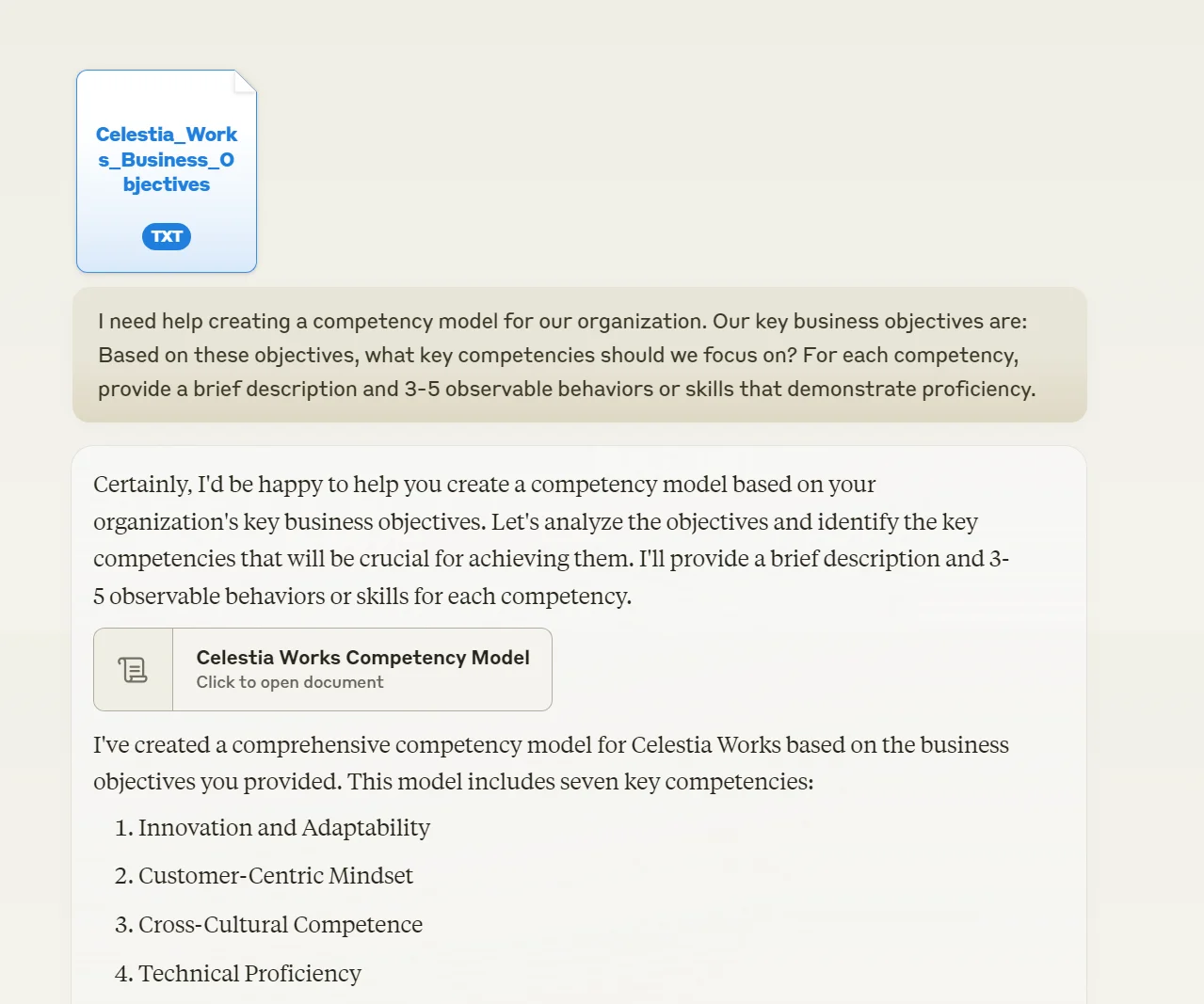
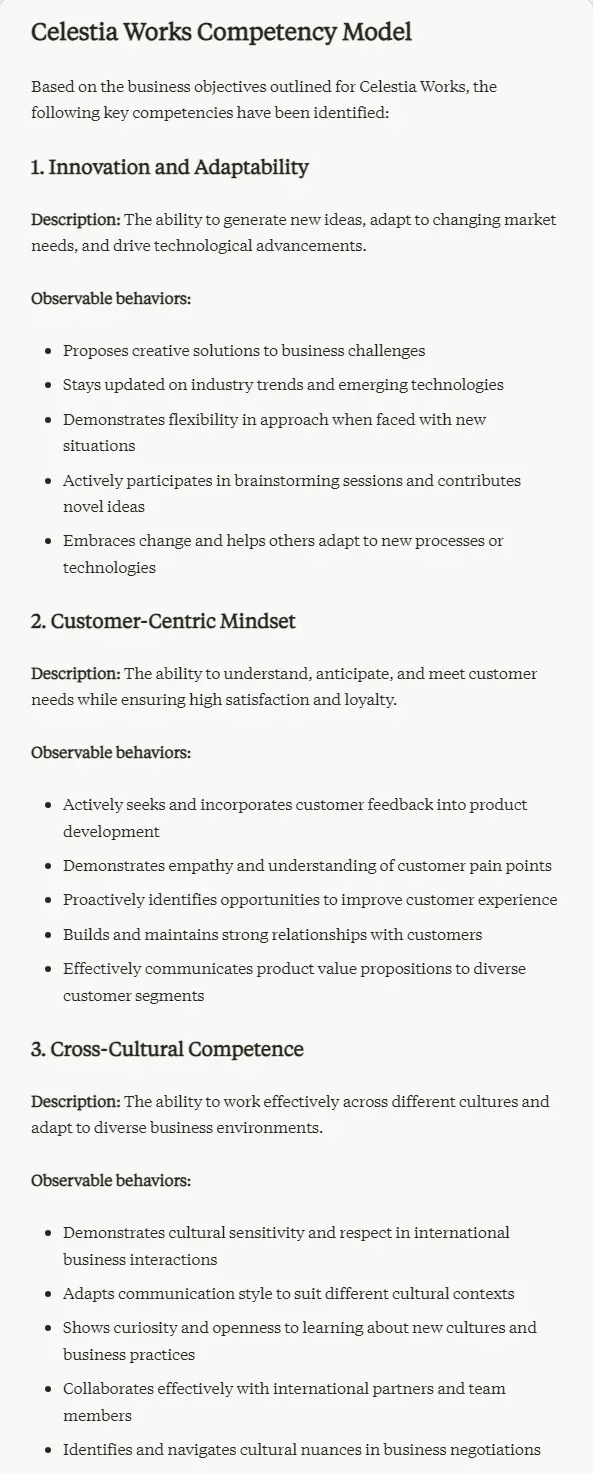
This prompt will give you a solid starting point for your competency model. Remember, Claude’s suggestions are a great foundation, but you'll want to review and refine them based on your specific organizational context and culture.
Step 2: Conduct a capability assessment
Now that we have our competency model, it's time to see how your team measures up. We're going to use Claude to design a capability assessment survey that's tailored to your organization.
Prompt Claude with:
Based on the competency model we just created, design a capability assessment survey. For each competency:
1. Create 3-5 multiple-choice questions that assess proficiency
2. Add an open-ended question asking for specific examples of how the employee has demonstrated this competency
Place these survey questions in an artifact for easy reference and distribution. Also, suggest how we could distribute this survey and collect responses efficiently.
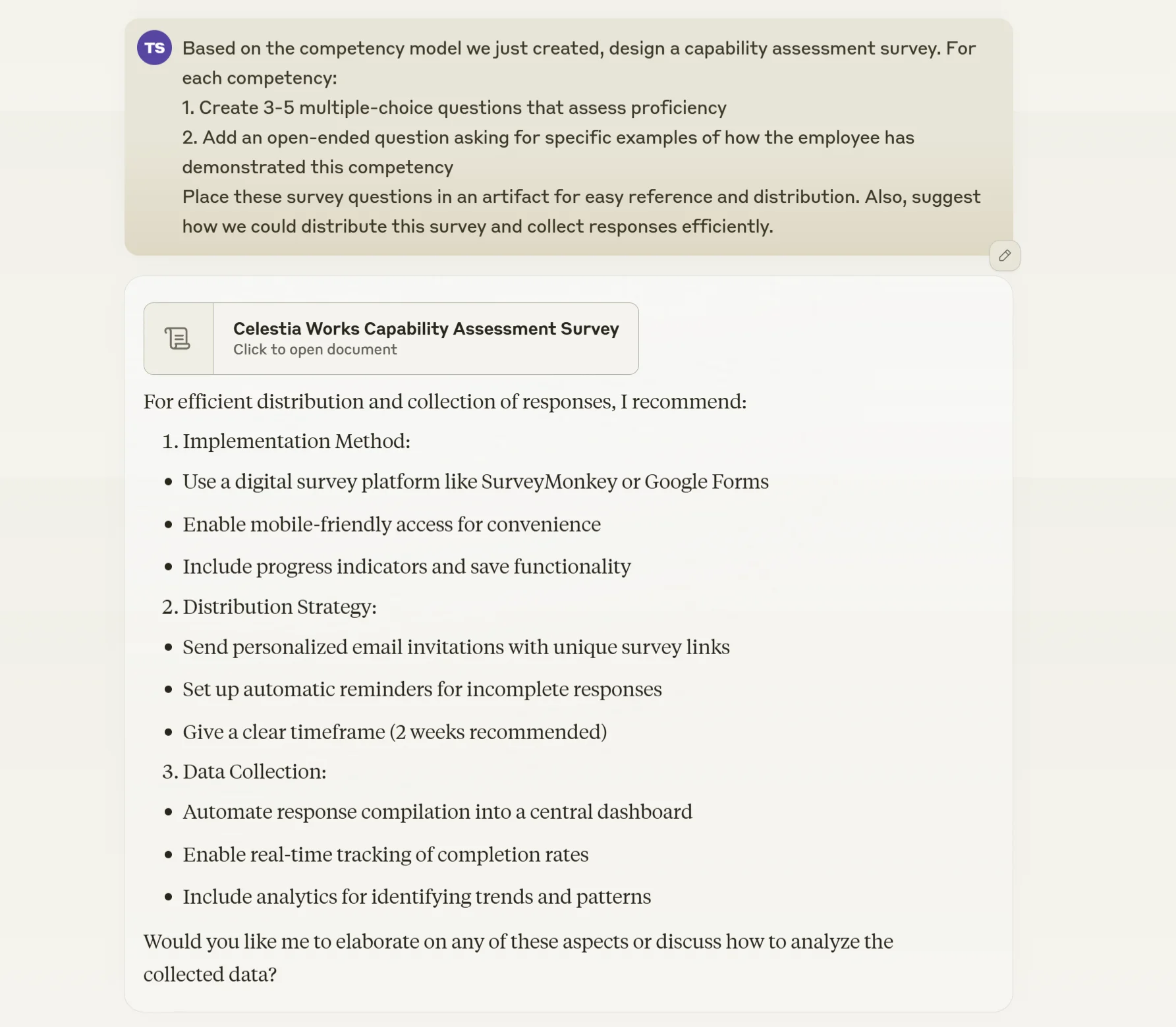
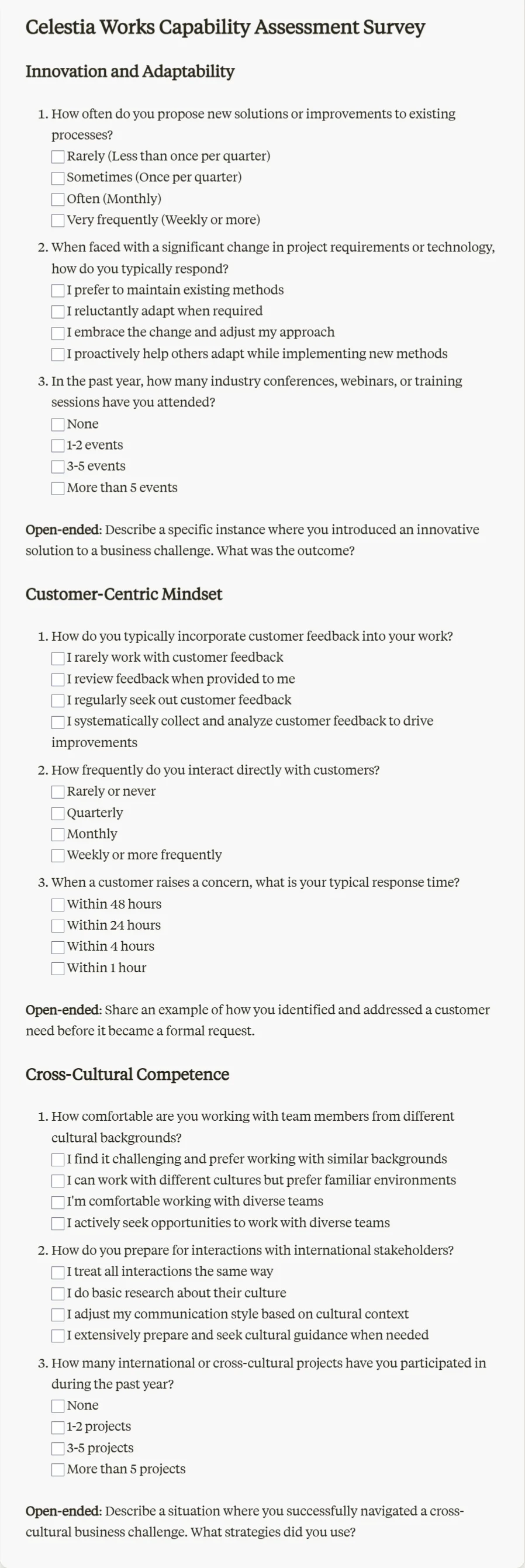
Great, now we have our survey. Let's say you've distributed it and collected responses. The next step is to analyze this data and estimate the value of closing these gaps.
Step 3: Analyze capability assessment results
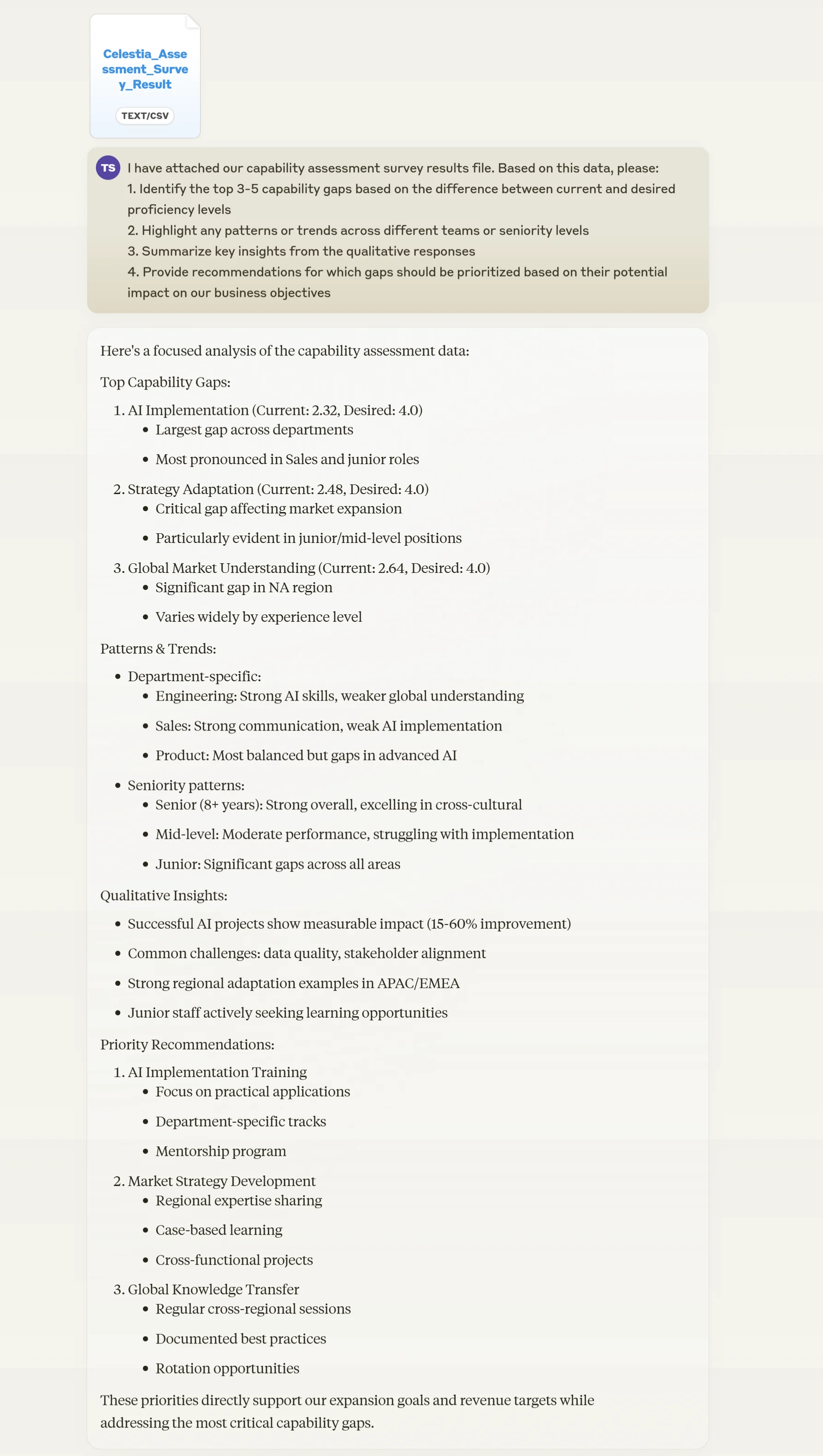
Now that you've collected survey responses, let's use Claude to analyze the data and identify key capability gaps. We'll want to look for patterns, trends, and areas where current capabilities don't meet desired levels.
Prompt Claude with:
I have attached our capability assessment survey results file. Based on this data, please:
1. Identify the top 3-5 capability gaps based on the difference between current and desired proficiency levels
2. Highlight any patterns or trends across different teams or seniority levels
3. Summarize key insights from the qualitative responses
4. Provide recommendations for which gaps should be prioritized based on their potential impact on our business objectives
Step 4: Estimate the value of closing capability gaps
Knowing where the gaps are is great, but to really make a case for L&D investment, we need to quantify the potential impact of closing these gaps.
Prompt Claude with:
For each of the capability gaps identified in our assessment results
1. Estimate the potential financial impact of closing each gap (e.g., increased revenue, cost savings)
2. Suggest metrics we could use to measure improvement in each area
3. Propose a high-level action plan for addressing each gap
Additionally, create a prioritized list of these gaps based on their potential business impact.
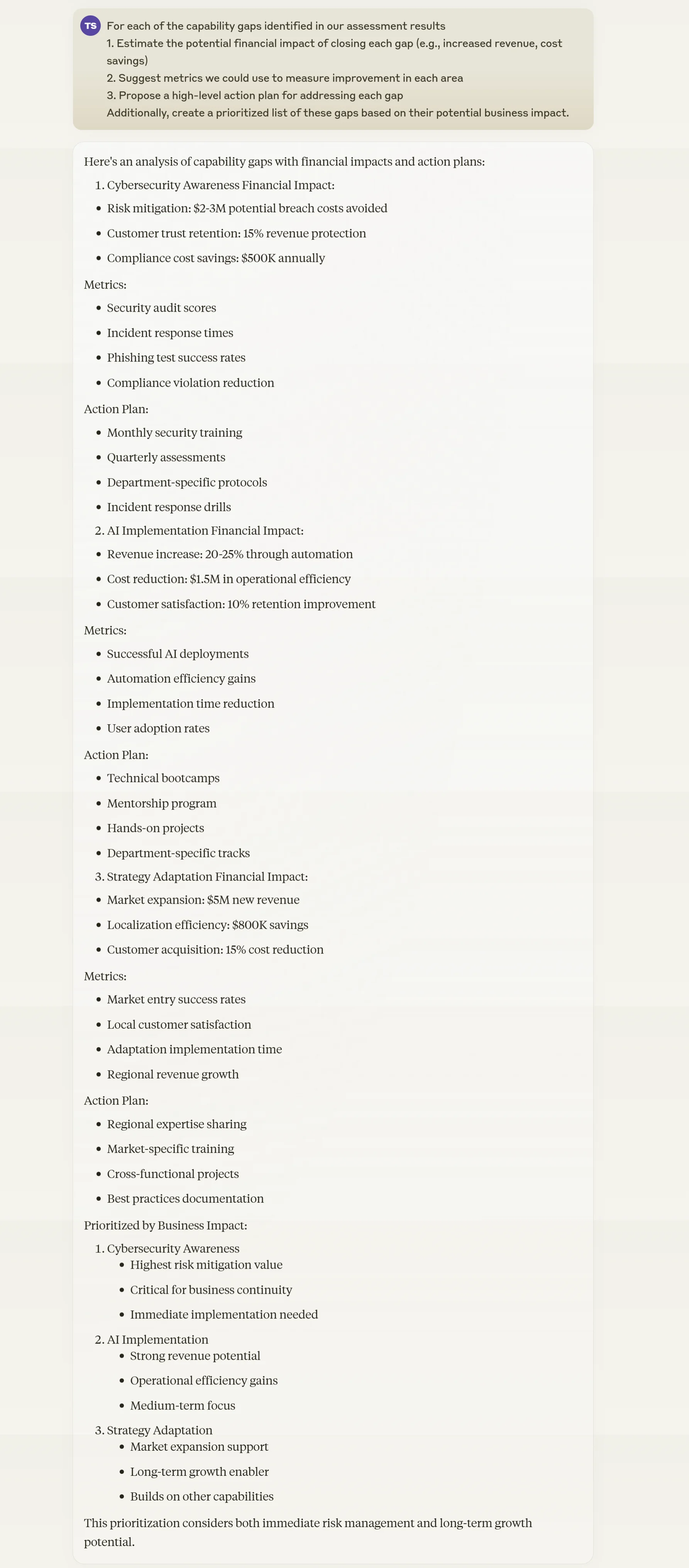
This output will be crucial for building your business case for L&D interventions. It translates capability gaps into concrete business outcomes, which is exactly what you need to get buy-in from leadership.
Step 5: Design a gap-closing strategy
Now that we know where to focus and why it matters, let's design a strategy to close these gaps. We'll use Claude to help us create personalized learning interventions.
Use this prompt:
For our top priority gap identified above:
1. Recommend 5 different learning interventions (e.g., online courses, workshops, mentoring programs)
2. Suggest personalization based on individual results
3. Propose implementation timeline and reassessment plan
4. Recommend progress tracking methods
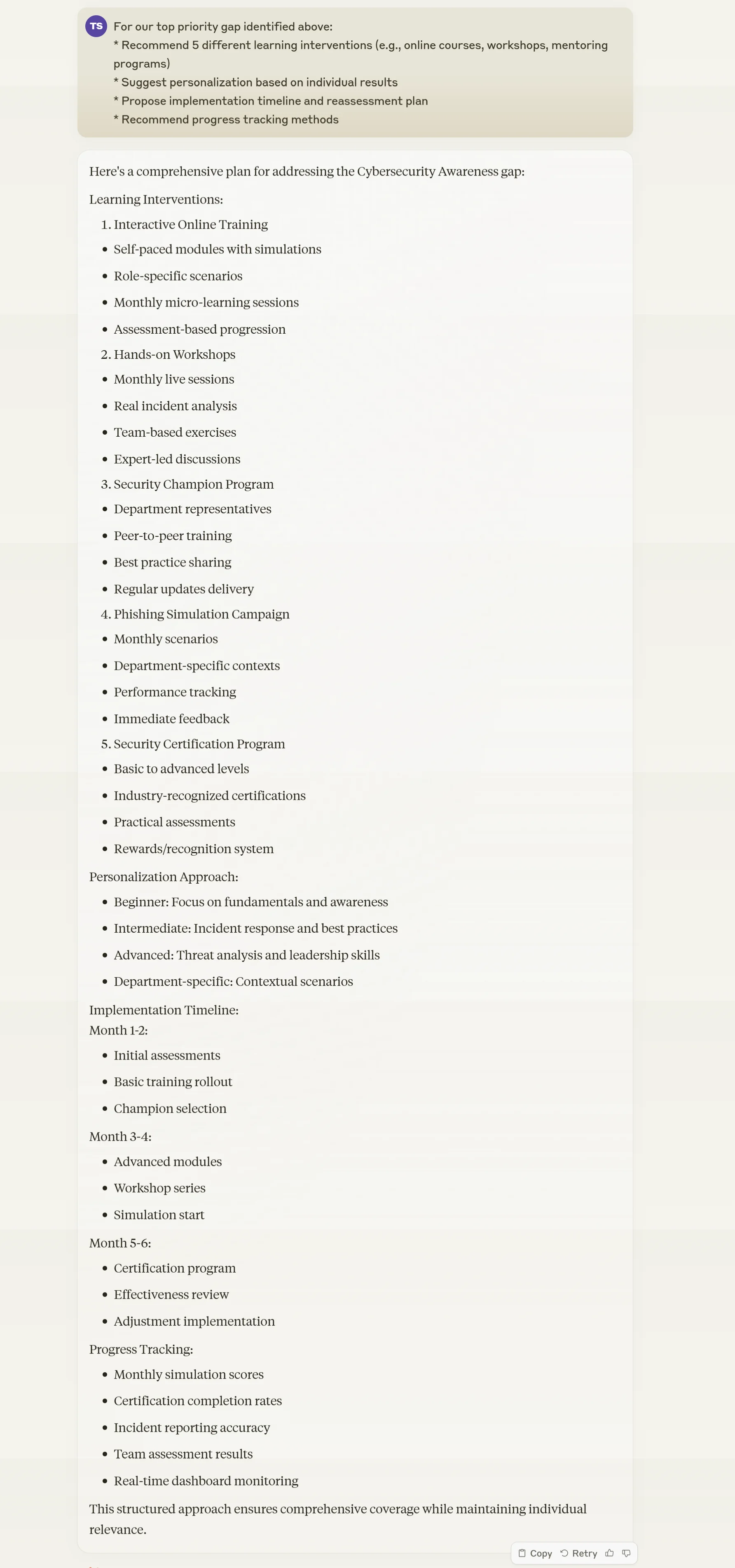
This plan gives you a solid starting point for your gap-closing strategy. Remember, the key is to make it personalized and adaptive. Everyone learns differently, and the skills needed in your organization will continue to evolve.
The business landscape is constantly changing, and so are the capabilities needed to succeed. Make capability assessment an ongoing part of your L&D strategy, and you'll be well-positioned to keep your workforce skilled, engaged, and ready for whatever challenges come your way.
This tutorial was created by Tanmay.