Create a comprehensive employee handbook
Use ChatGPT to do the heavy lifting in creating a handbook for new employees.
2024-11-13
An employee handbook is a great reference tool for new hires, who can use it to find administrative information they might need. Pulling one together can be a time-consuming task, but you can use an AI tool like ChatGPT to do a lot of the heavy lifting.
In this tutorial, you will learn how to:
- Develop a comprehensive employee handbook
- Include company culture and code of conduct
- Ensure legal and organizational compliance
Step 1: Define company culture
Articulating company values and mission
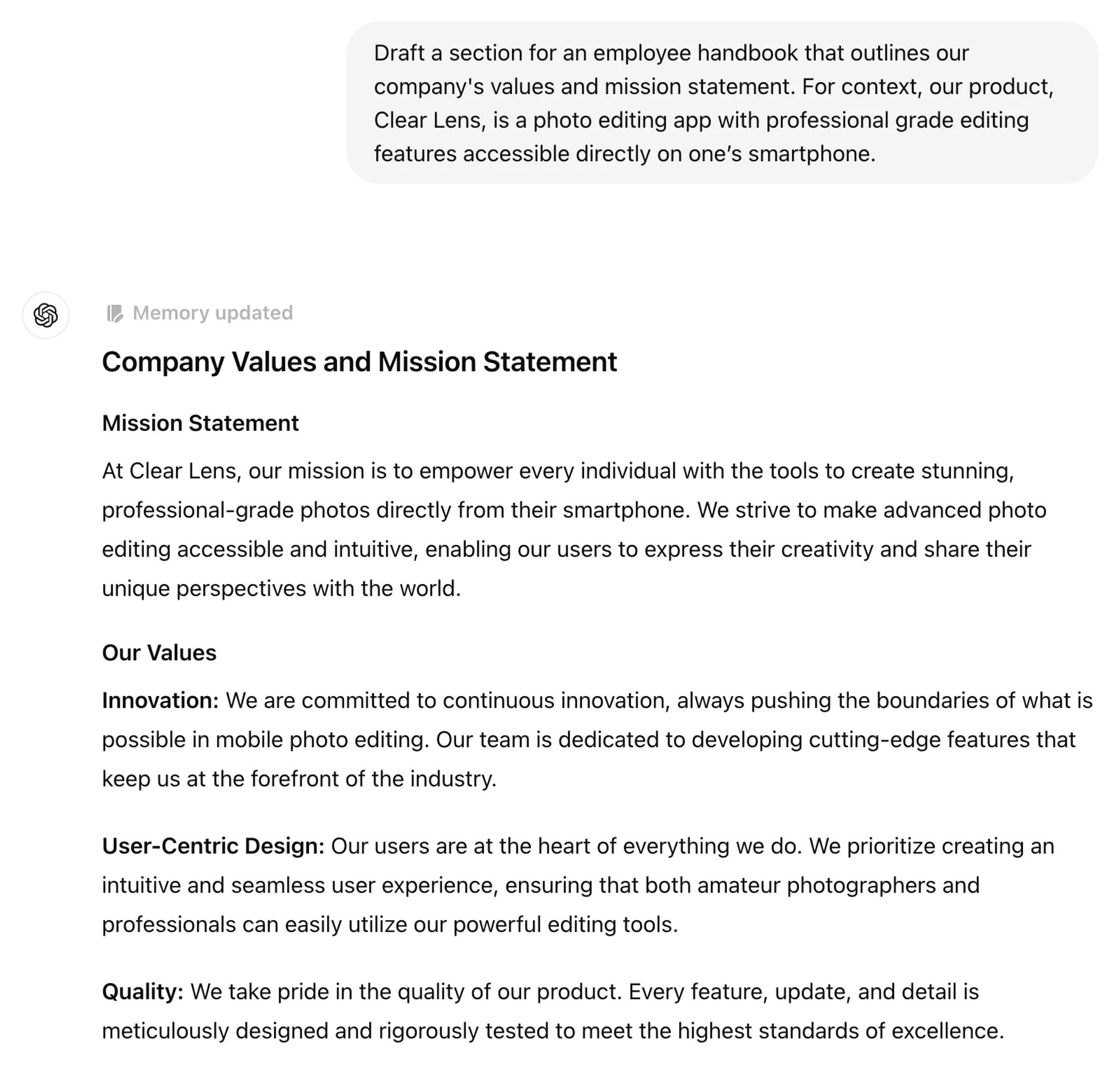
Begin by clearly articulating your company's values and mission. If you don’t already have a clear mission and vision, ChatGPT can help write them for you. This sets the foundation for the handbook and helps employees understand the core principles guiding the organization.
Suggested ChatGPT prompt:
Draft a section for an employee handbook that outlines our company's values and mission statement. For context, our product, [brand name], is a [product/service].
.webp)
Creating a positive workplace environment
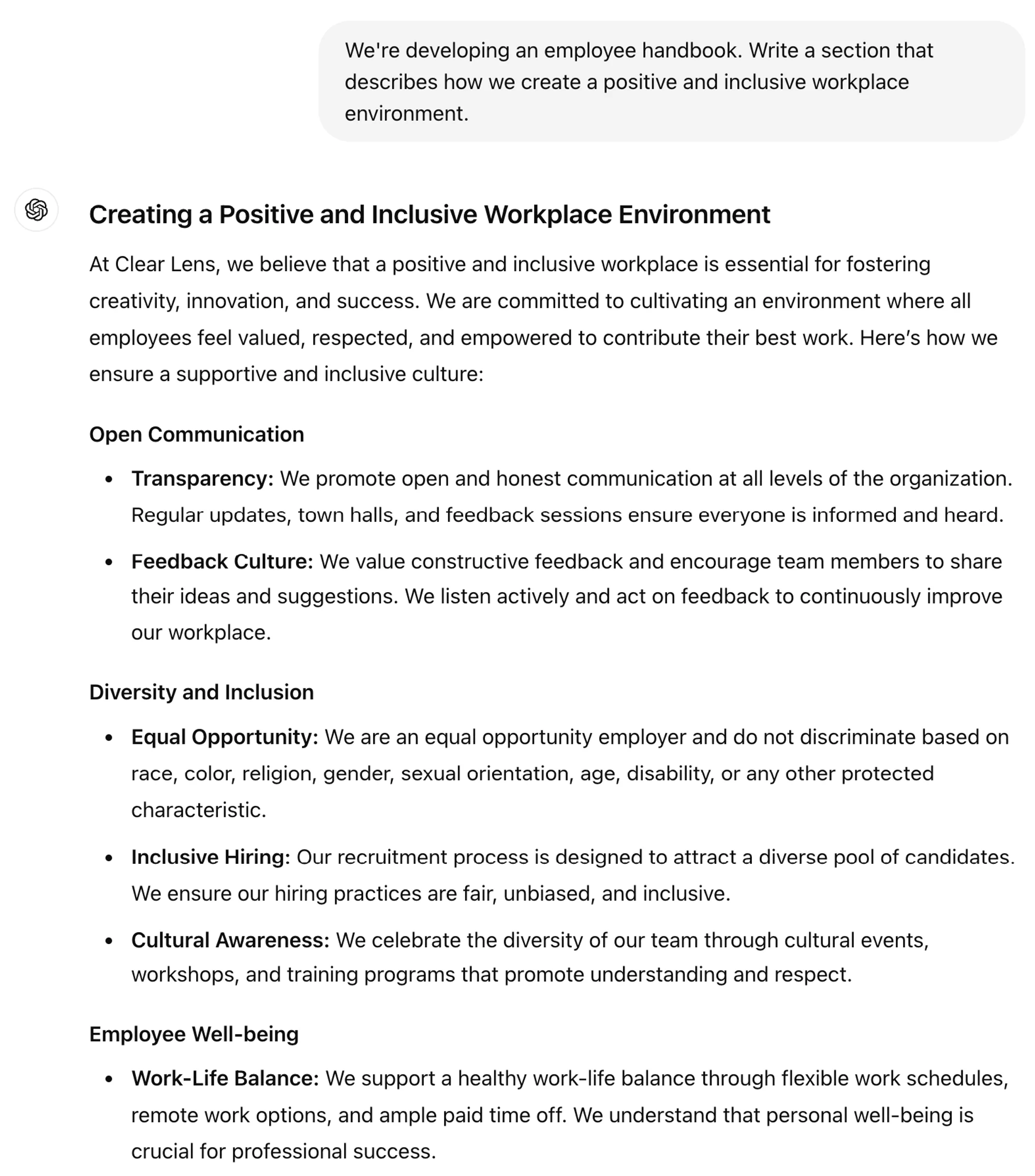
Focus on creating a positive workplace environment by detailing how your company fosters inclusivity, respect, and collaboration. Highlight initiatives and programs that support employee well-being and professional development.
Suggested prompt:
We're developing an employee handbook. Write a section that describes how we create a positive and inclusive workplace environment.
.webp)
Step 2: Draft the code of conduct
Establishing expected behaviors and policies
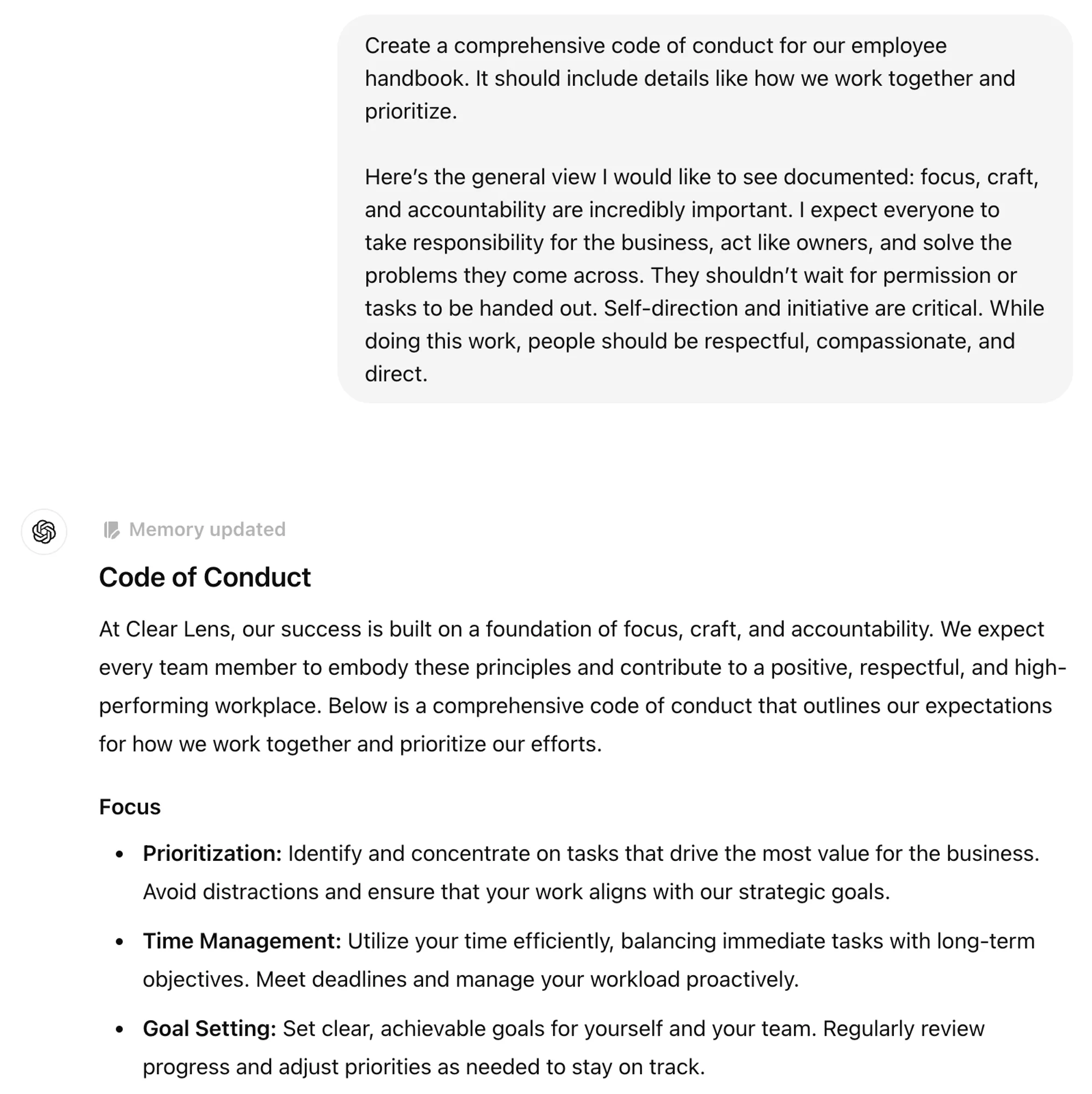
Establish clear expectations for employee behavior and policies in the code of conduct. Outline acceptable and unacceptable behaviors, dress code, attendance policies, and the procedures for addressing misconduct.
Create a comprehensive code of conduct for our employee handbook. It should include details like how we work together and prioritize.
Here’s the general view I would like to see documented: [share what you value in employees and how they should work].
.webp)
.webp)
Addressing workplace ethics and compliance
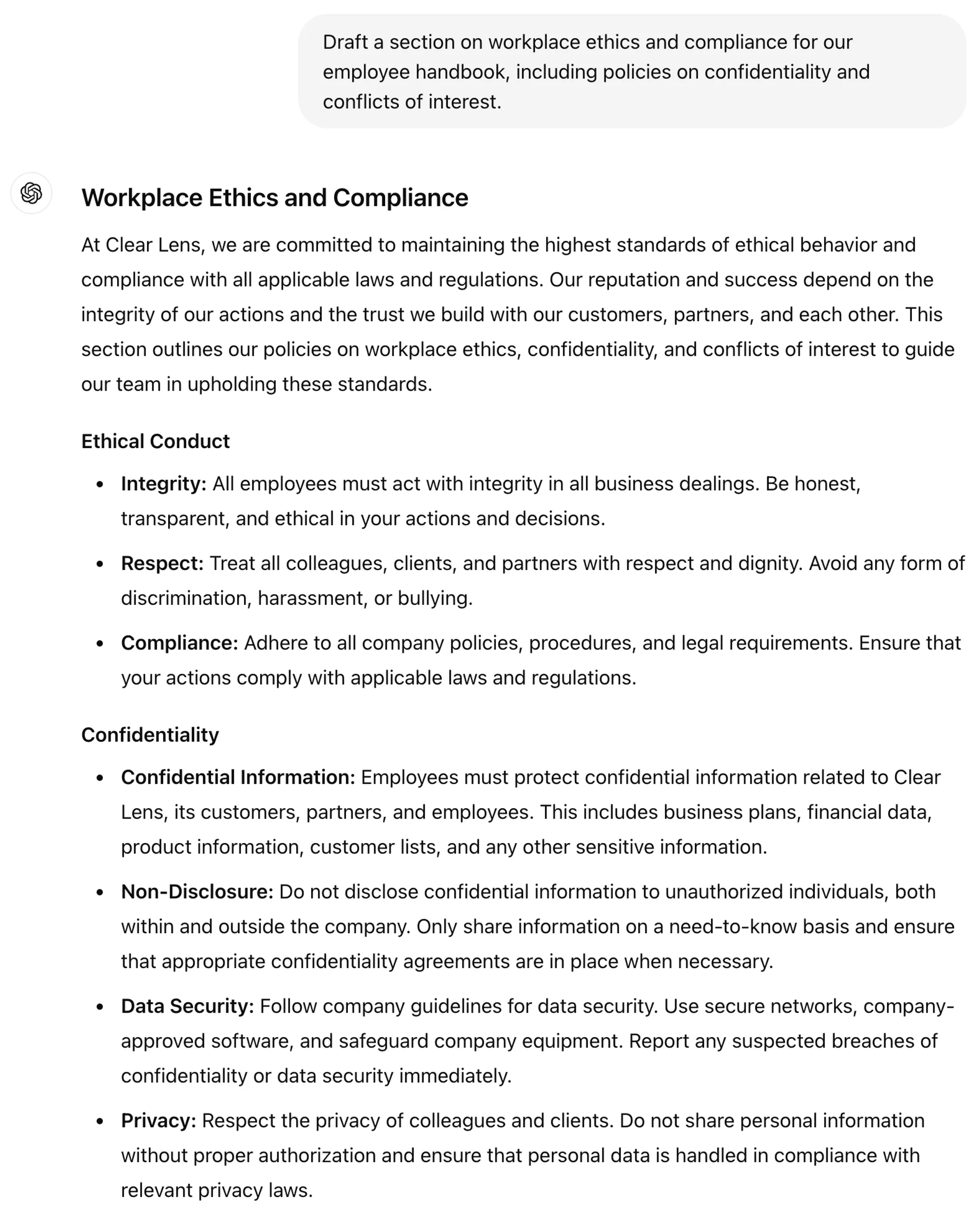
Address workplace ethics and compliance by outlining policies on confidentiality, conflicts of interest, and adherence to laws and regulations. Provide guidance on how employees can report ethical concerns and the steps the company will take to investigate and resolve issues.
Draft a section on workplace ethics and compliance for our employee handbook, including policies on confidentiality and conflicts of interest.
.webp)
Step 3: Additional sections for a comprehensive employee handbook
Establishing safety protocols
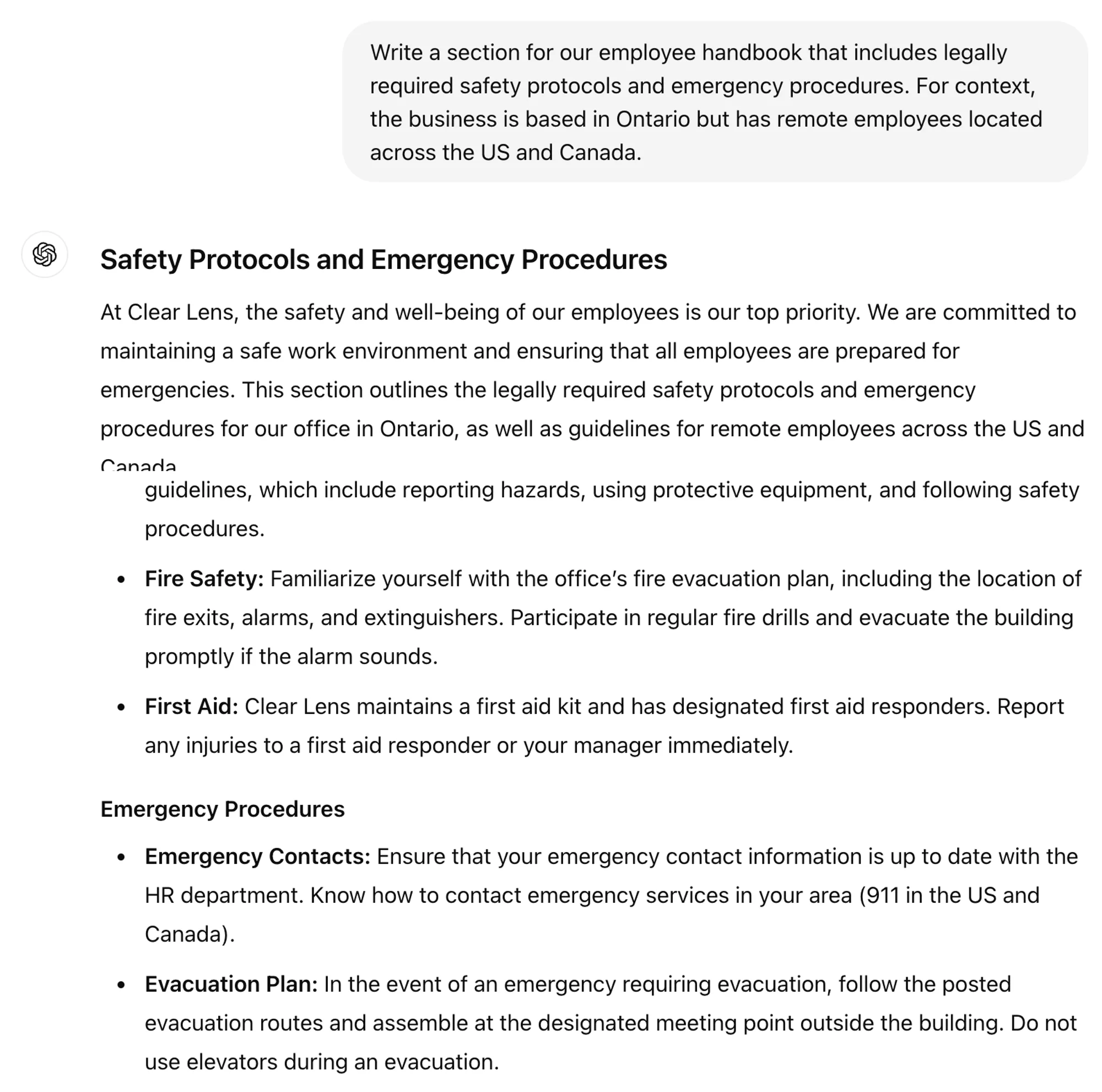
Include legally required language to ensure your handbook complies with safety regulations. Detail safety protocols, emergency procedures, and employee responsibilities for maintaining a safe work environment. This section should align with local, state, and federal regulations to protect both employees and the organization.
Write a section for our employee handbook that includes legally required safety protocols and emergency procedures. For context, the business is based in [incorporation jurisdiction] [add any other details about where your staff is located].
.webp)
Compensation and benefits
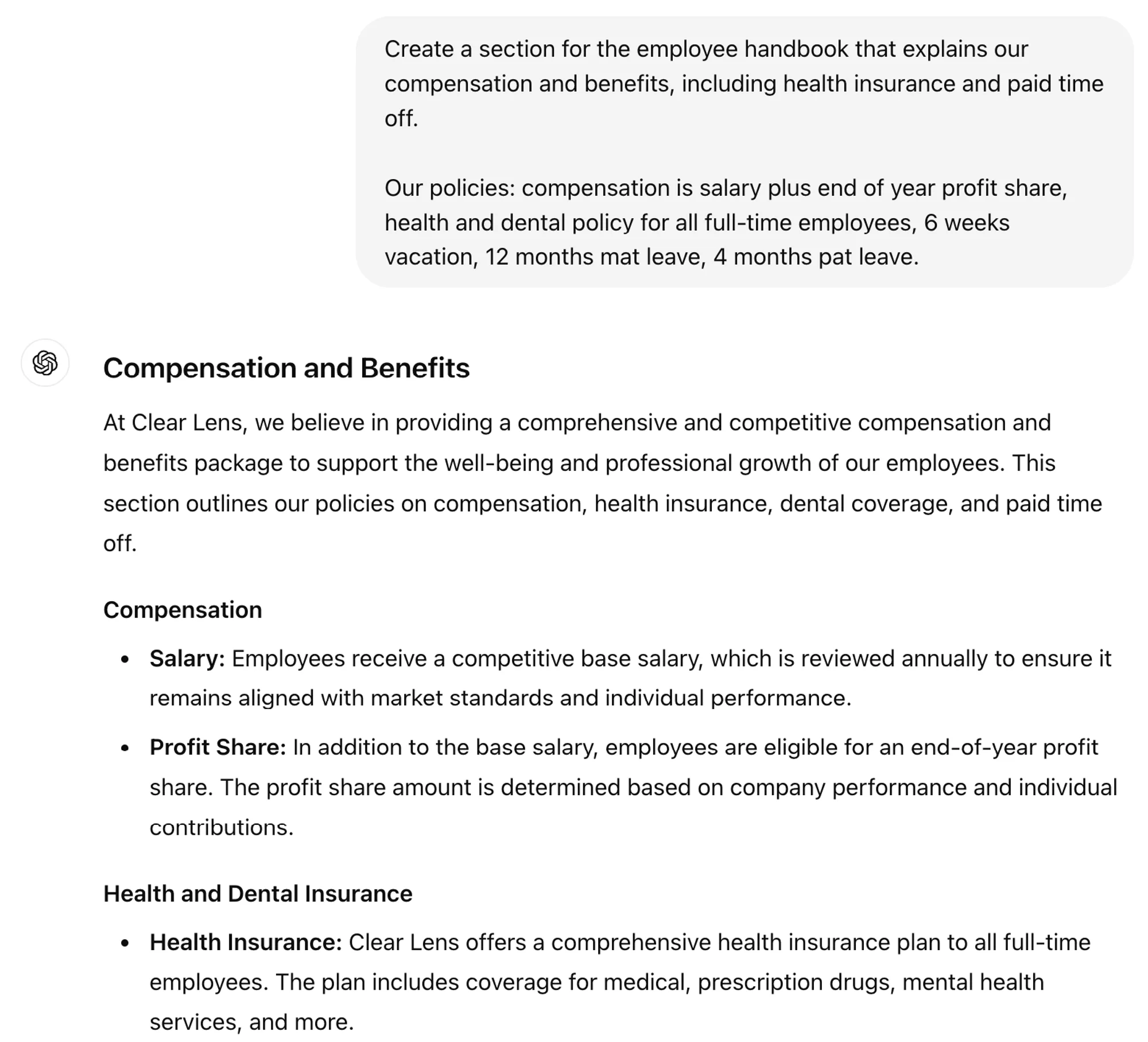
Detail the company’s compensation structure, including salary, bonuses, and raises. Provide an overview of employee benefits such as health insurance, retirement plans, paid time off, and any other perks offered by the company.
Create a section for the employee handbook that explains our compensation and benefits, including health insurance and paid time off.
Our policies: [share your company’s policies]
.webp)
.webp)
Work hours and attendance
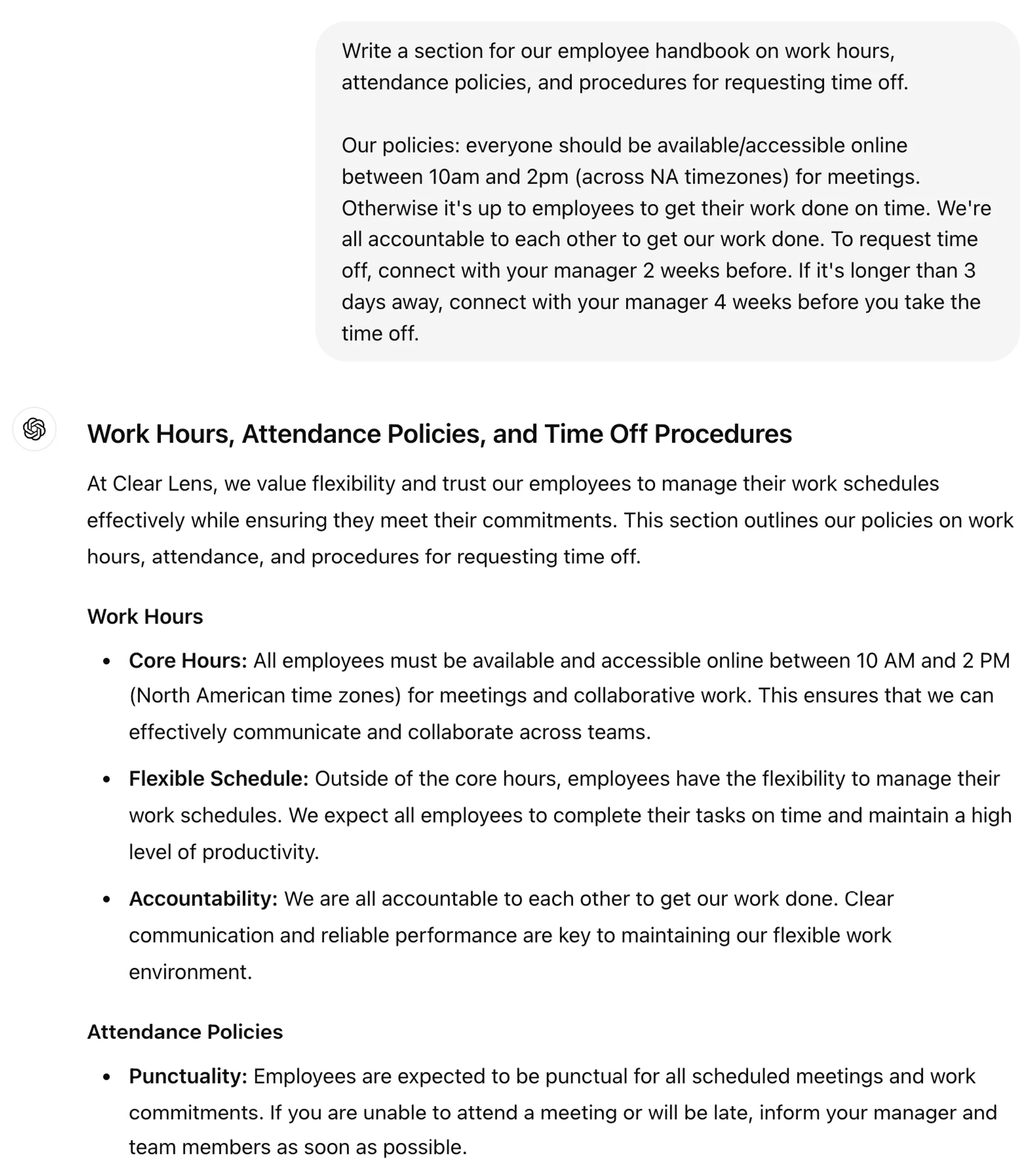
Define the expected work hours, break times, and attendance policies. Include information on flexible work arrangements, remote work policies, and procedures for requesting time off. Clearly outline the company’s policy on punctuality and absenteeism.
Write a section for our employee handbook on work hours, attendance policies, and procedures for requesting time off.
Our policies: [share your company’s policies]
.webp)
Performance evaluations
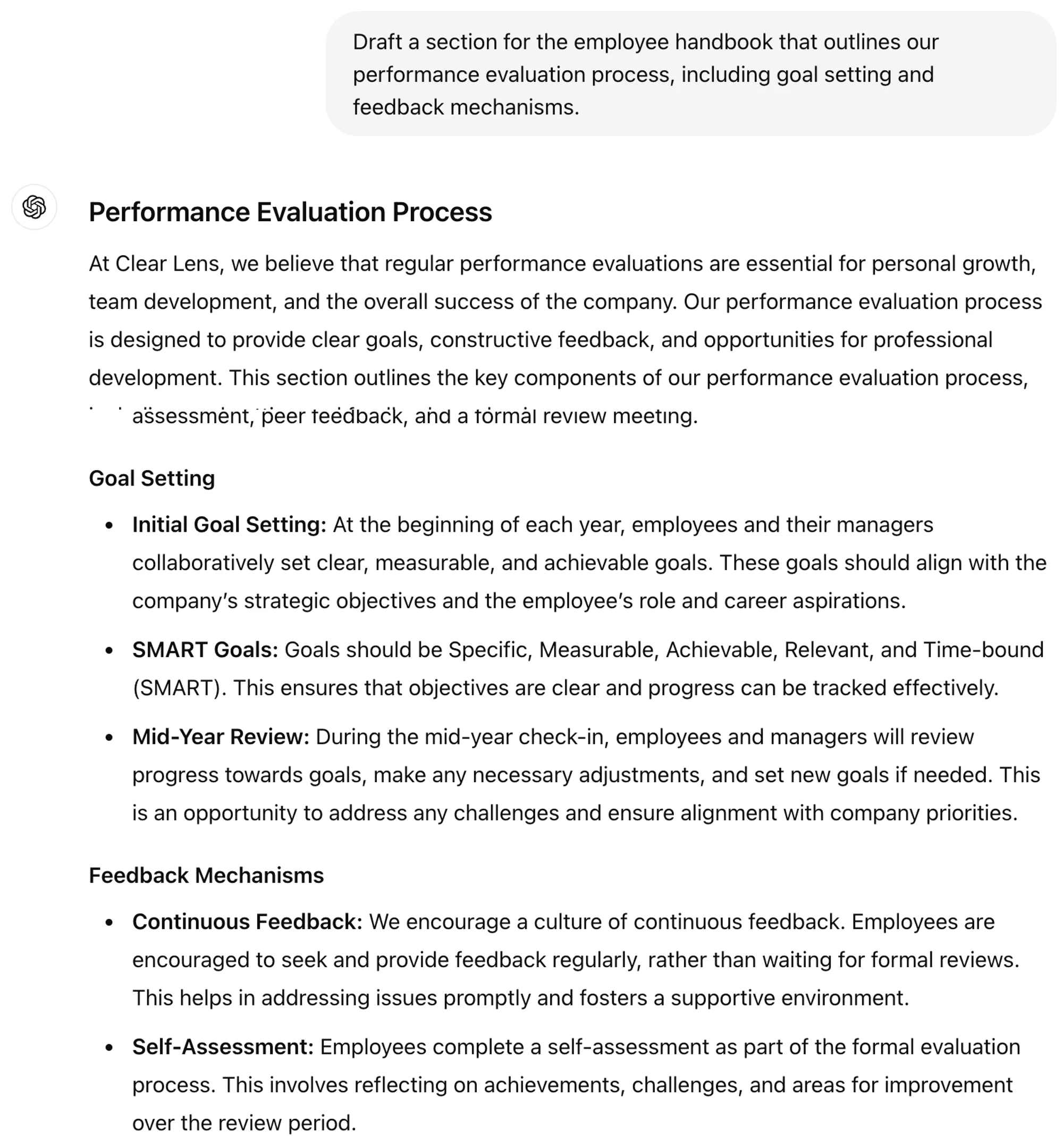
Explain the performance evaluation process, including how often evaluations occur and the criteria used to assess employee performance. Detail the process for setting goals, providing feedback, and addressing performance issues.
Draft a section for the employee handbook that outlines our performance evaluation process, including goal setting and feedback mechanisms.
.webp)
Training and development
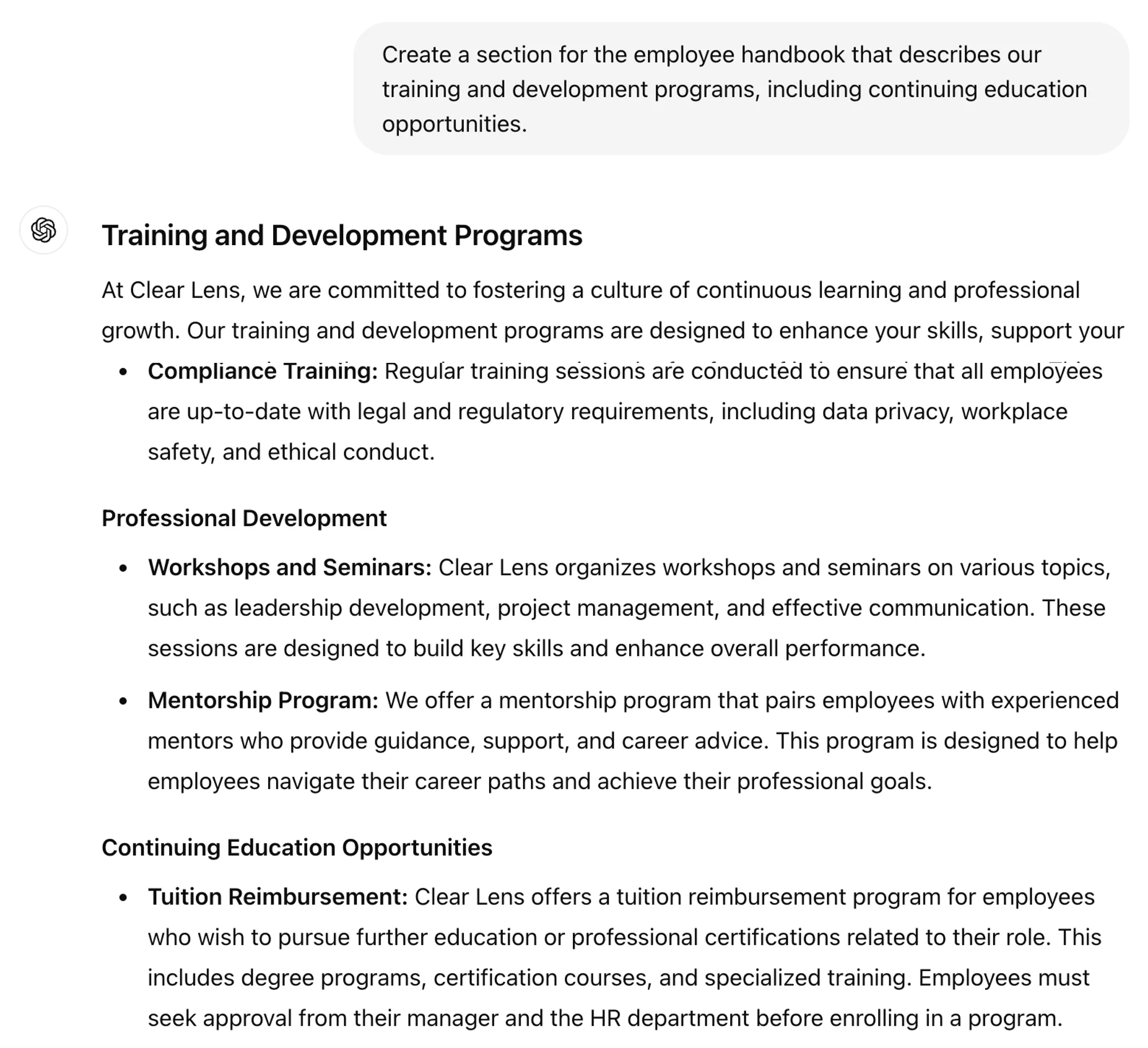
Highlight the company’s commitment to employee development by detailing available training programs, continuing education opportunities, and career development resources. Encourage employees to take advantage of these opportunities to enhance their skills and advance their careers.
Create a section for the employee handbook that describes our training and development programs, including continuing education opportunities.
.webp)
Employee relations and communication
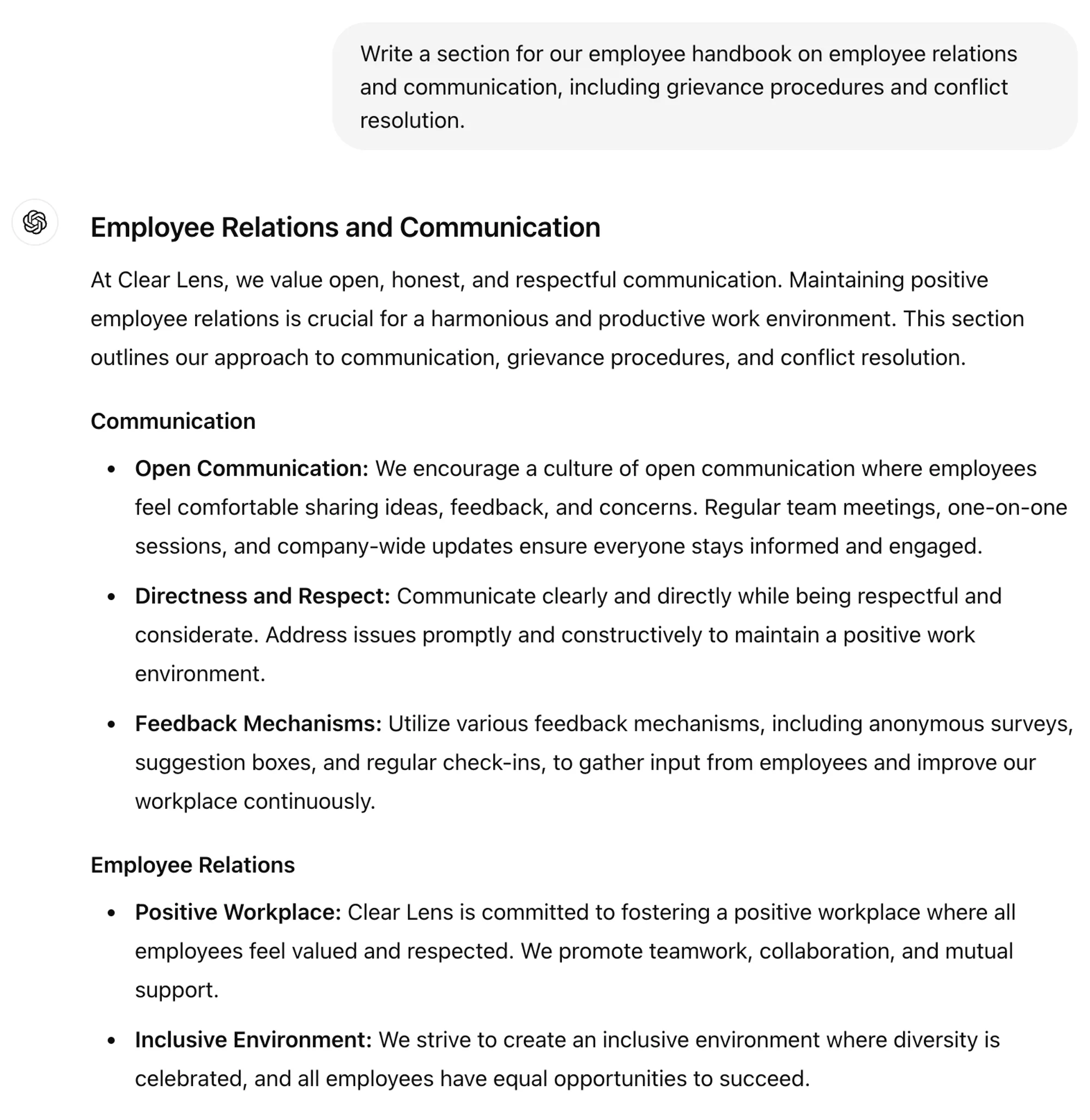
Detail the company’s approach to employee relations and communication. Include policies on open-door communication, grievance procedures, and conflict resolution. Emphasize the importance of transparent communication and provide resources for employees to voice their concerns.
Write a section for our employee handbook on employee relations and communication, including grievance procedures and conflict resolution.
.webp)
Step 4: Create your handbook
Now you can use ChatGPT to quickly put the whole handbook together. Ask for a Word doc (or other formay) the refine and edit it to suit your needs.
Assemble all the information you’ve created for the handbook into one downloadable Word document.

With your employee handbook, you can quickly and effectively scale your onboarding process without having to walk each new hire through it yourself. Instead, you can spend more time getting to know them and less time on administrative details!
This tutorial was created by Jonah.