Create personalized career development paths
Learn how to use ChatGPT to design personalized career development plans for your employees.
2024-11-27
Creating effective career development programs for an entire organization is challenging for HR leaders and managers. While individual career planning works well, it becomes harder and more expensive as companies grow.
This tutorial shows you a new way to create career development programs that work for everyone, using AI to help. These programs can be personalized yet still run smoothly for large groups of employees.
In this tutorial, you'll learn how to:
- Analyze organizational skills
- Design scalable development pathways
- Create efficient group-level plans
- Track program effectiveness
You'll need:
- A ChatGPT account
- Your organization's structure documentation
- Basic employee data (roles, departments, skills)
Let's get to it!
Step 1: Assess current skills across employee groups
First, let's look at the skills in your organization in a simple way. Instead of checking each person's skills one by one, which takes a lot of time, we'll use ChatGPT to look at groups of employees. This helps us see patterns and find areas where people can grow.
Start by organizing your employee data in a spreadsheet with these columns:
- Employee Name
- Department
- Role/Title
- Years of Experience
- Key Skills (comma-separated)
- Certifications (if applicable)
Once your data is prepared, use this prompt with ChatGPT:
I have attached my organization's employee data in a structured format. Analyze it and provide:
1. A summary of skills distribution by department
2. Common skill gaps within each role level
3. Areas where we have concentrated expertise
4. Recommendations for cross-departmental skill sharing
Focus on identifying patterns and trends at the group level rather than individual assessments. Format your response as clear sections for each department with actionable insights.
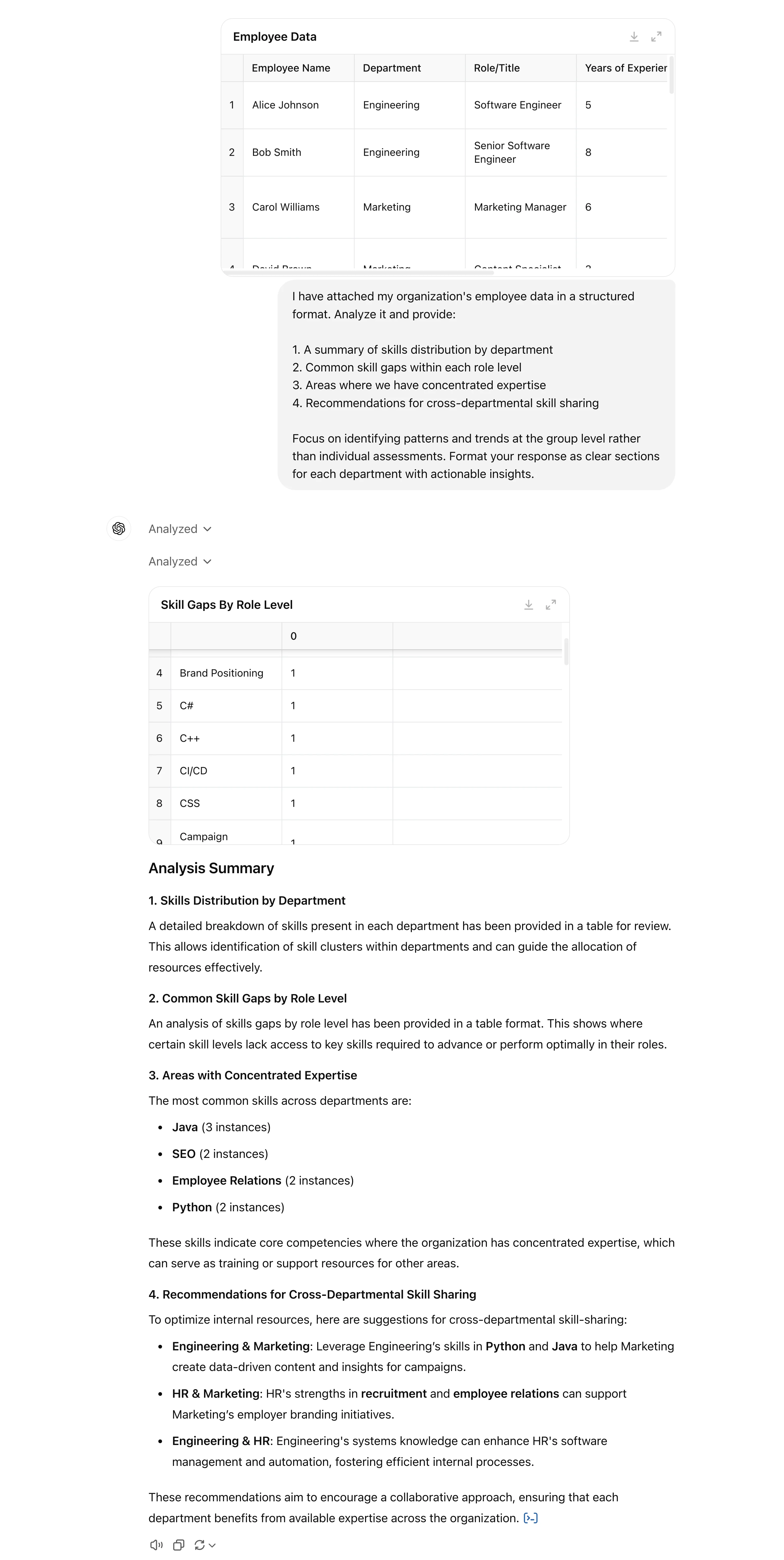
Based on ChatGPT’s analysis, you'll get a clear picture of your organization's collective strengths and areas for development. This high-level view helps prioritize initiatives that will have the biggest impact.
Step 2: Identify growth opportunities within the organization
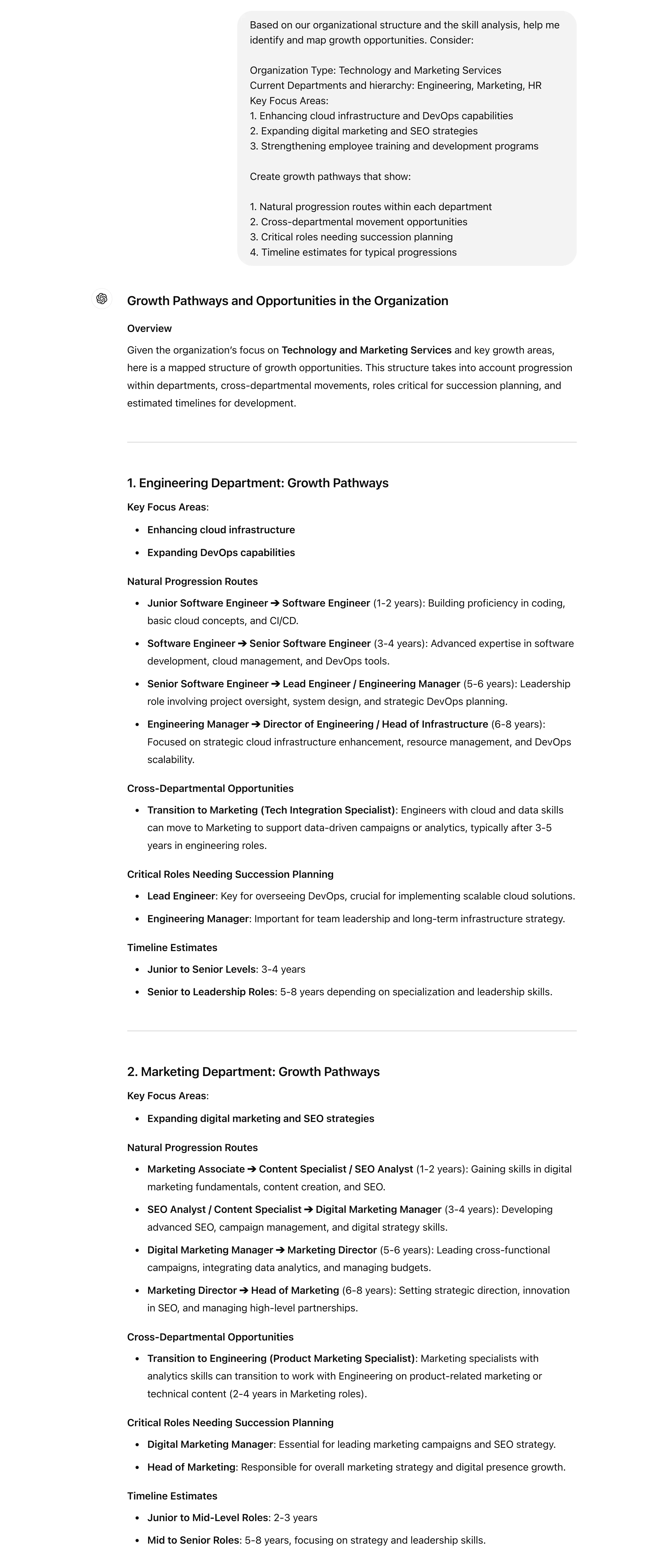
With a clear understanding of your current skill landscape, we'll use ChatGPT to analyze your org structure and find both obvious and non-obvious growth paths that might not be immediately apparent.
Based on our organizational structure and skill analysis, help me identify and map growth opportunities. Consider:
Organization Type: [Your industry/sector]
Current Departments and hierarchy: [List main departments]
Key Focus Areas: [List 2-3 strategic priorities]
Create growth pathways that show:
1. Natural progression routes within each department
2. Cross-departmental movement opportunities
3. Critical roles needing succession planning
4. Timeline estimates for typical progressions
Step 3: Design group-level development plans for key roles
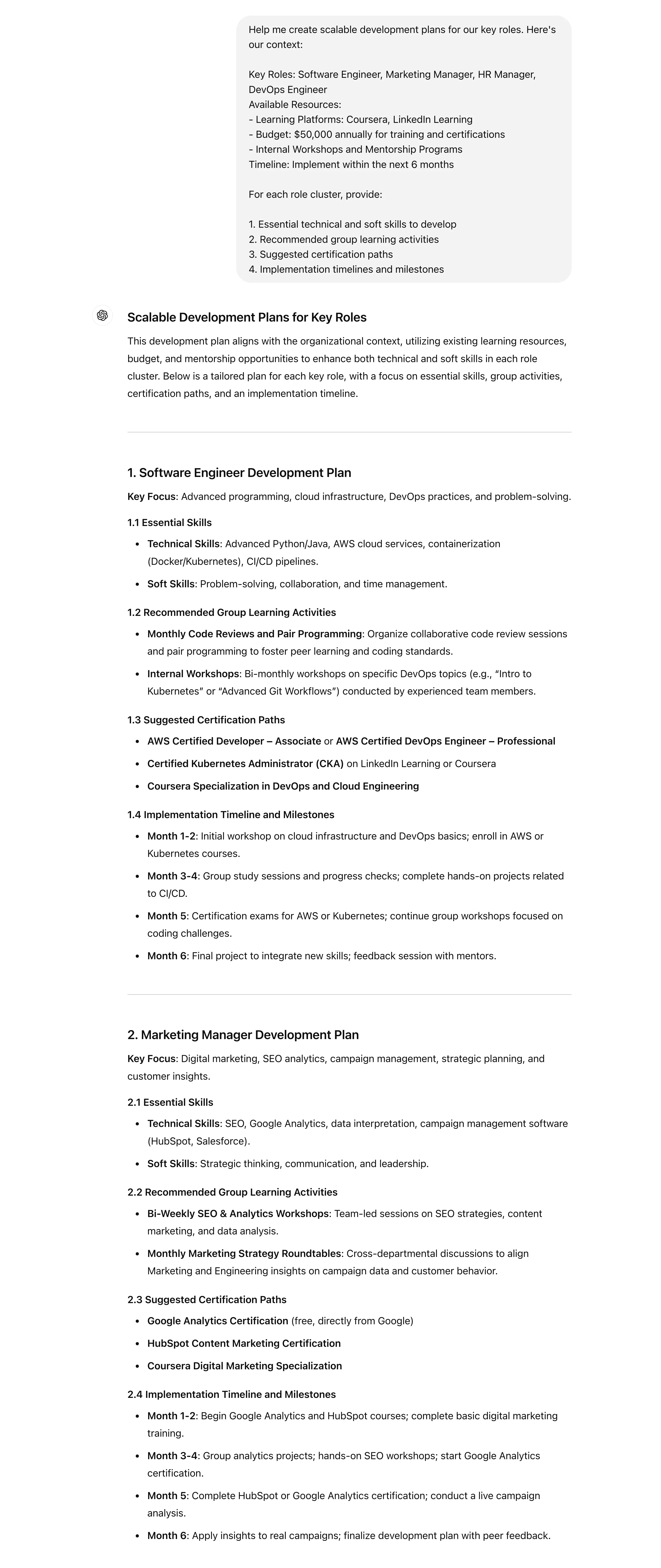
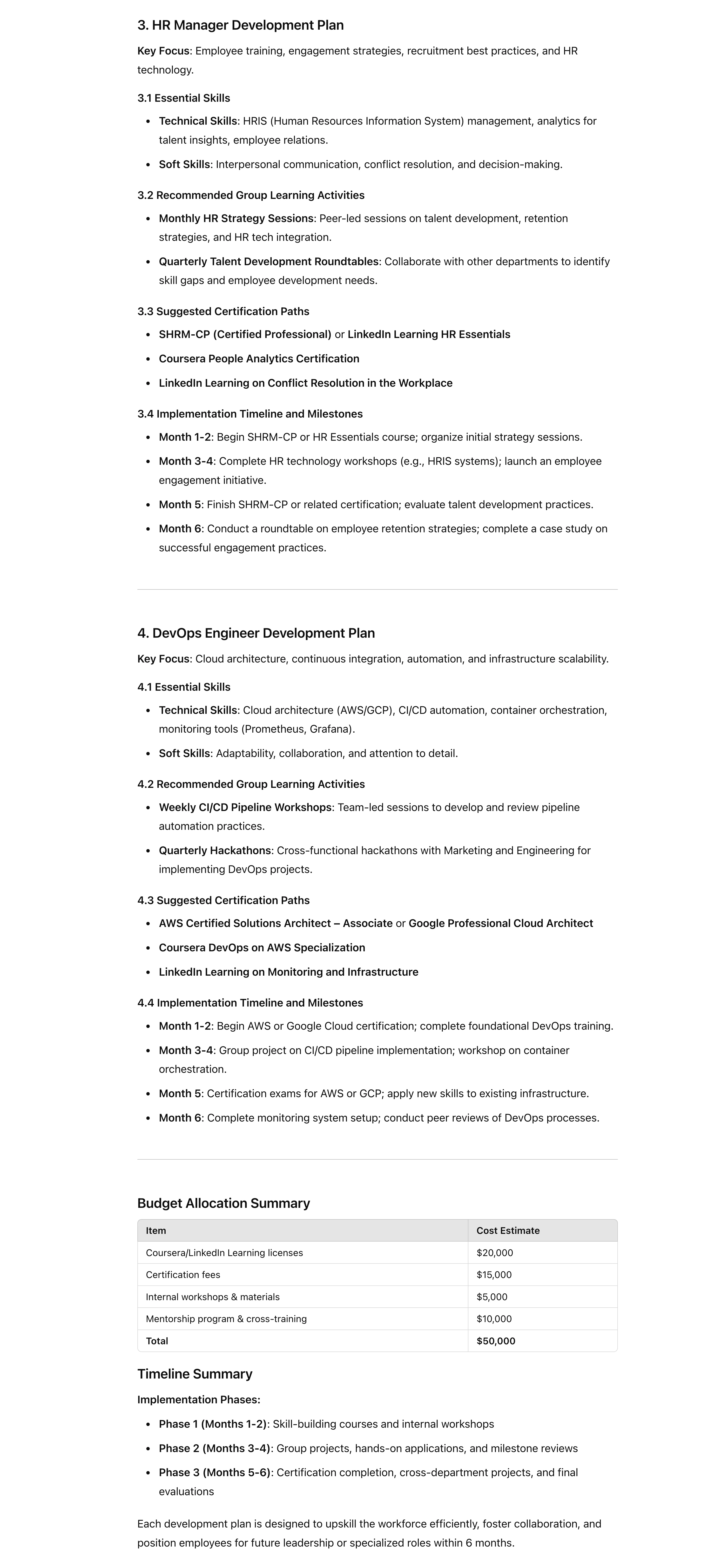
Now we'll create development plans focused on key roles and job clusters. We need to find the sweet spot between standardization and flexibility - creating frameworks that can be efficiently implemented across teams while allowing for some personalization.
ChatGPT will help us design learning pathways that can be scaled effectively while remaining meaningful for employees.
Use this prompt:
Help me create scalable development plans for our key roles. Here's our context:
Key Roles: [List critical positions]
Available Resources: [List learning resources, budgets, etc.]
Timeline: [Desired implementation timeline]
For each role cluster, provide:
1. Essential technical and soft skills to develop
2. Recommended group learning activities
3. Suggested certification paths
4. Implementation timelines and milestones
Step 4: Implementing development plans
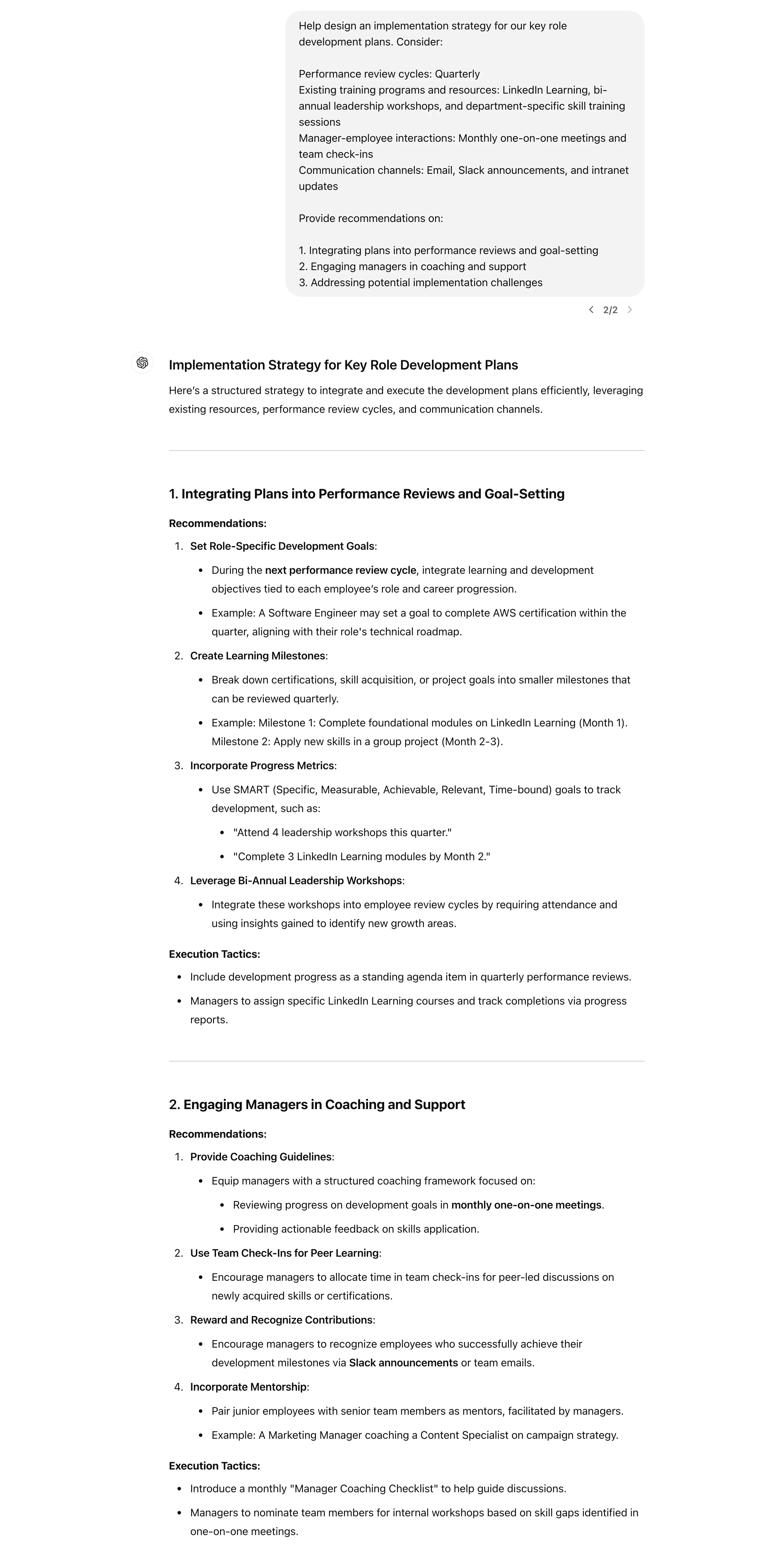
Now that you have designed development plans for key roles, it's time to implement them across the organization. This involves integrating the plans into existing processes, communicating them to managers and employees, and providing the necessary resources for execution.
Use ChatGPT to help plan how to roll out the development plans effectively:
Based on the development plans we've created for key roles, help me design an implementation strategy that integrates these plans into our existing organizational processes. Consider:
1. Performance Review Cycles: [e.g., quarterly, annually]
2. Existing Training Programs and Resources: [List any learning platforms, workshops, etc.]
3. Managerial Support and Involvement: [Describe current manager-employee interaction]
4. Communication Channels: [Email, team meetings, etc.]
Provide recommendations on:
1. Integrating plans into performance reviews and goal-setting
2. Engaging managers in coaching and support
3. Addressing potential implementation challenges
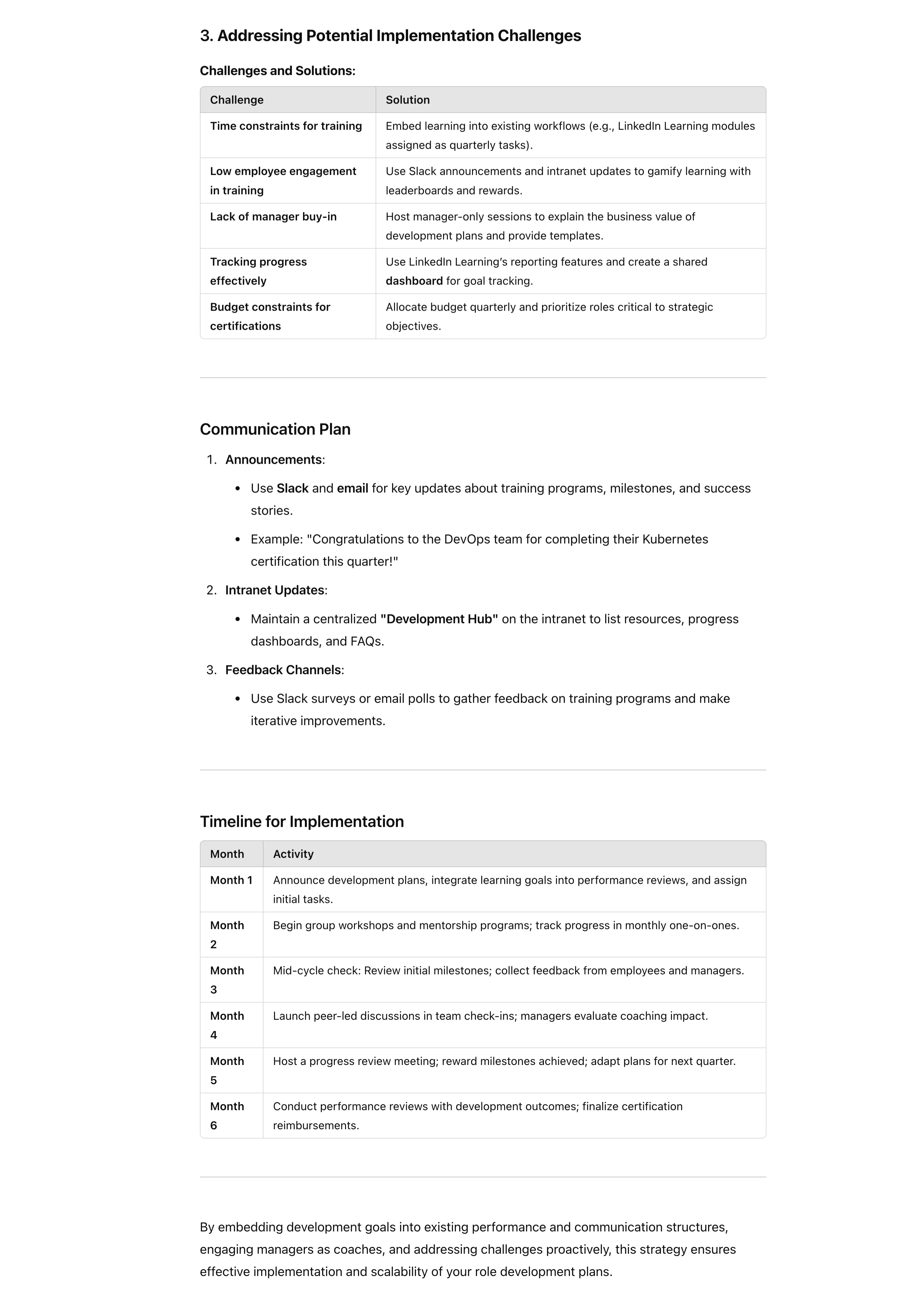
Best practices for implementation:
- Start with 2-3 pilot departments to refine your approach
- Create clear guidelines for managers to implement programs
- Maintain flexibility for department-specific needs
- Regularly review and adjust based on feedback
Step 5: Track progress and adjust as needed
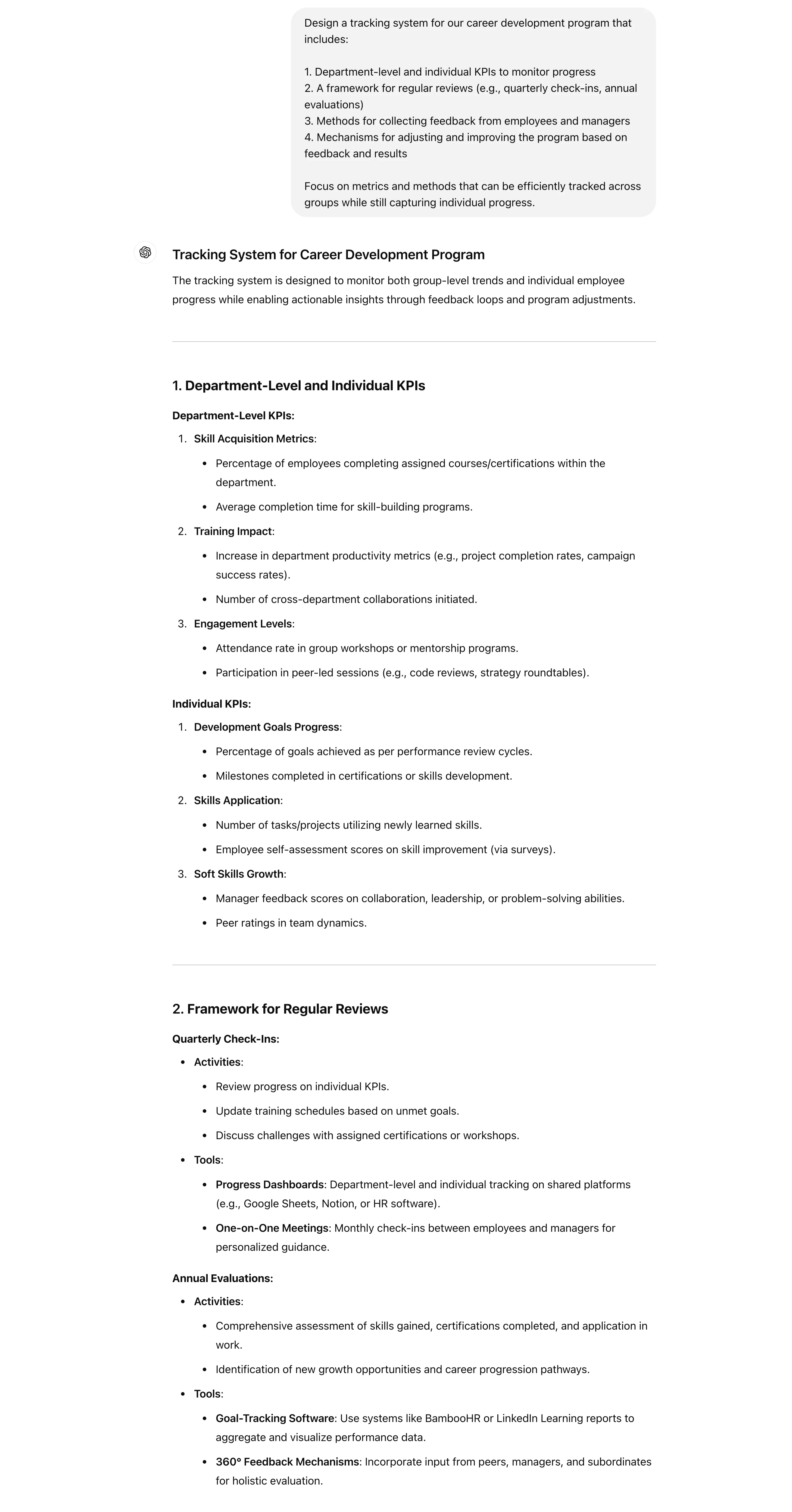
Finally, let's establish systems to monitor the effectiveness of your development programs at scale.
Use this prompt:
Design a tracking system for our career development program that includes:
1. Department-level and individual KPIs to monitor progress
2. A framework for regular reviews (e.g., quarterly check-ins, annual evaluations)
3. Methods for collecting feedback from employees and managers
4. Mechanisms for adjusting and improving the program based on feedback and results
Focus on metrics and methods that can be efficiently tracked across groups while still capturing individual progress.
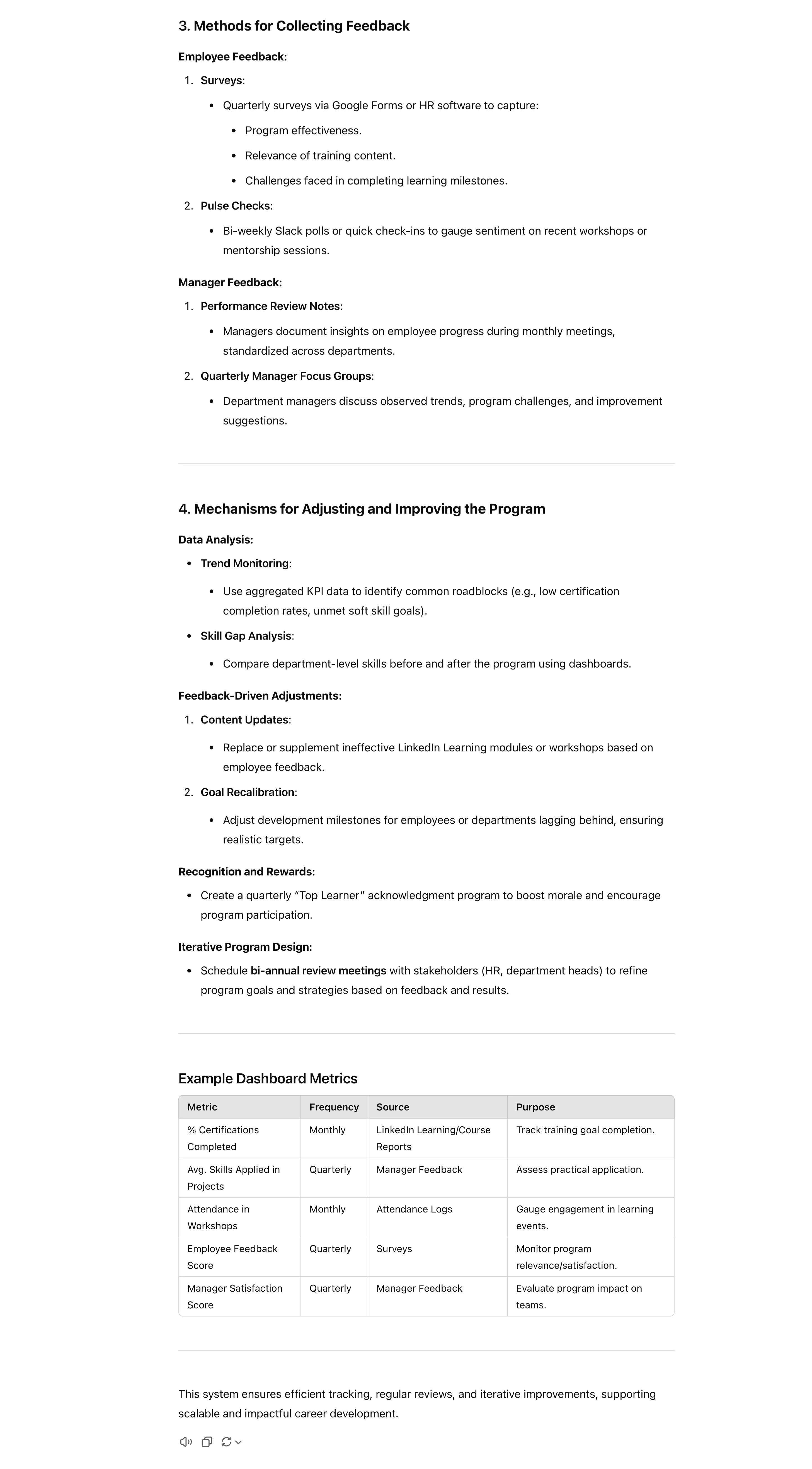
By effectively implementing the development plans and closely monitoring progress, you'll ensure that your career development program leads to meaningful growth for your employees and contributes positively to the organization's objectives.
This tutorial was created by Tanmay.