Design customer loyalty programs
Use Claude AI to create customer loyalty programs based on behavioral data.
2024-12-20
Turning customer data into actionable insights is the key to building a loyalty program that truly resonates with your audience. However, designing a program that truly resonates with your audience requires more than just intuition - it demands a data-driven approach. This tutorial will guide you through leveraging Claude AI and data analytics to craft a loyalty program tailored to your specific customer base.
In this tutorial, you’ll learn how to:
- Prepare and analyze customer data
- Visualize customer engagement patterns
- Design loyalty program structure
- Personalize rewards and incentives
- Implement and measure program effectiveness
Let’s dive in.
Step 1: Prepare and analyze customer data
The foundation of any effective loyalty program is a deep understanding of your customers. This step is crucial because it allows you to uncover insights that will shape every aspect of your program. Start by exporting relevant customer data from your CRM or other data sources. Look for information such as:
- Purchase history
- Engagement metrics (e.g., email open rates, website visits)
- Customer demographics
- Retention data
- Product preferences
Once you have this data compiled in a CSV or Excel file, we're ready to let Claude work its magic. Use this suggested prompt:
Analyze the attached customer data CSV file. Provide a summary of key metrics including:
• Average customer lifetime value
• Purchase frequency
• Most popular products/services
• Customer segmentation based on behavior
• Churn rate
Also, identify any notable trends or patterns in customer behavior.
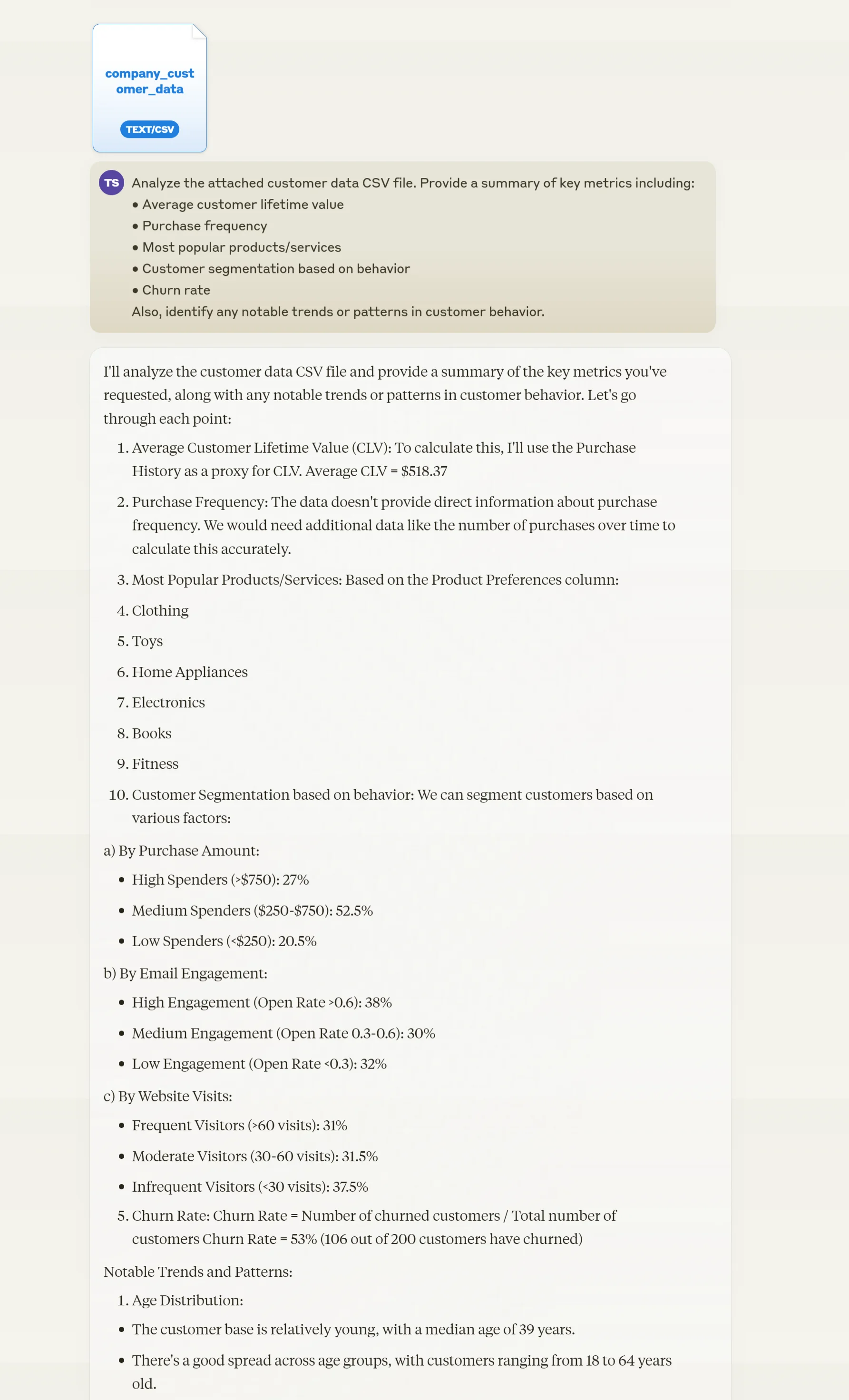
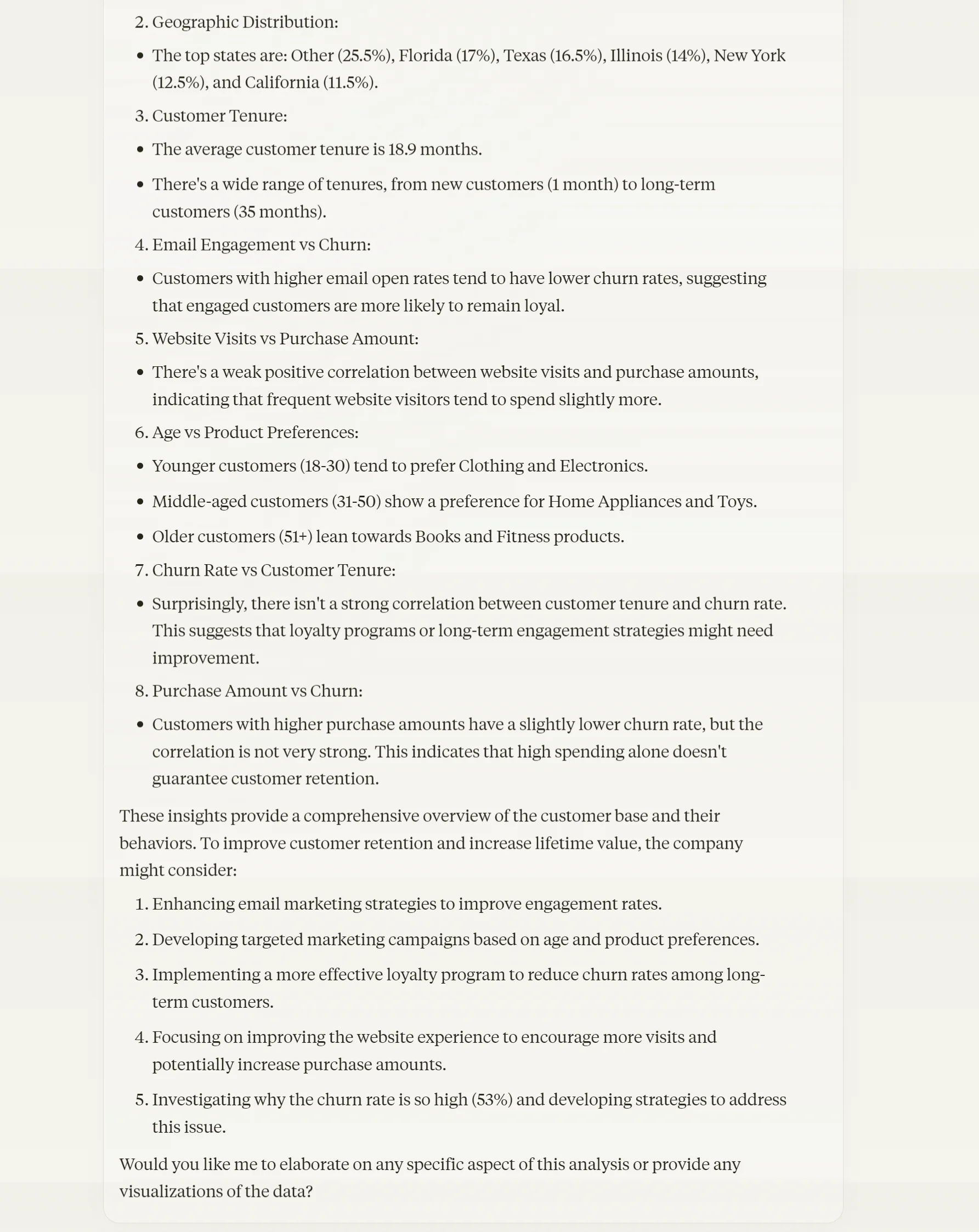
These insights will be invaluable as we move forward in designing your loyalty program. They'll help ensure that every aspect of your program is grounded in data and tailored to your specific customer base.
Step 2: Visualize customer engagement patterns
Now that we have a solid understanding of our customer data, it's time to bring these insights to life through visualization. Visual representations of data can reveal patterns and trends that might not be immediately obvious from numbers alone. They're also incredibly useful for communicating insights to team members who might not be as comfortable with raw data.
Here's the prompt we'll use to generate these visualizations:
Based on the customer data analysis, create the following visualizations:
• A line graph showing customer retention over time
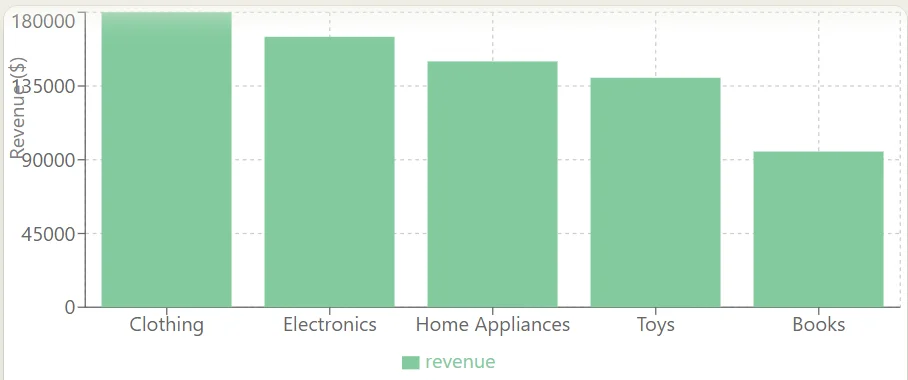
• A bar chart of top 5 products/services by revenue
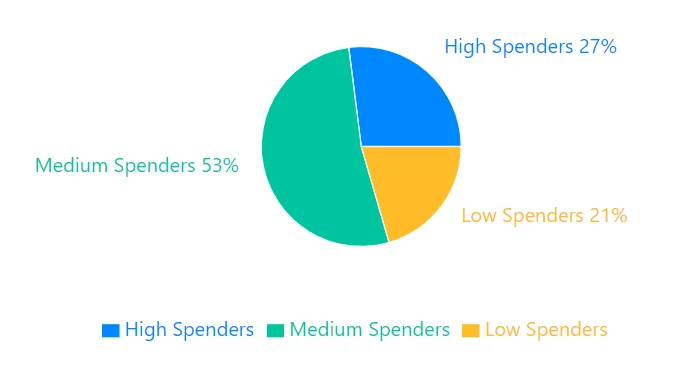
• A pie chart illustrating customer segments
• A heat map of purchase frequency by customer segment and product category
Describe any insights gained from these visualizations that could inform our loyalty program design.
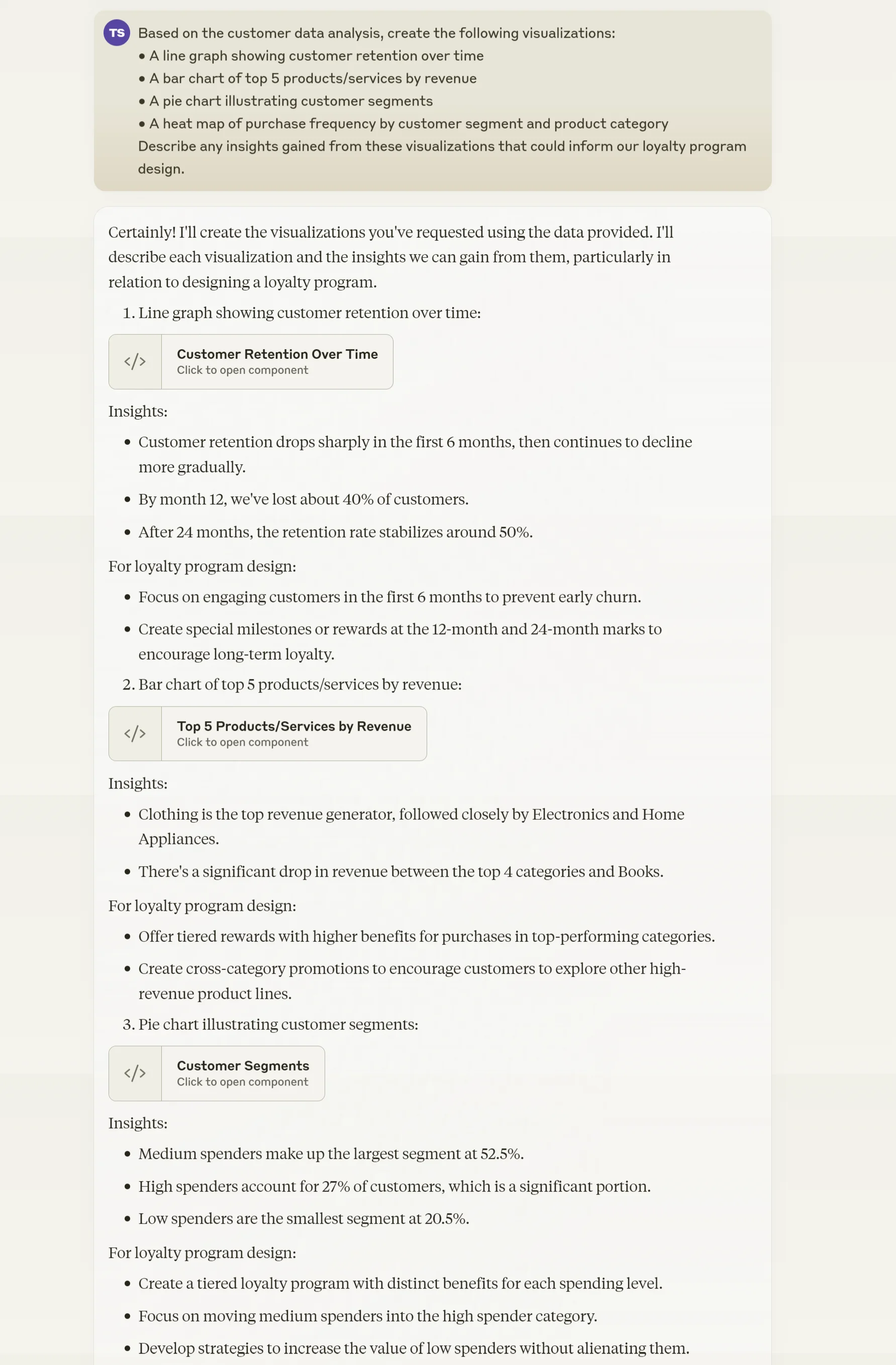
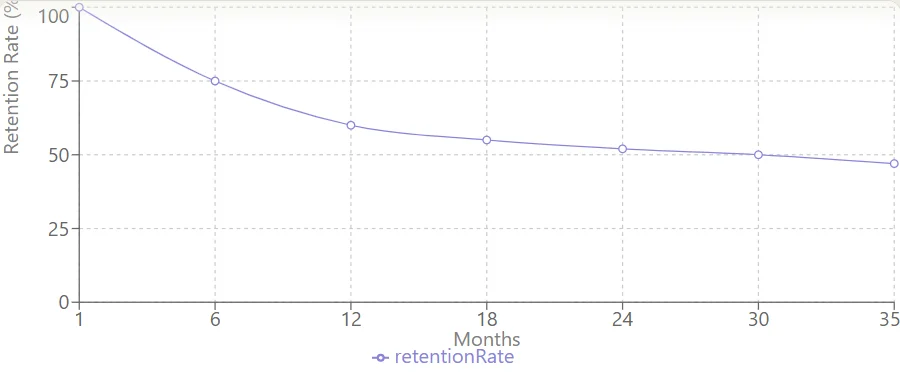
Step 3: Design loyalty program structure
Now that we have a deep understanding of our customer base, backed by both data analysis and visual insights, we're ready to start designing the structure of your loyalty program. This is where we'll take all those insights and transform them into a concrete plan that will engage your customers and drive loyalty.
Use this prompt:
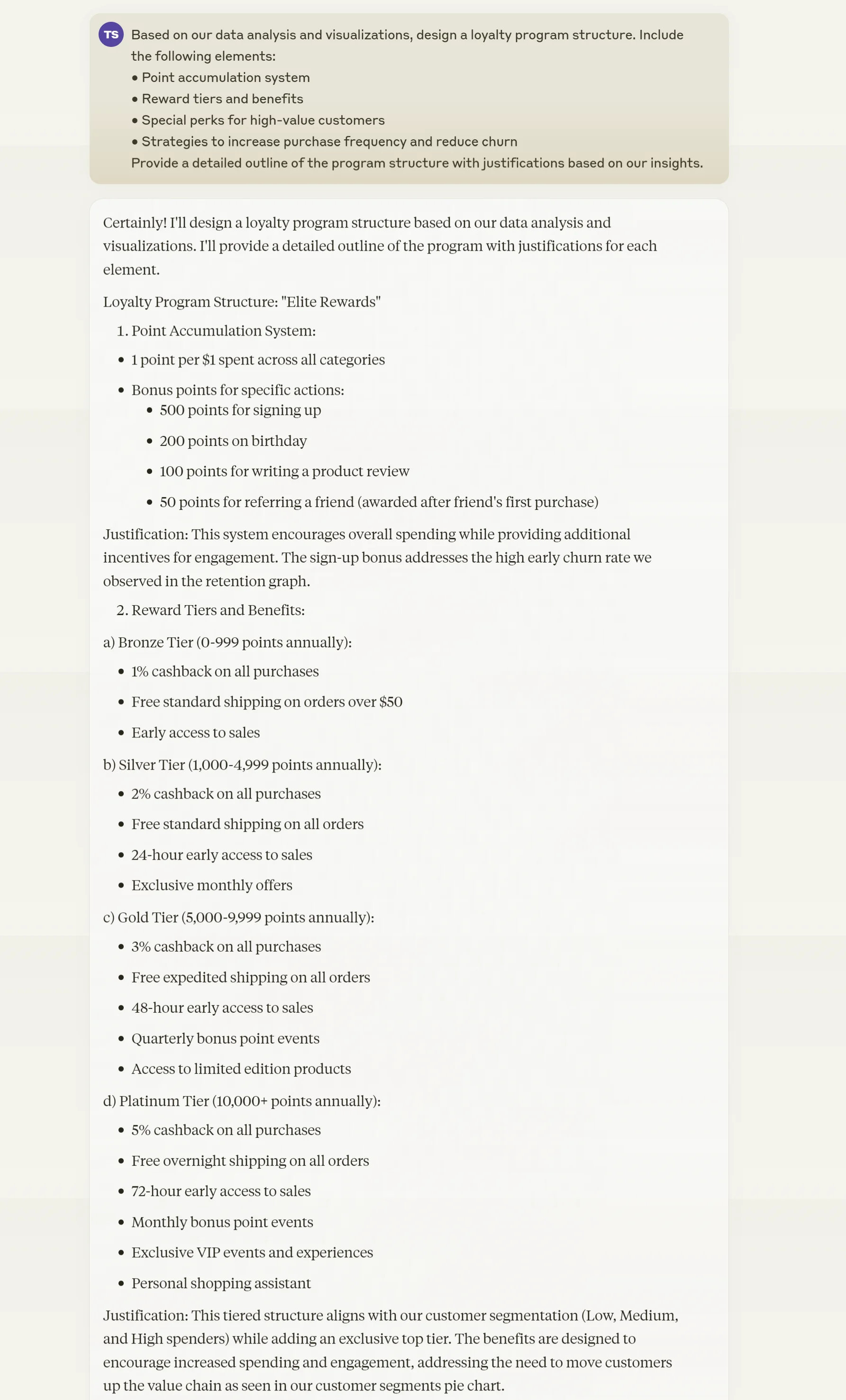
Based on our data analysis and visualizations, design a loyalty program structure. Include the following elements:
• Point accumulation system
• Reward tiers and benefits
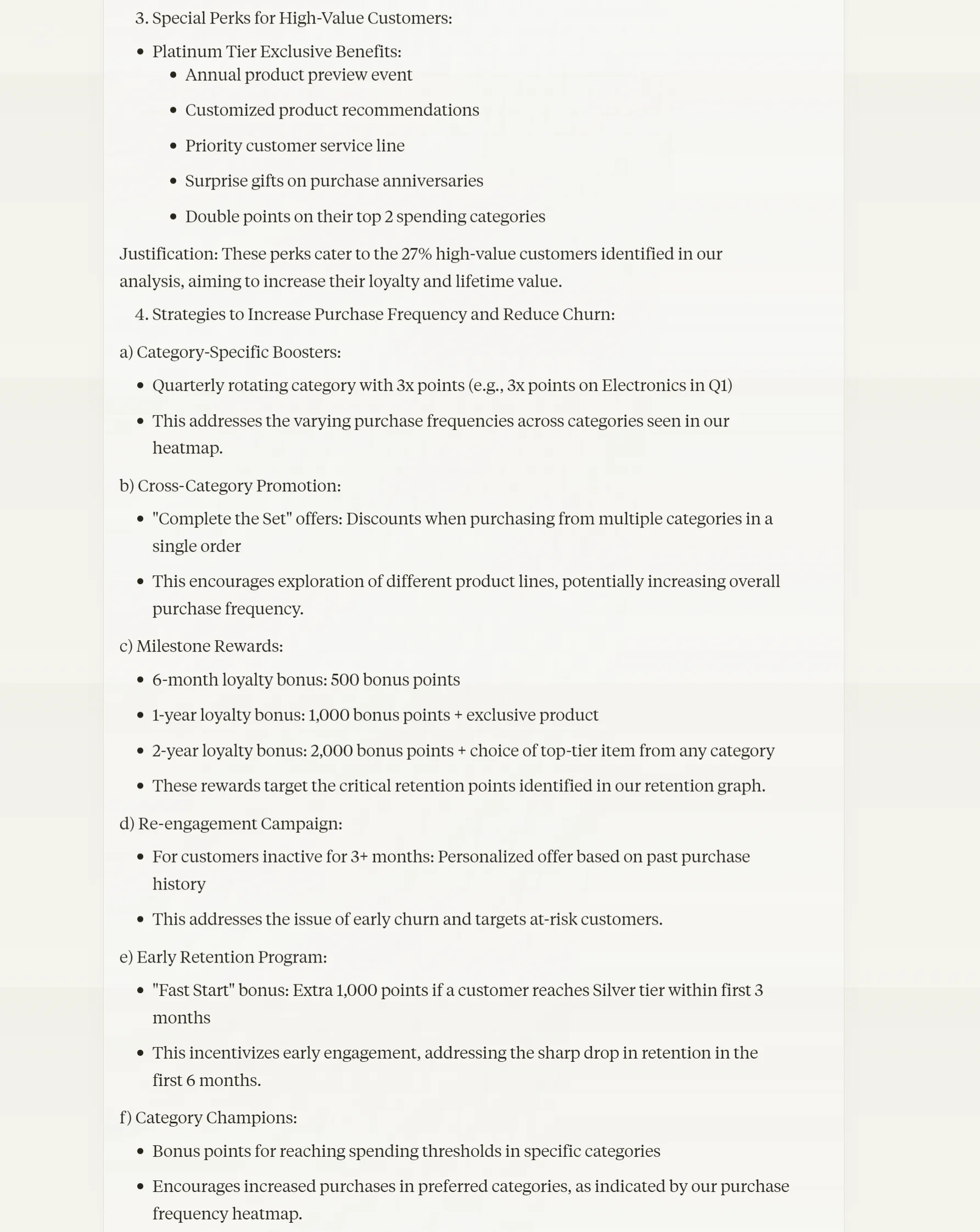
• Special perks for high-value customers
• Strategies to increase purchase frequency and reduce churn
Provide a detailed outline of the program structure with justifications based on our insights.
Remember, while Claude's suggestions will be based on your data, you know your business best. The goal is to create a loyalty program that not only engages your customers but is also feasible for your team to implement and manage.
Step 4: Personalize rewards and incentives
With our basic loyalty program structure in place, it's time to add a layer of personalization. In today's market, customers expect experiences tailored to their preferences, and your loyalty program is no exception. To create personalized strategies, we'll draw on the customer segmentation we identified in our earlier analysis.
Here's what we'll ask Claude to do:
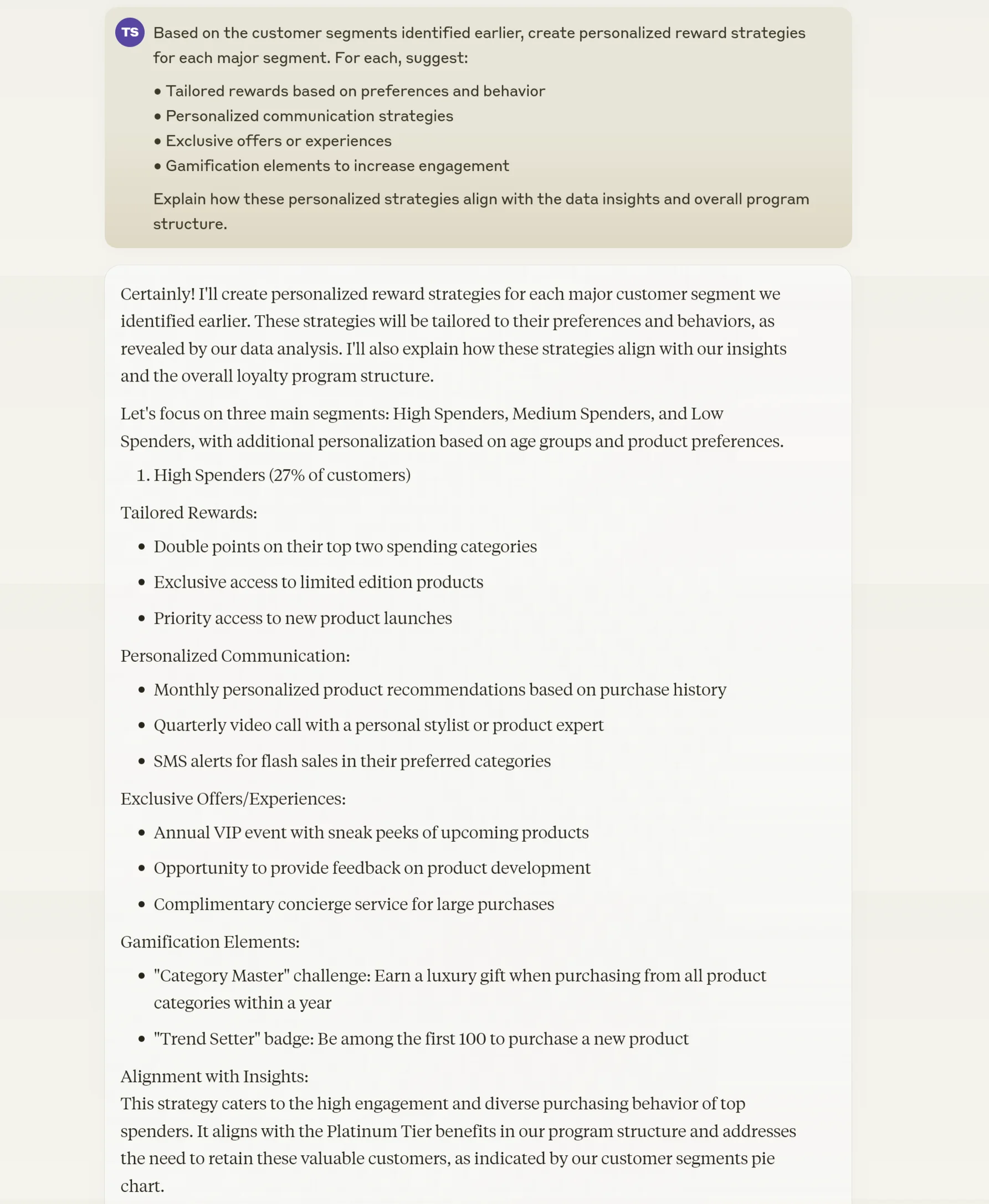
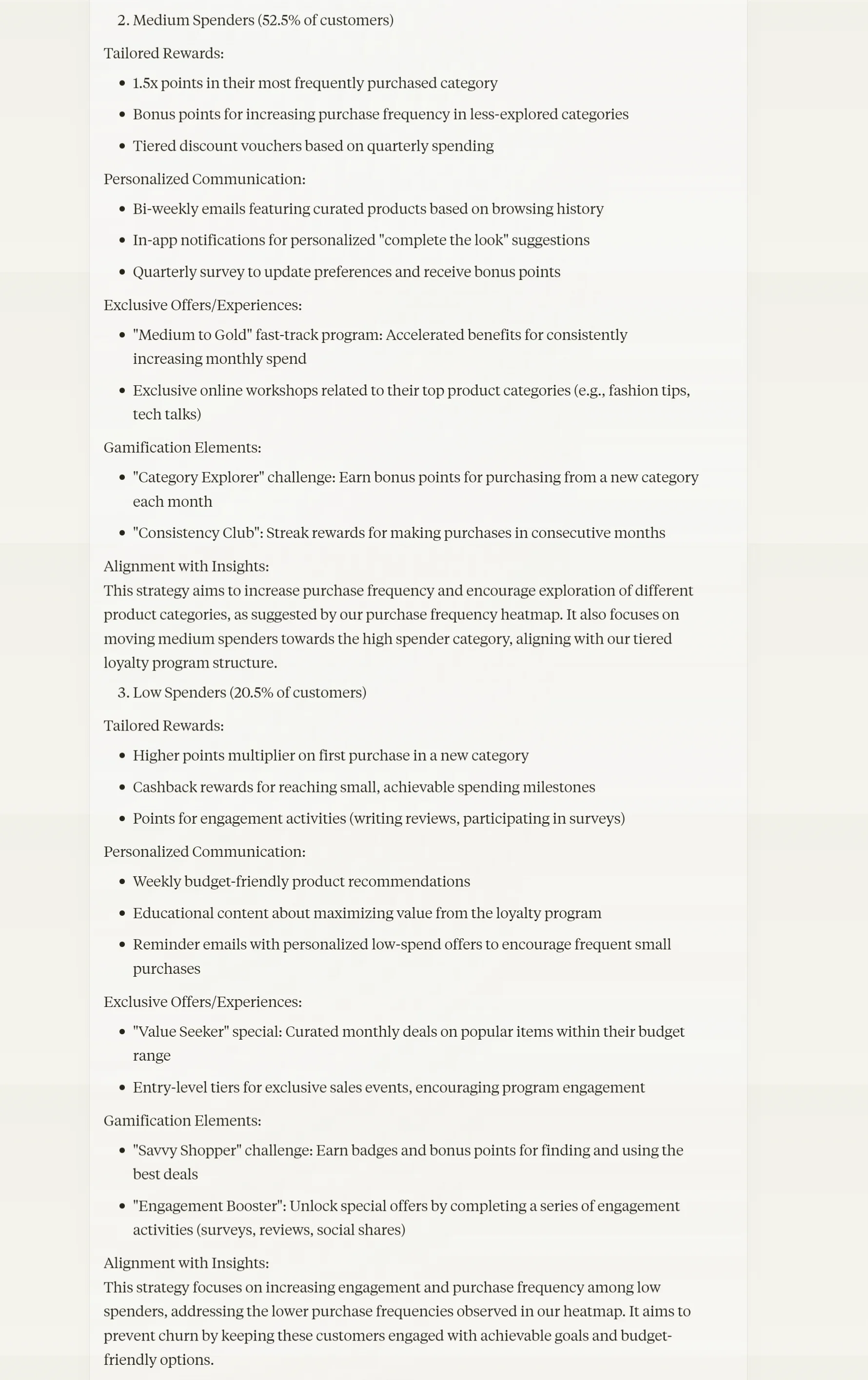
Based on the customer segments identified earlier, create personalized reward strategies for each major segment. For each, suggest:
• Tailored rewards based on preferences and behavior
• Personalized communication strategies
• Exclusive offers or experiences
• Gamification elements to increase engagement
Explain how these personalized strategies align with the data insights and overall program structure.
Also, consider how these personalized elements will be implemented from a technical standpoint. Will your current CRM or marketing automation tools support this level of personalization? If not, you might need to factor in additional resources or technology upgrades as part of your implementation plan.
Step 5: Implement and measure program effectiveness
We've designed a data-driven, personalized loyalty program. Now it's time to plan how we'll bring it to life and ensure its ongoing success. This final step is crucial because even the best-designed program won't succeed without proper implementation and continuous optimization.
Here's what we'll ask Claude to do:
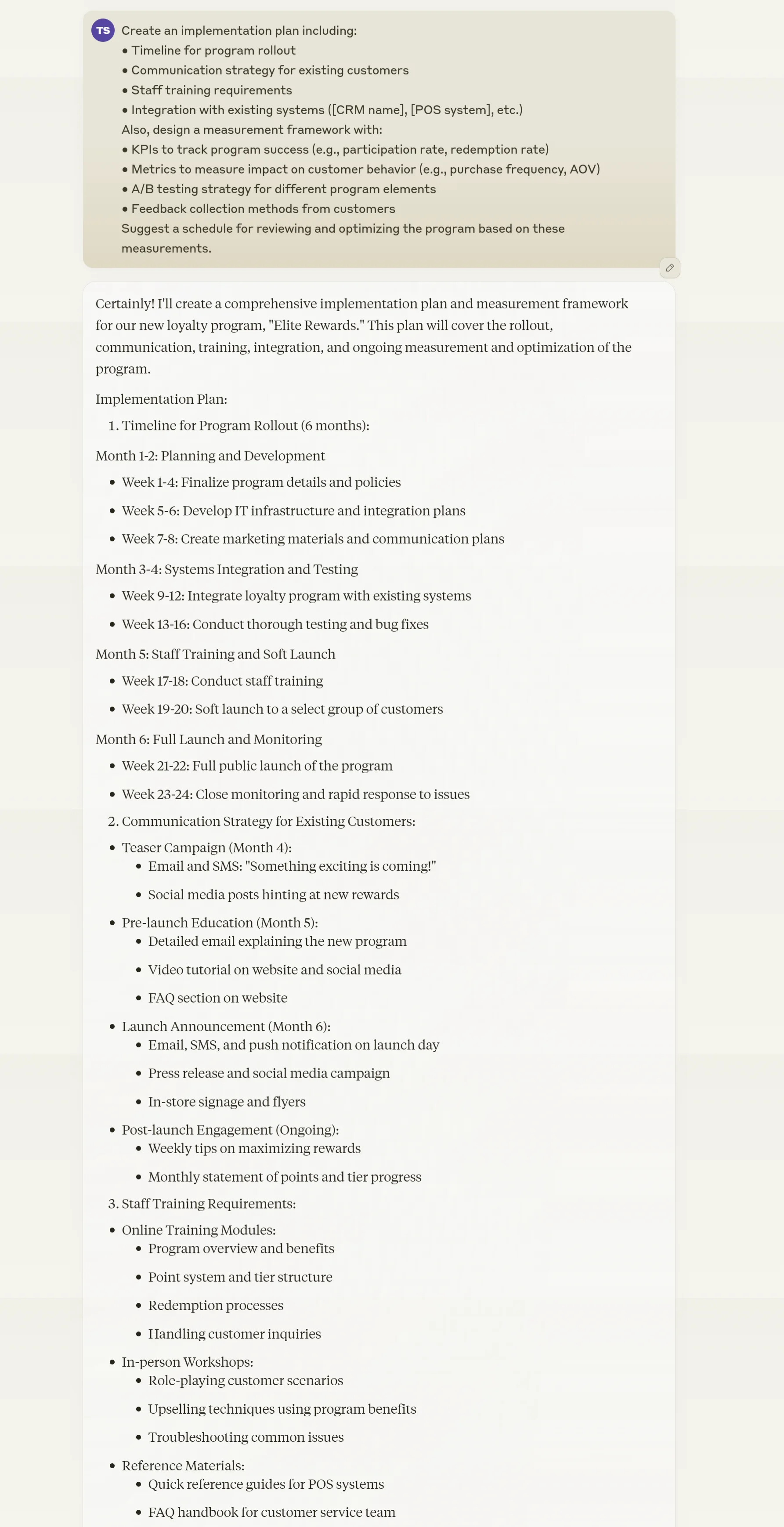
Create an implementation plan including:
• Timeline for program rollout
• Communication strategy for existing customers
• Staff training requirements
• Integration with existing systems ([CRM name], [POS system], etc.)
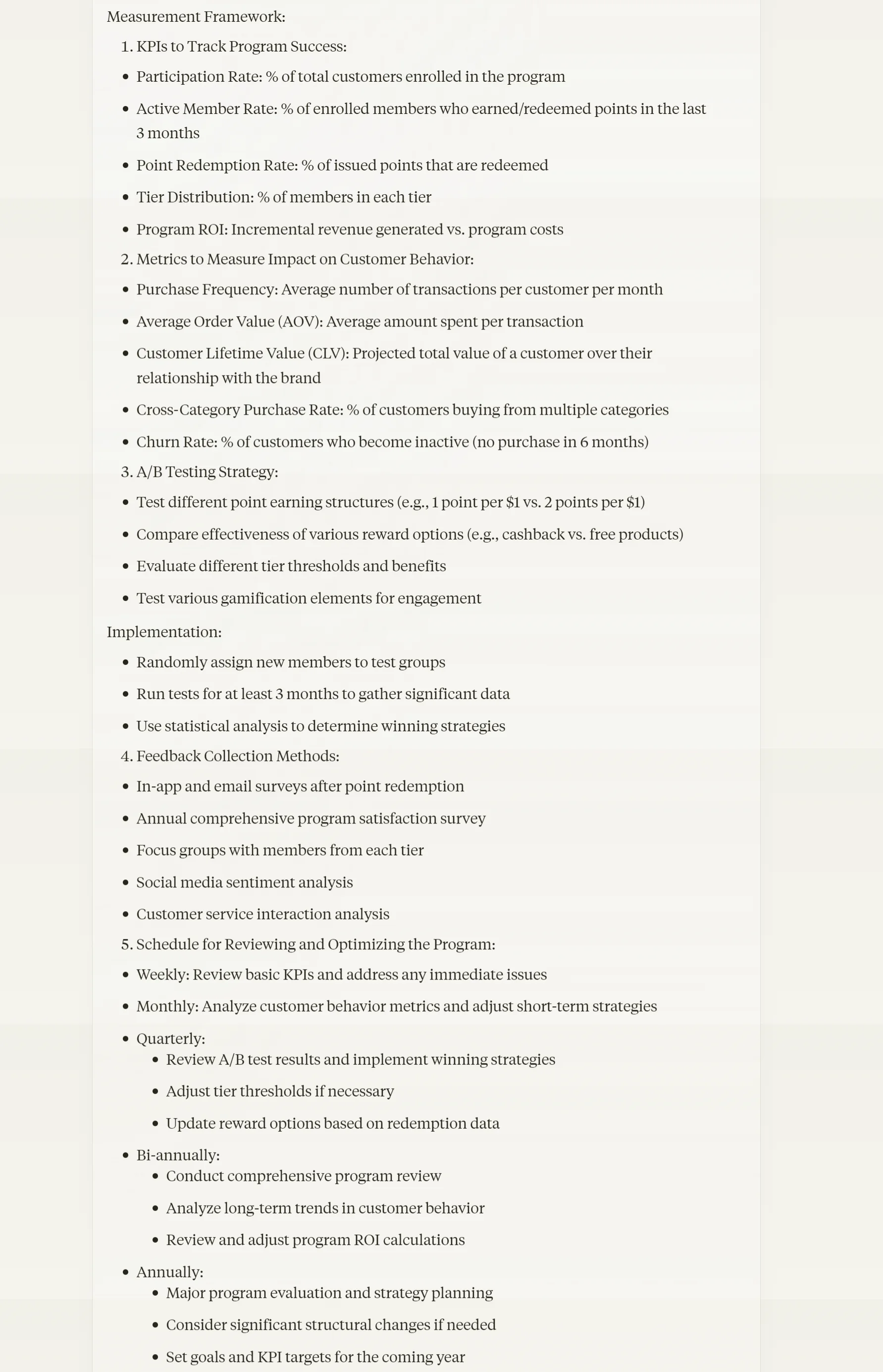
Also, design a measurement framework with:
• KPIs to track program success (e.g., participation rate, redemption rate)
• Metrics to measure impact on customer behavior (e.g., purchase frequency, AOV)
• A/B testing strategy for different program elements
• Feedback collection methods from customers
Suggest a schedule for reviewing and optimizing the program based on these measurements.
Launching your loyalty program is just the beginning. The most successful programs are those that evolve based on ongoing data analysis and customer feedback. Use the review schedule suggested by Claude to regularly assess your program's performance and make data-driven improvements.
Keep analyzing your data, and listening to your customers, and don't be afraid to make changes as needed. Your loyalty program should grow and evolve right alongside your business.
Best of luck with your new loyalty program!
This tutorial was created by Tanmay.