Develop business continuity plans
Prepare for various crisis scenarios by creating detailed continuity plans with Claude AI.
2024-11-13
Business continuity planning is essential for safeguarding your organization against unexpected disruptions. Yet, developing a comprehensive plan can be daunting and time-consuming. This tutorial showcases a novel approach: using Claude AI to assist in developing a comprehensive business continuity strategy.
In this tutorial, you'll learn how to:
- Define clear business continuity objectives
- Identify critical assets and vulnerabilities
- Assess potential risks and their impacts
- Develop targeted response and recovery strategies
- Create a comprehensive business continuity plan document
Let’s dive in.
Step 1: Define your business continuity objectives
A solid foundation is crucial for any effective plan. This initial step focuses on pinpointing what your business continuity efforts aim to achieve. Clearly defining objectives and scope sets the stage for a focused and impactful strategy, helping identify key functions, departments, and stakeholders crucial to your continuity efforts.
Prompt Claude with:
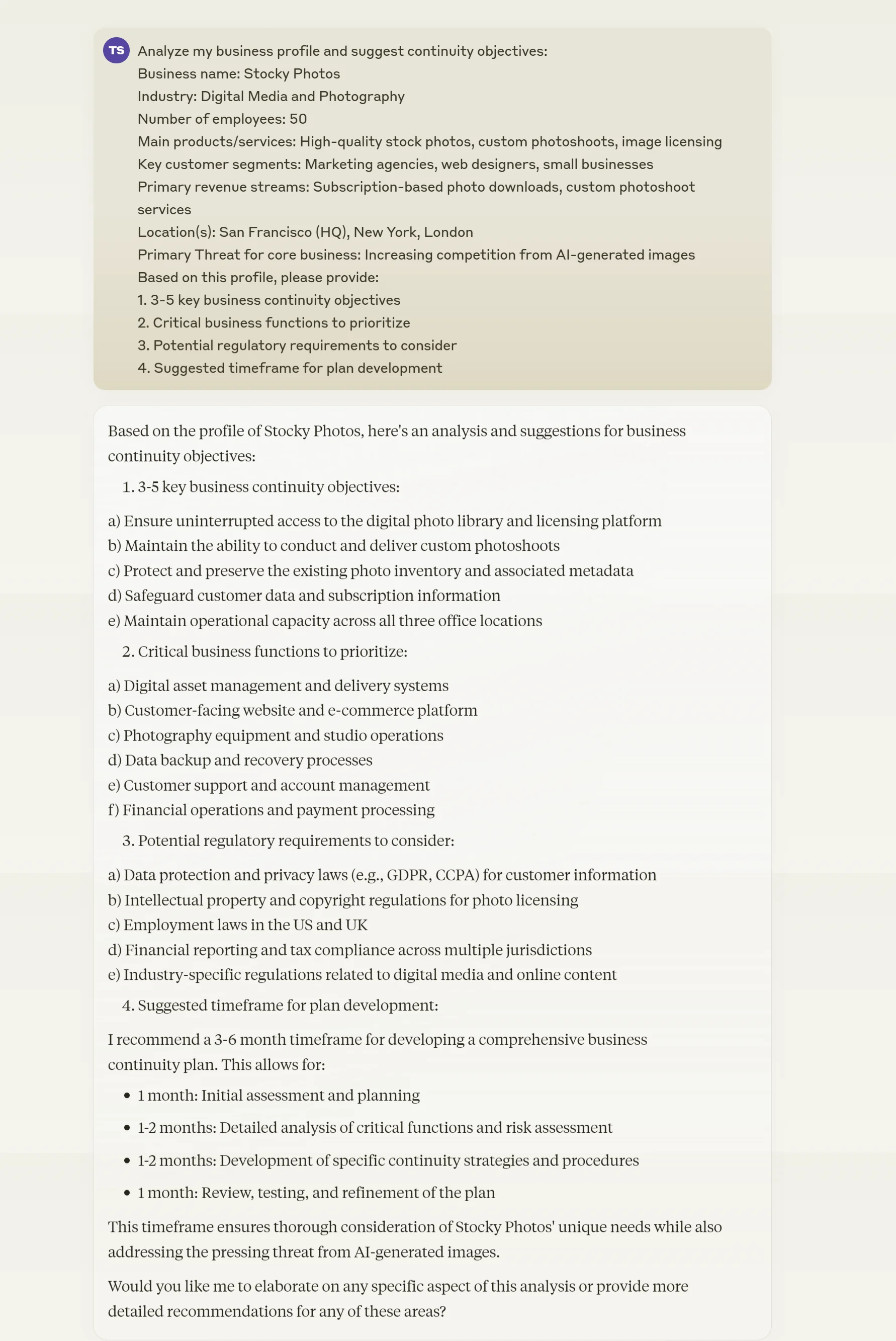
Analyze my business profile and suggest continuity objectives:
Business name: [Business Name]
Industry: [Industry]
Number of employees: [Employee Count]
Main products/services: [Product/Service List]
Key customer segments: [Customer Segments]
Primary revenue streams: [Revenue Streams]
Location(s): [Business Location(s)]
Primary Threat for core business: [Threat for business]
Based on this profile, please provide:
1. 3-5 key business continuity objectives
2. Critical business functions to prioritize
3. Potential regulatory requirements to consider
4. Suggested timeframe for plan development
Step 2: Identify critical assets and vulnerabilities
Now that we have a clear view of your business and objectives, let's identify the assets crucial to your operations and any potential vulnerabilities. This step will help us focus our continuity efforts where they matter most.
Use this prompt:
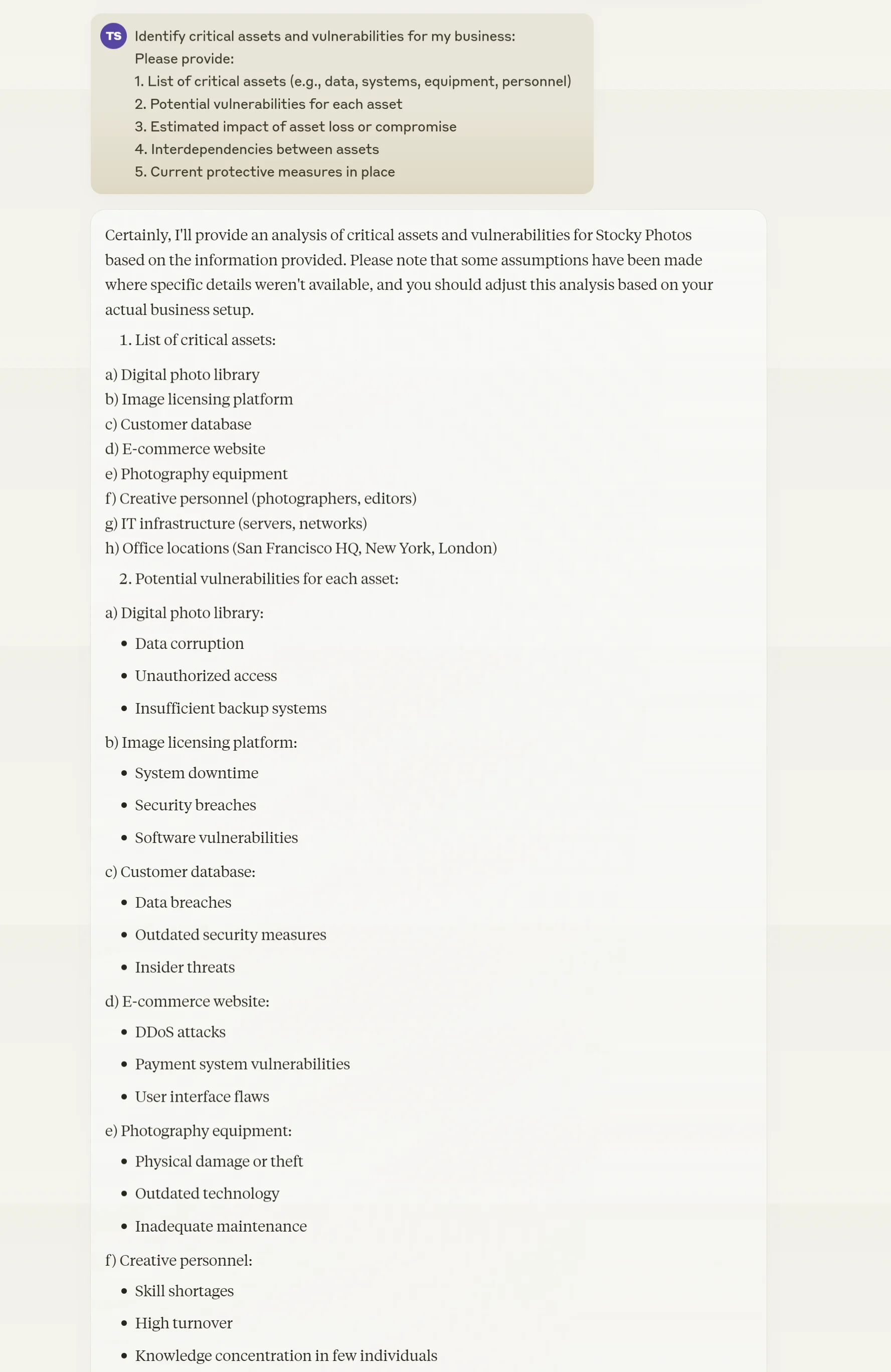
Identify critical assets and vulnerabilities for my business:
Please provide:
1. List of critical assets (e.g., data, systems, equipment, personnel)
2. Potential vulnerabilities for each asset
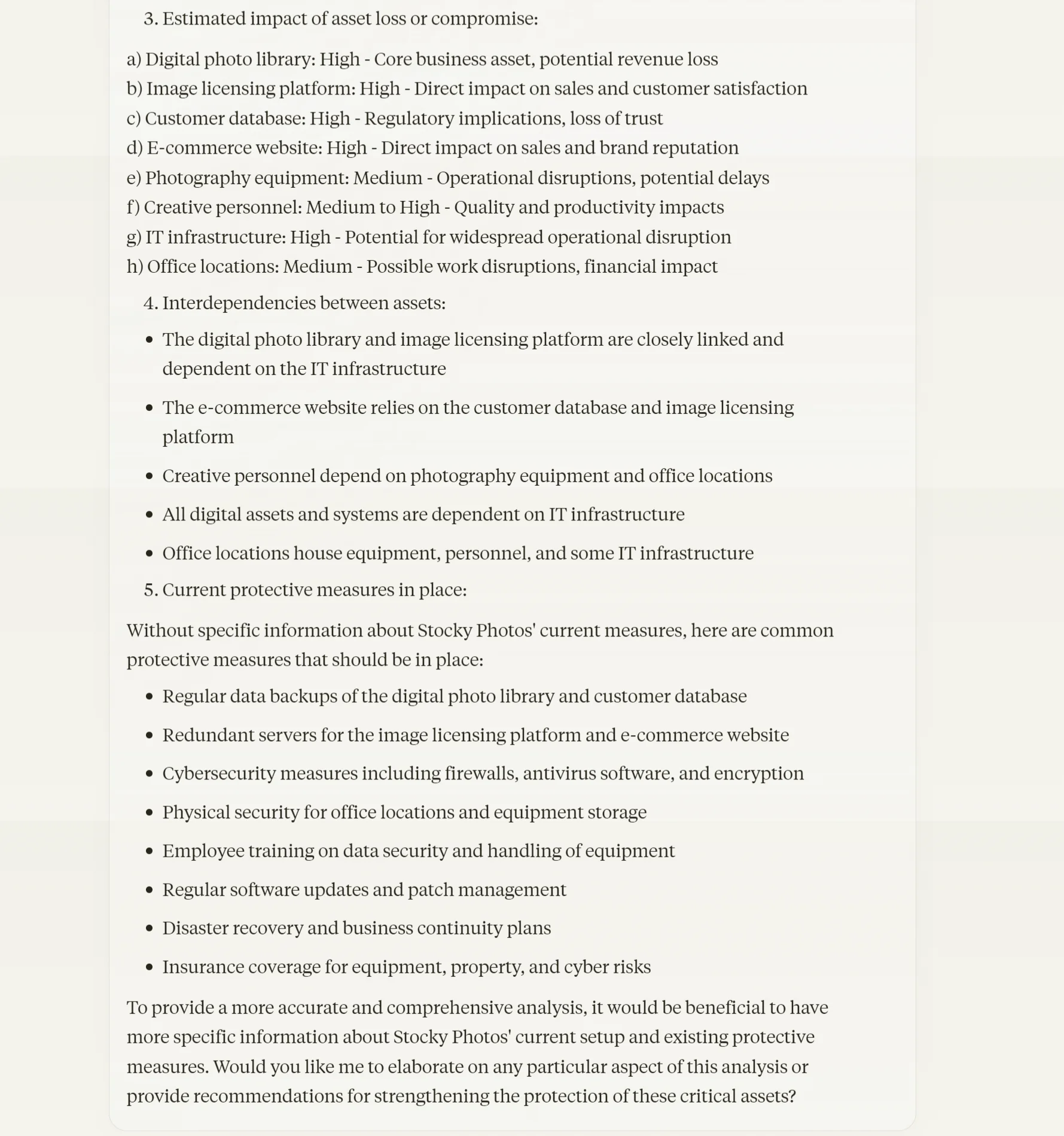
3. Estimated impact of asset loss or compromise
4. Interdependencies between assets
5. Current protective measures in place
Step 3: Identify and assess potential risks
This step focuses on anticipating risks to your business, creating a comprehensive risk radar for your organization. The process involves evaluating both internal and external factors that could disrupt operations, assessing each risk for likelihood and potential impact to lay the groundwork for targeted mitigation strategies.
Prompt Claude with:
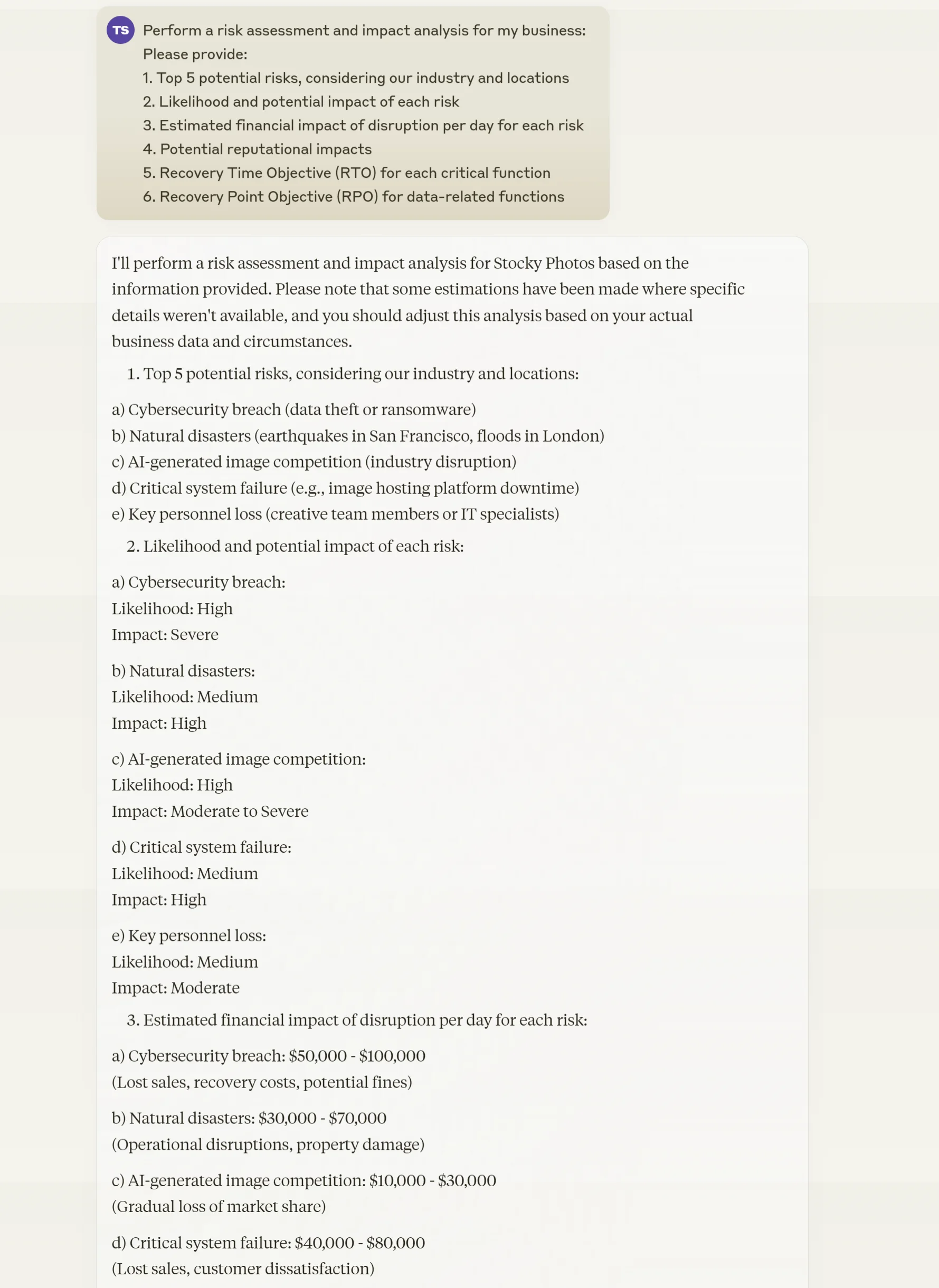
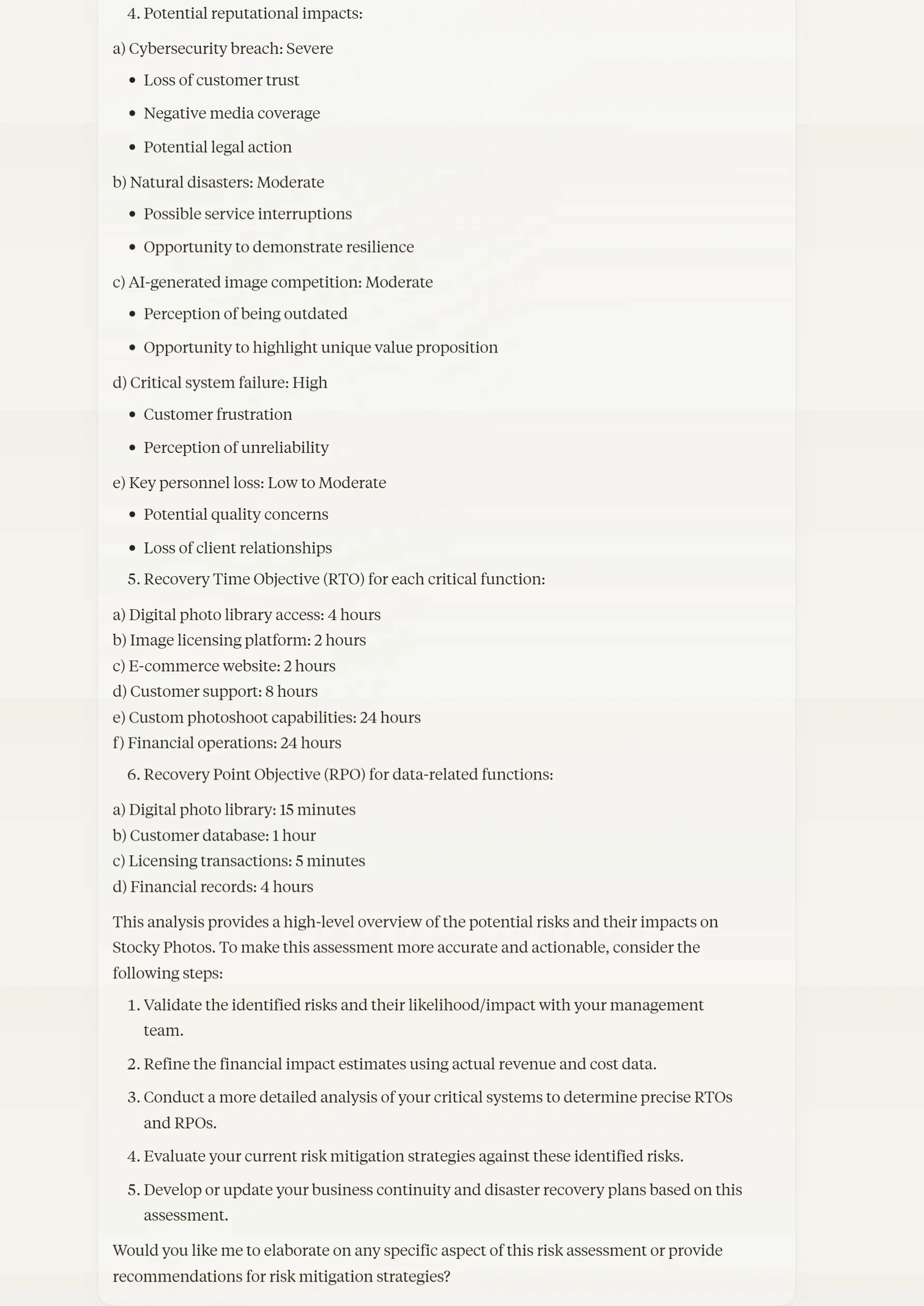
Perform a risk assessment and impact analysis for my business:
Provide with:
1. Top 5 potential risks, considering our industry and locations
2. Likelihood and potential impact of each risk
3. Estimated financial impact of disruption per day for each risk
4. Potential reputational impacts
5. Recovery Time Objective (RTO) for each critical function
6. Recovery Point Objective (RPO) for data-related functions
Step 4: Develop response and recovery strategies
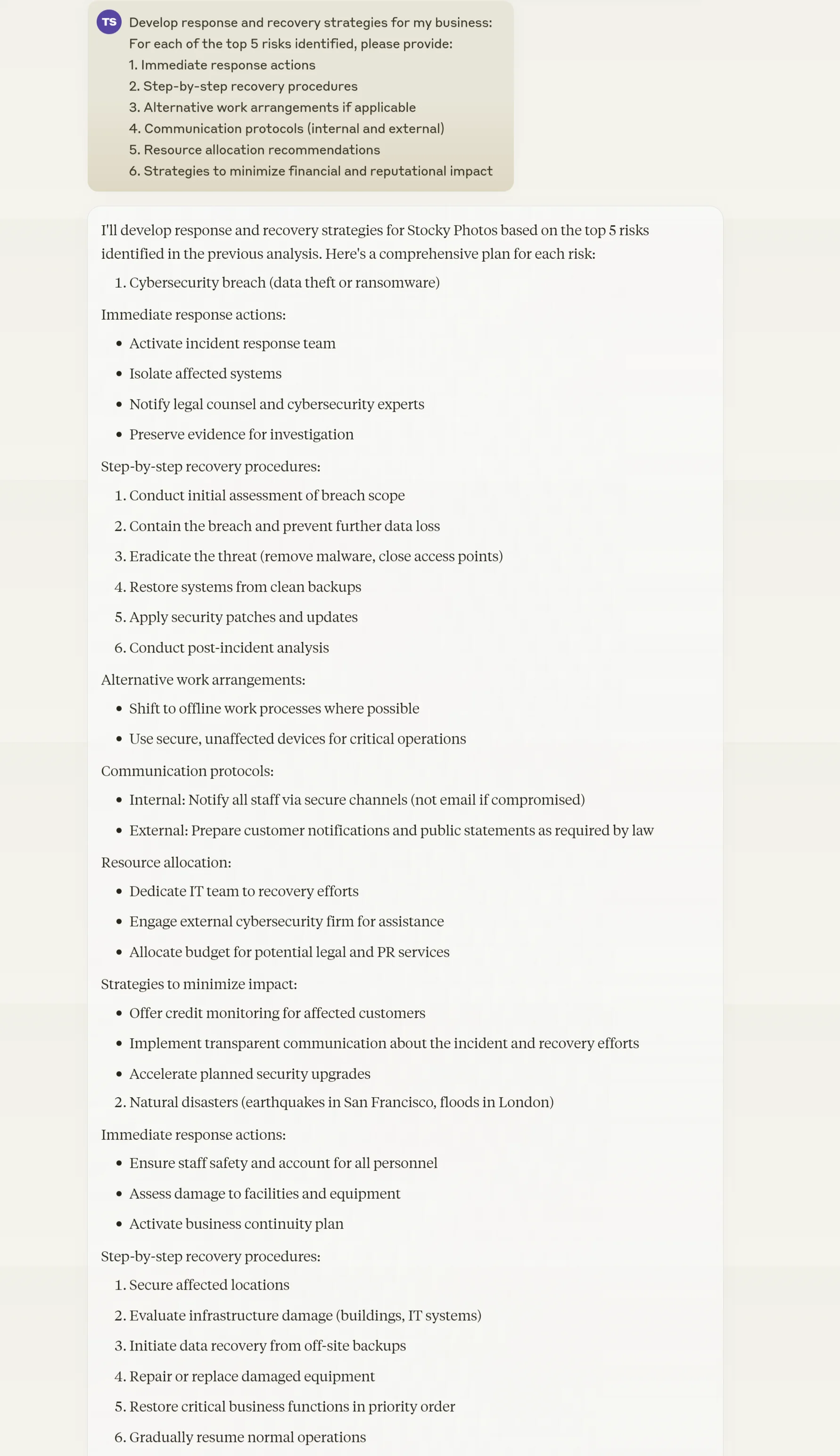
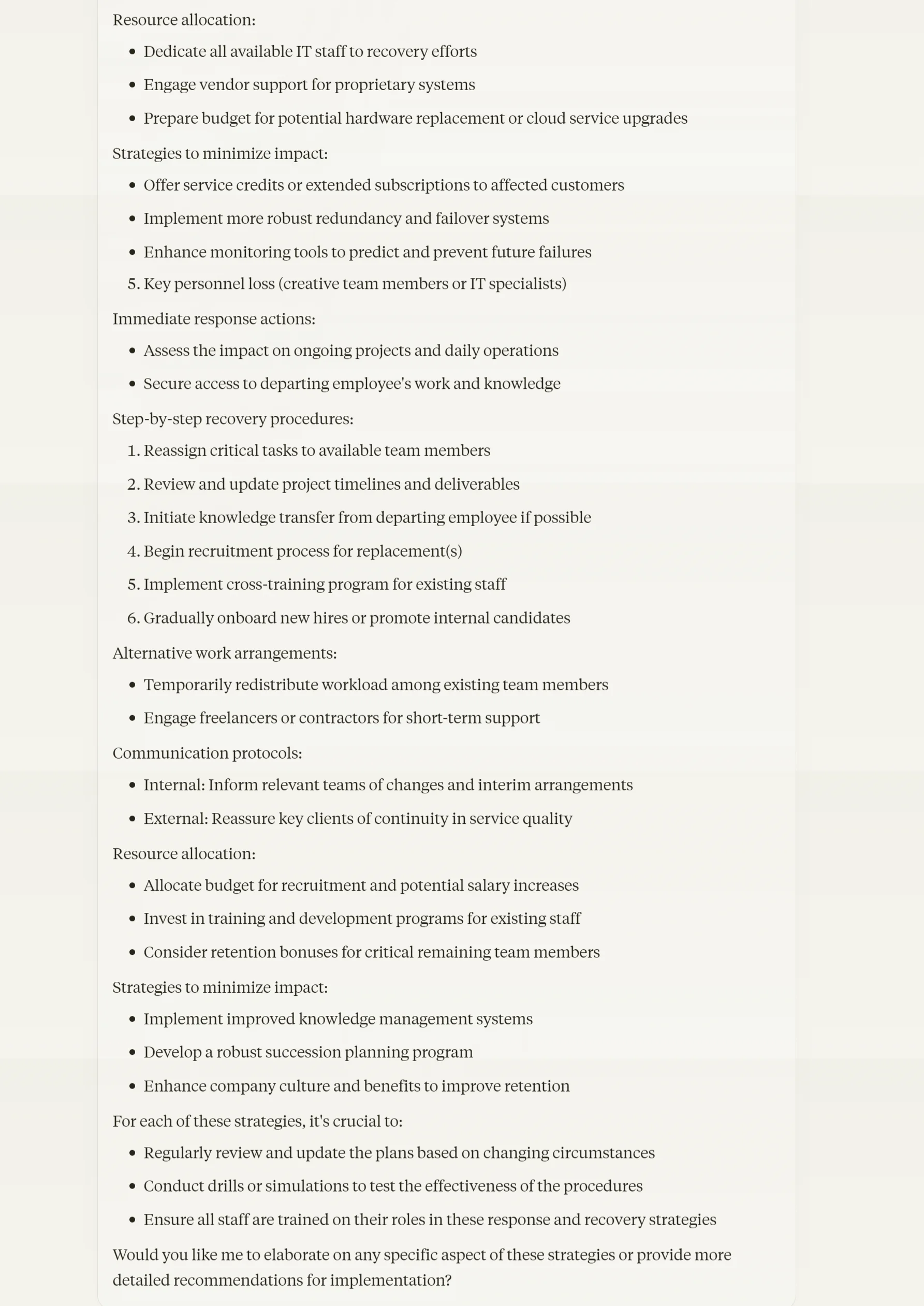
Armed with a thorough understanding of objectives, critical functions, and potential risks, this step focuses on crafting targeted response and recovery strategies. The goal is to create actionable plans addressing various disruption scenarios, minimizing their impact, and efficiently restoring normal operations through alternative work arrangements, communication protocols, and resource allocation.
Use this prompt:
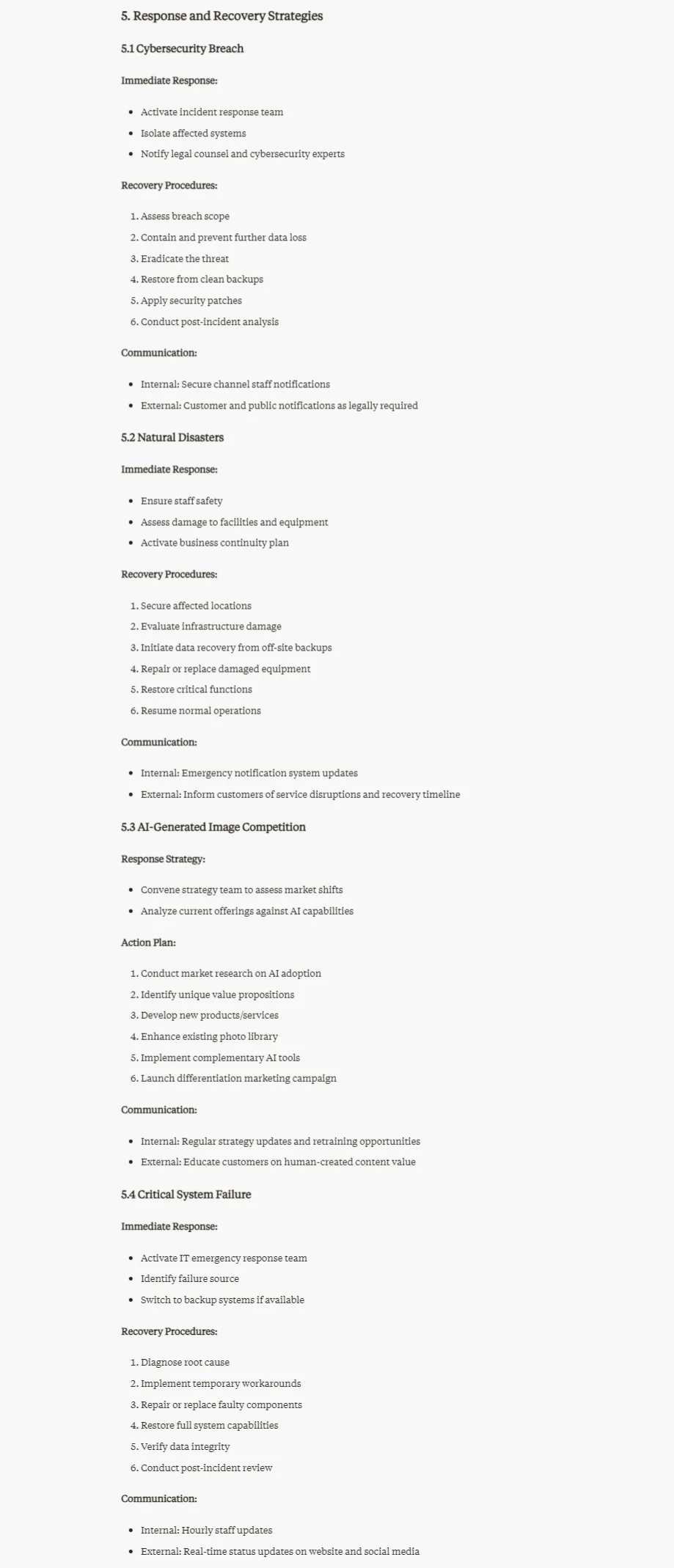
Develop response and recovery strategies for my business.
For each of the top 5 risks identified, please provide:
1. Immediate response actions
2. Step-by-step recovery procedures
3. Alternative work arrangements if applicable
4. Communication protocols (internal and external)
5. Resource allocation recommendations
6. Strategies to minimize financial and reputational impact
Step 5: Create a comprehensive business continuity plan
The final step focuses on testing and refining your business continuity plan to ensure real-world effectiveness. This process involves developing a comprehensive testing strategy, including various exercises from tabletop simulations to full-scale drills, and establishing a system for continuous improvement based on test results and evolving business conditions.
Prompt Claude with:
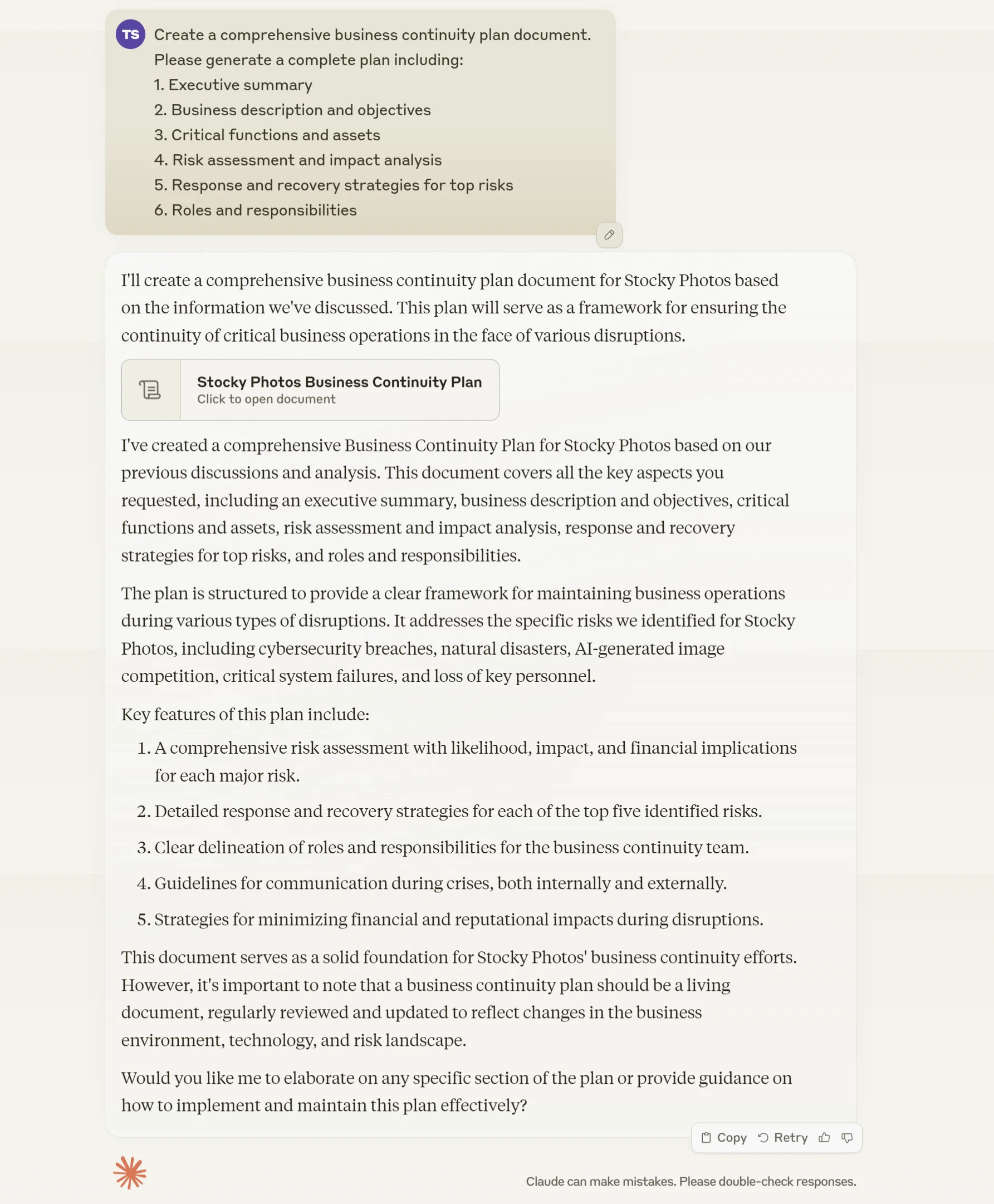
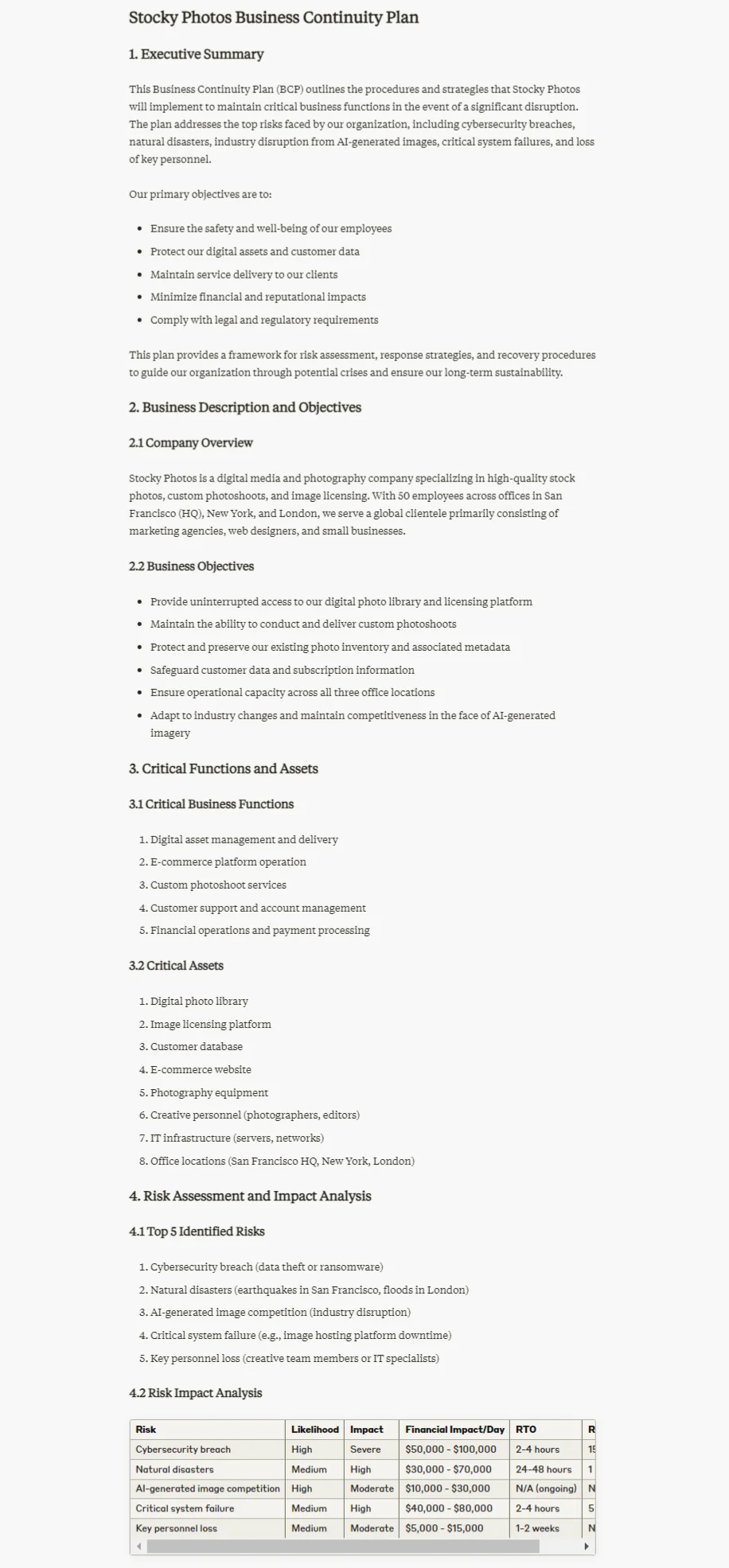
Create a comprehensive business continuity plan document.
Please generate a complete plan including:
1. Executive summary
2. Business description and objectives
3. Critical functions and assets
4. Risk assessment and impact analysis
5. Response and recovery strategies for top risks
6. Roles and responsibilities
This tutorial was created by Tanmay.