Develop your company’s mission, vision, and values statement
Use AI to help articulate the foundational elements of your company’s strategy.
2024-11-13
Developing a company's mission, vision, and values statement is more than just a corporate exercise. It's about defining your company's identity, direction, and principles in a way that resonates with your team and stakeholders.
In this tutorial, we’re going to learn how AI assistant Claude can streamline this process, crafting compelling statements that truly capture your company's essence.
Steps we’ll follow using Claude:
- Analyze your company's core information
- Identify key themes and aspirations
- Craft a powerful mission statement
- Develop an inspiring vision statement
- Formulate meaningful value statements
Understanding mission, vision, and values
Before we dive in, let's quickly break down what each of these statements means:
- Mission Statement: Your company's reason for being. It's not about what you do, but why you do it. A good mission statement should be clear, concise, and inspiring. It answers the question: "Why does our company exist?"
- Vision Statement: Think of this as your company's future aspirations. It's where you see your company headed in the long term. A strong vision statement is ambitious yet achievable, providing a clear direction for your organization. It answers: "Where do we want to be in the future?"
- Values Statement: These are the guiding principles that shape your company culture and inform decision-making. They reflect what your company stands for and how you expect your team to behave. It answers: "What do we believe in and how do we act on those beliefs?"
Now, let's walk through the process of creating these statements.
Step 1: Analyze company information
First, we need to build a comprehensive picture of your company and analyze its key components. This step is crucial as it provides the foundation for all the statements we'll create. We're not just collecting facts; we're trying to understand the essence of your business and how its various elements interrelate.
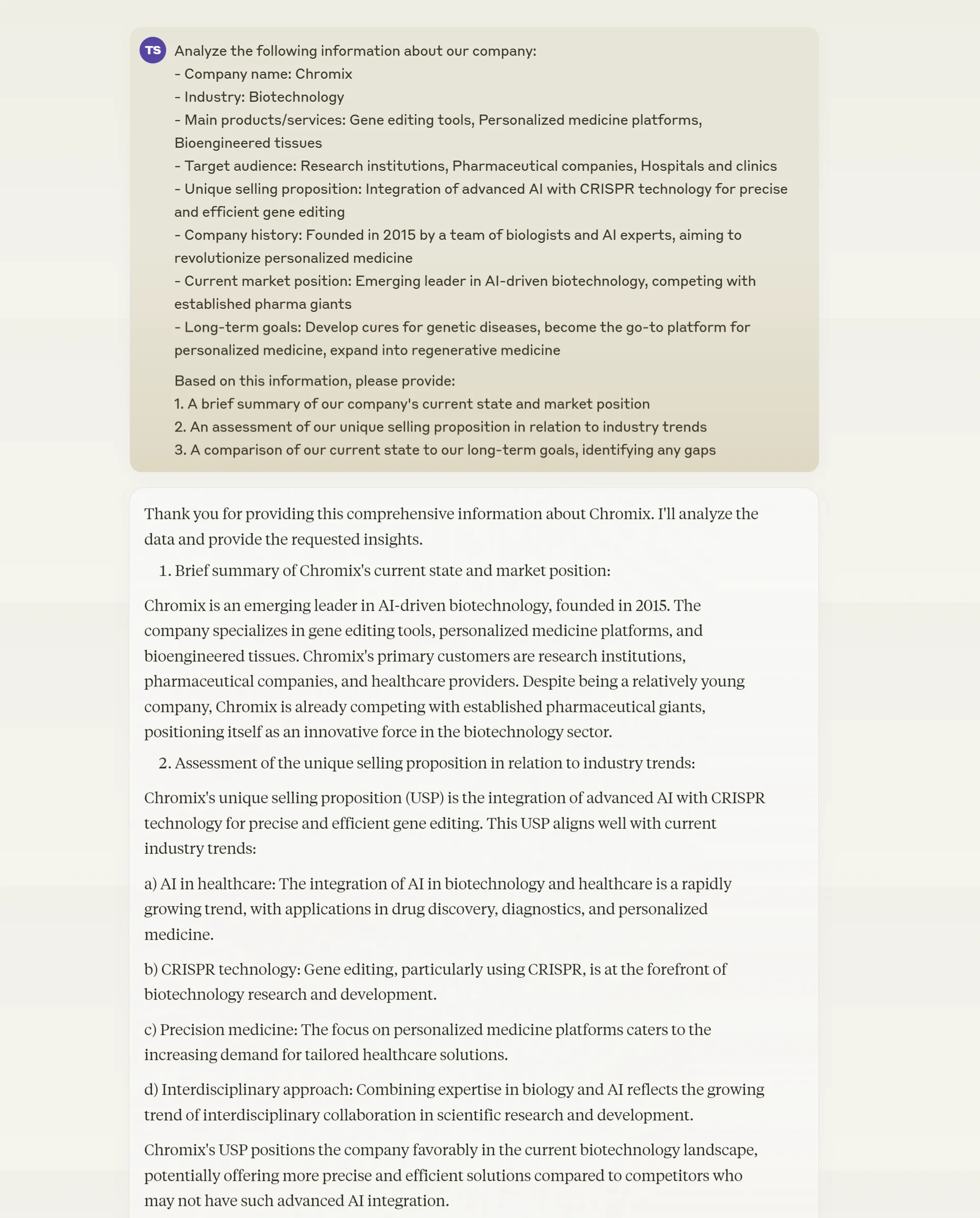
Use this prompt in Claude:
Analyze the following information about our company:
- Company name: [Your company name]
- Industry: [Your industry]
- Main products/services: [List main offerings]
- Target audience: [Describe primary customers]
- Unique selling proposition: [What sets you apart]
- Company history: [Brief overview]
- Current market position: [Industry standing]
- Long-term goals: [5-10 year objectives]
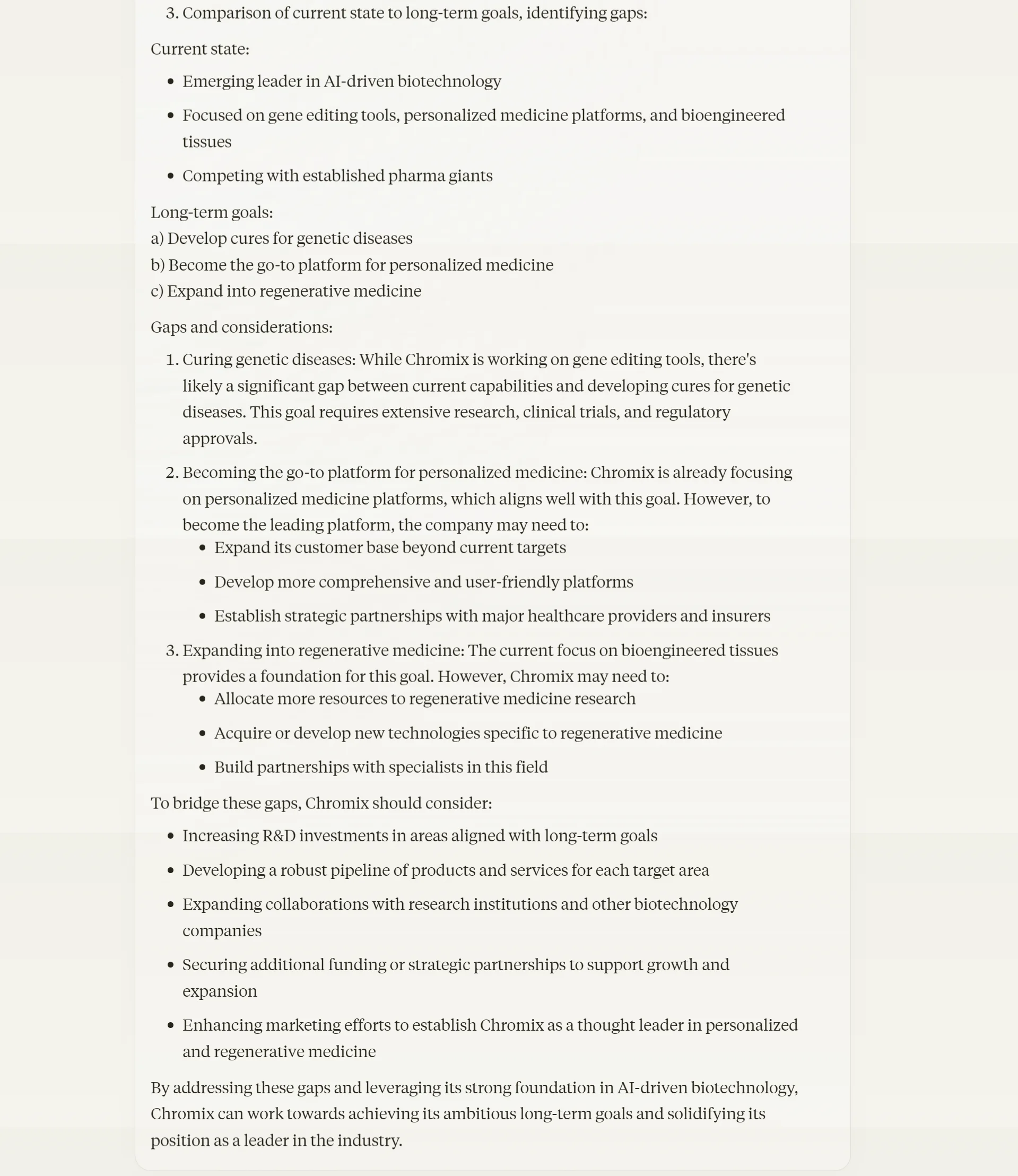
Based on this information, please provide:
1. A brief summary of our company's current state and market position
2. An assessment of our unique selling proposition in relation to industry trends
3. A comparison of our current state to our long-term goals, identifying any gaps
Step 2: Identify key themes and aspirations
Now that we have a comprehensive overview of your company, we're going to dig deeper. This step is about finding the common threads and big ideas that run through your business. We're looking for the themes that come up repeatedly, the goals that excite your team, and the values that guide your decisions.
Let's have Claude help us identify these key elements:
Based on the information provided, analyze:
a) 3-5 key themes that define the company's essence
b) 2-3 major aspirations or future goals
c) 3-4 core values that drive the business
d) 2-3 ways the company aims to make a positive impact
Present this analysis in a concise, bulleted format.
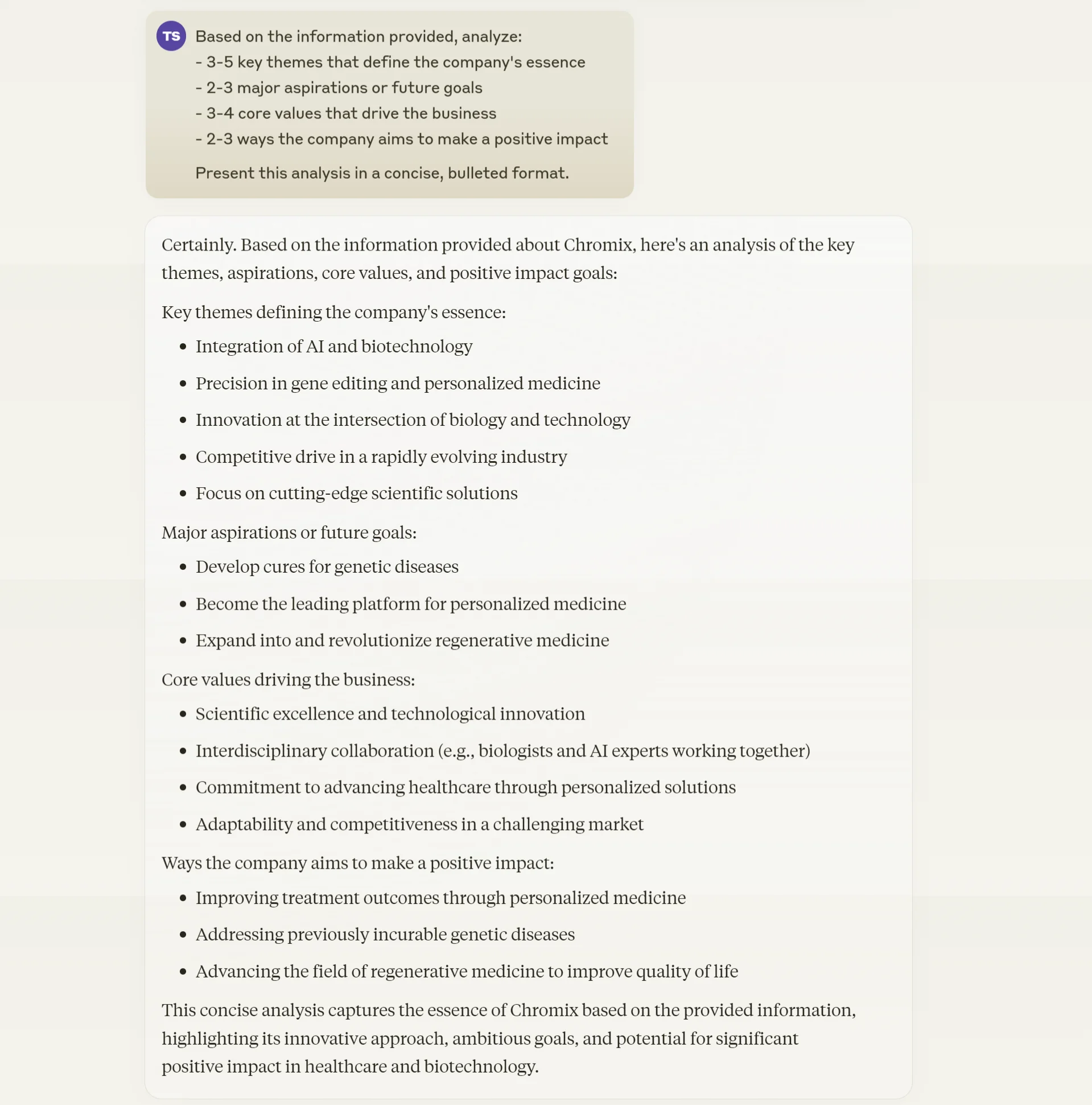
Review the themes, aspirations, and values that Claude identifies. Do they resonate with your understanding of your company? If something seems off or missing, make sure to ask Claude to refine its analysis or explain its reasoning.
Step 3: Craft the mission statement
With our key themes identified, we're ready to craft your mission statement. A good mission statement is concise, clear, and inspiring. It should capture the essence of why your company exists in a way that resonates with both employees and customers.
Let's use Claude to generate some potential mission statements:
Using the themes and information gathered, draft 3 potential mission statements. Each statement should:
1. Be concise (preferably one sentence)
2. Clearly state the company's purpose
3. Industry: [Your industry]
4. Main value proposition: [Your unique selling point]
5. Target audience: [Your target audience]
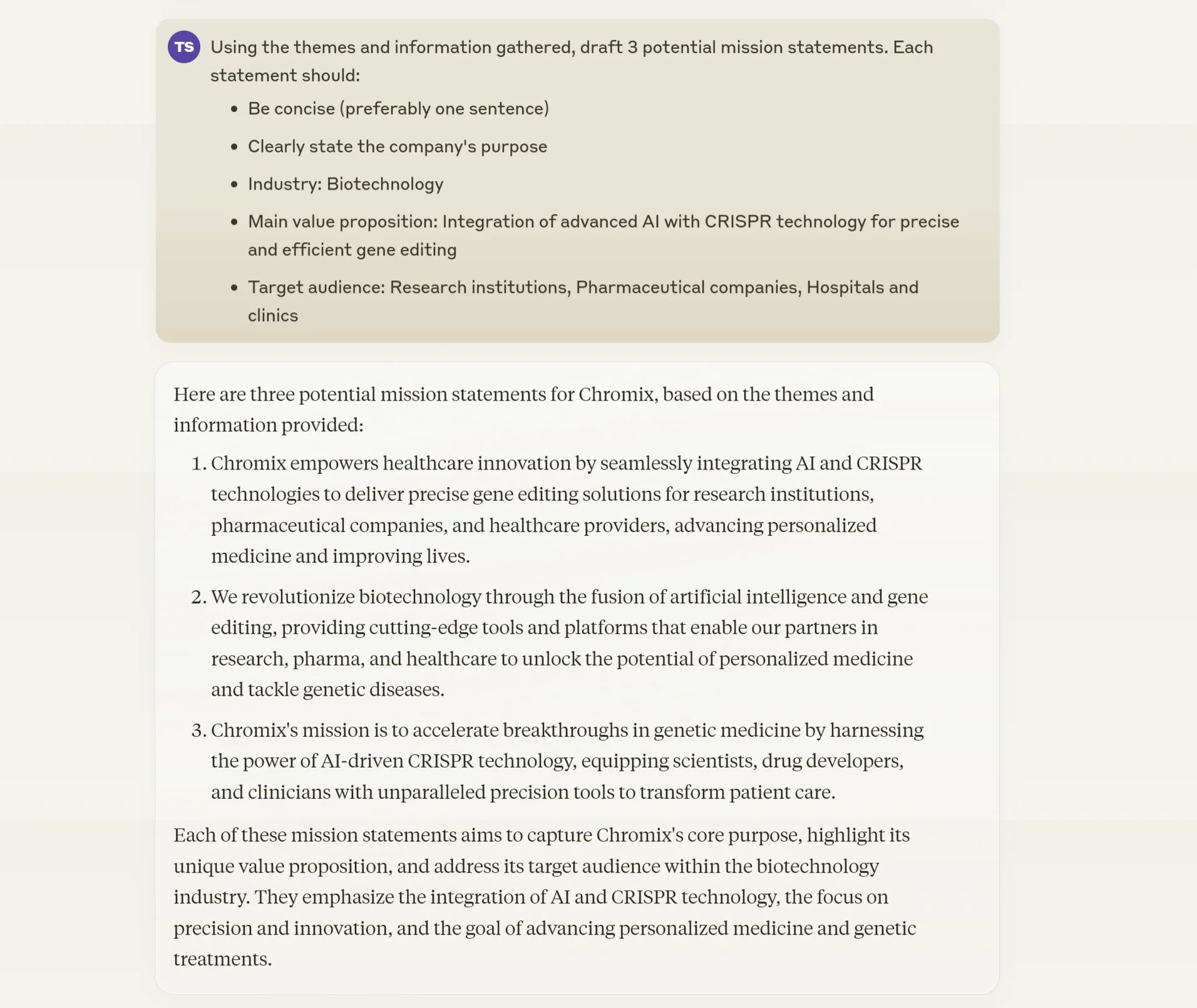
Review the mission statements Claude generates. You might find that elements from different statements could be combined to create the perfect fit for your company.
Step 4: Develop the vision statement
Now that we've defined why your company exists, let's look to the future. Your vision statement should paint a picture of where you want your company to be in the coming years. It's aspirational but should still be grounded in reality.
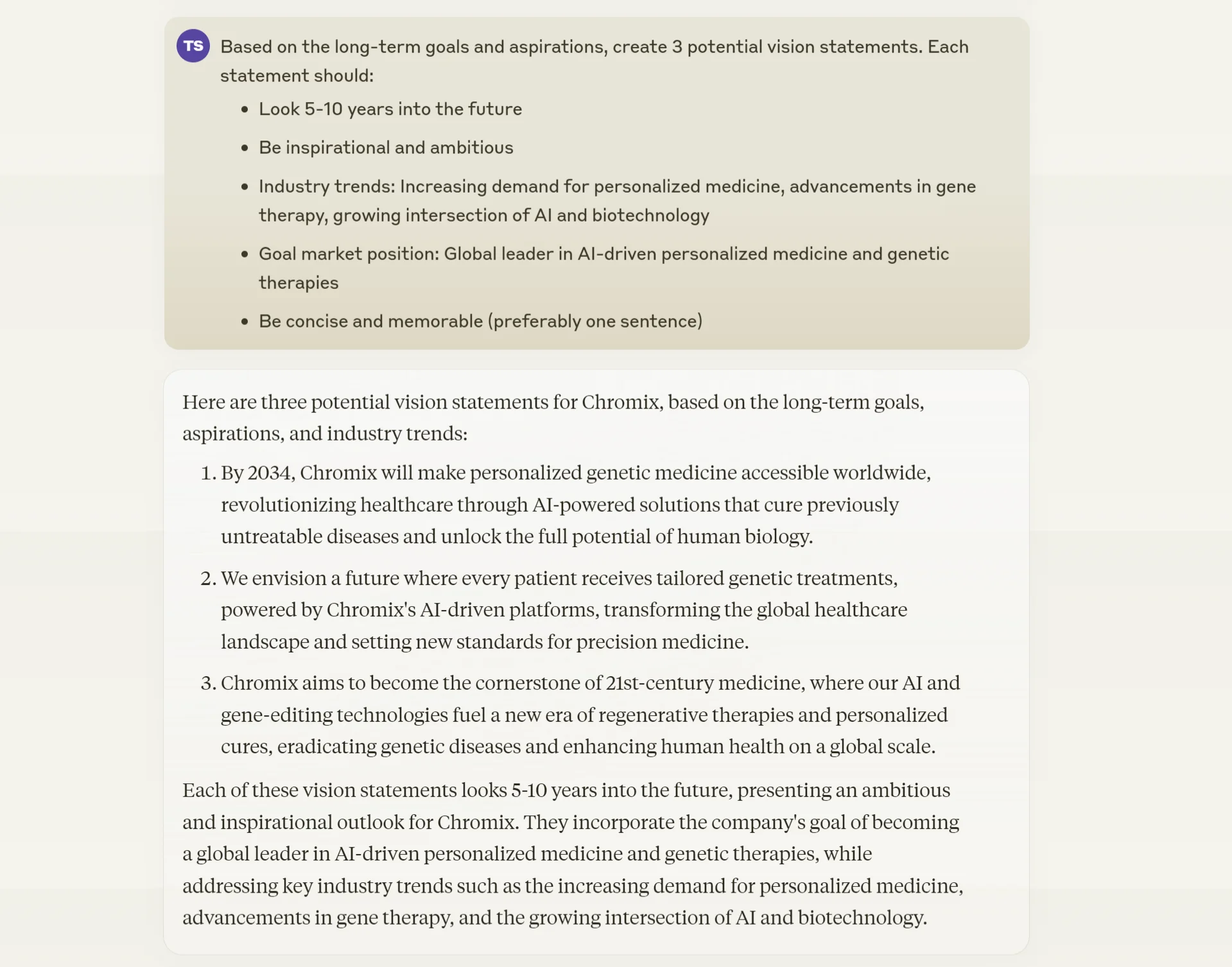
Let's have Claude help us craft some vision statements:
Based on the long-term goals and aspirations, create 3 potential vision statements. Each statement should:
1. Look 5-10 years into the future
2. Be inspirational and ambitious
3. Industry trends: [Your industry trends]
4. Goal market position: [Your goal market position]
5. Be concise and memorable (preferably one sentence)
Step 5: Formulate the values statement
The final piece of the puzzle is your values statement. This isn't just a list of nice-sounding words; it's a declaration of the principles that guide your company's behavior and decision-making. These values should be reflected in your day-to-day operations and long-term strategies.
Let's use Claude to help formulate your values statement:
Using the core values identified earlier, create a values statement that:
1. Lists 4-6 key values
2. Provides a brief (1-2 sentence) explanation for each value
3. Company culture: [Describe your company culture]
4. Industry: [Your industry]
5. Guides employee behavior and decision-making
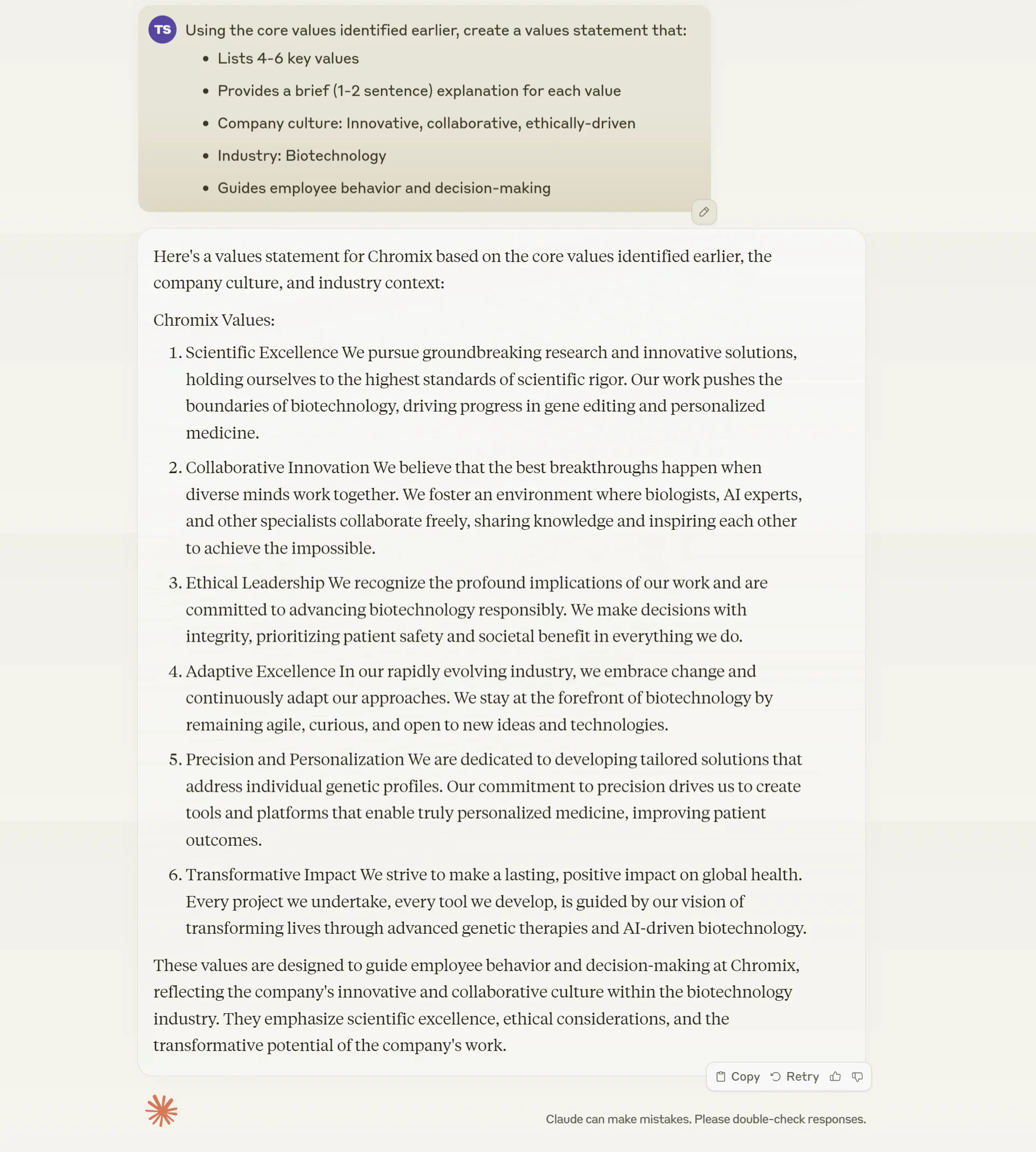
When reviewing these values, consider what principles are non-negotiable for your company. Your values should be specific enough to be meaningful but broad enough to apply across your organization.
As your company grows and evolves, you may need to revisit and refine these statements. The key is to ensure they always accurately reflect who you are, where you're going, and what you stand for.
Take time to review and refine your statements. Share them with key team members and stakeholders for feedback. The final product should resonate with everyone in your organization and serve as a powerful tool for alignment and motivation.
This tutorial was created by Tanmay.