Implementing service level agreements (SLAs)
Use AI to generate service level agreements to guarantee customer satisfaction and service quality.
2024-11-13
In this tutorial, we'll use Claude to help us craft effective service level agreements (SLAs) that outline expected timelines and quality standards for support. Utilising Claude, we'll draft SLAs that clearly communicate these benchmarks to customers.
The steps we'll cover:
- Drafting an SLA document
- Reviewing and refining the SLA draft
- Communicating SLAs to customers
- Monitoring and reporting on SLA performance
Drafting an SLA document
First, let's identify the key metrics and standards that will define our promised service levels. Feed the prompt below into Claude to determine what to include in the scope of our SLA:
I'm creating an SLA for my [product/service]. What factors should I consider when determining the scope of my SLA and which specific services or products it should cover?
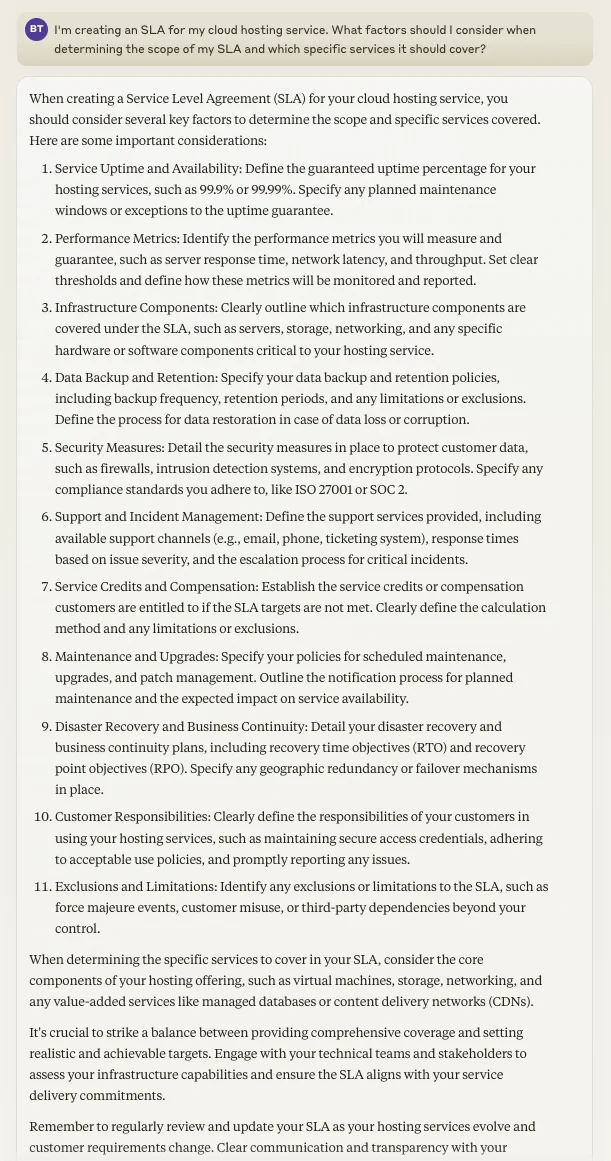
Following this, we'll create an SLA template that includes key sections for metrics, targets, and responsibilities, along with a description of each part.
Can you provide an SLA template that includes sections for key metrics, targets, and responsibilities, along with brief explanations of what should be included in each section?
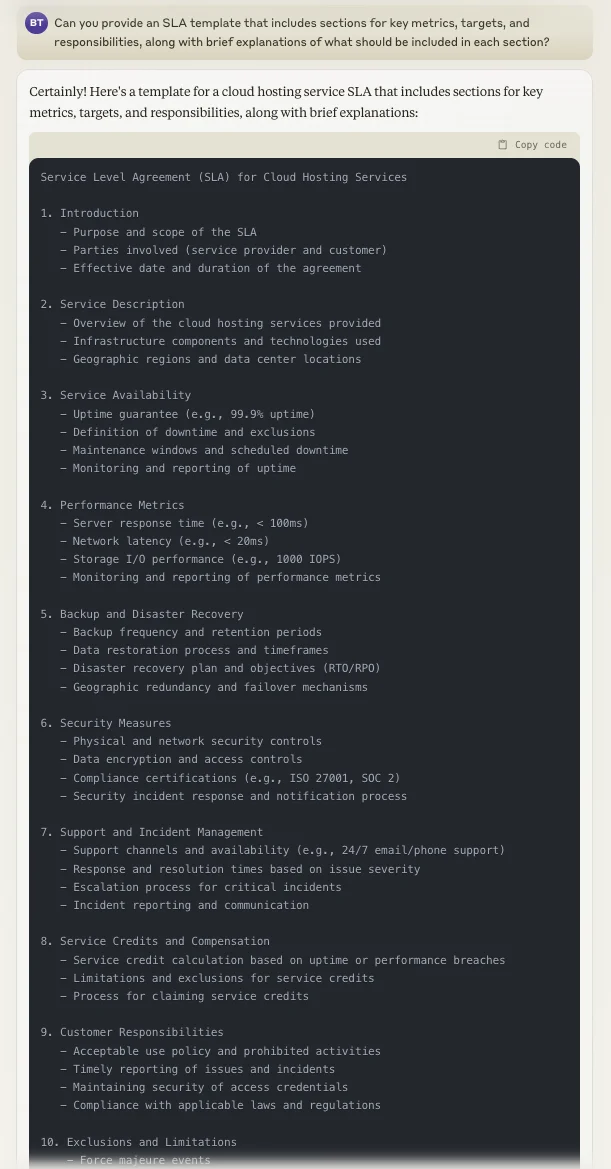
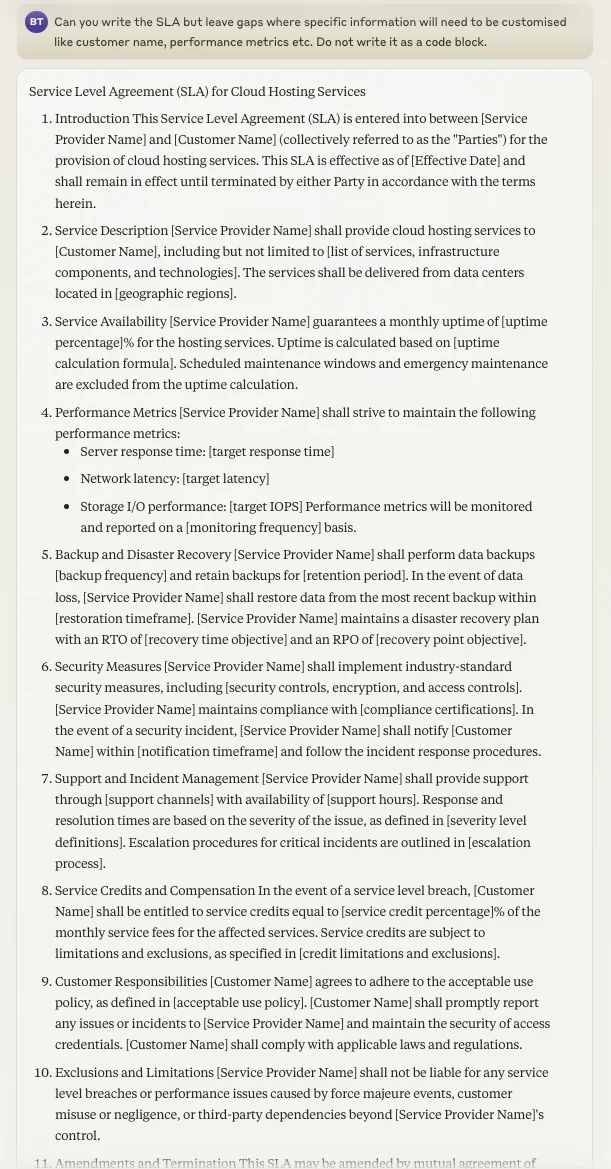
The template looks good. Using this as a foundation, let's create the full draft SLA, leaving placeholders for info we'll need to customise, such as customer names and performance metrics.
Note: The first time we asked Claude to do this, it returned the response in a code block - possible because we asked for a ‘template’ specifically. So in the next prompt, we’ll specify not to do that.
Let’s create the full SLA.
Can you write the SLA but leave gaps where specific information will need to be customised like customer name, performance metrics etc. Do not write it as a code block.
Reviewing and refining the SLA draft
Now, let’s ask Claude to review the draft and suggest feedback based on our company’s goals and capabilities.
Can you review the document and provide feedback on its clarity, completeness, and alignment with our company's goals and capabilities?
[company goals]
[company capabilities]

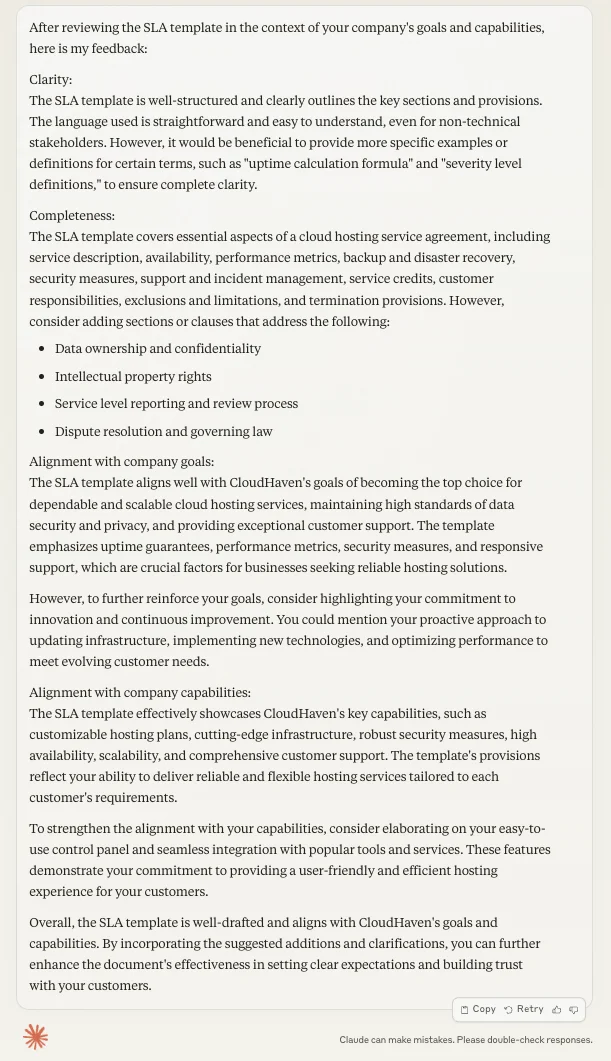
Now we can ask Claude to incorporate this feedback into the draft.
Incorporate this feedback into our SLA template.
Communicate SLAs to your customers
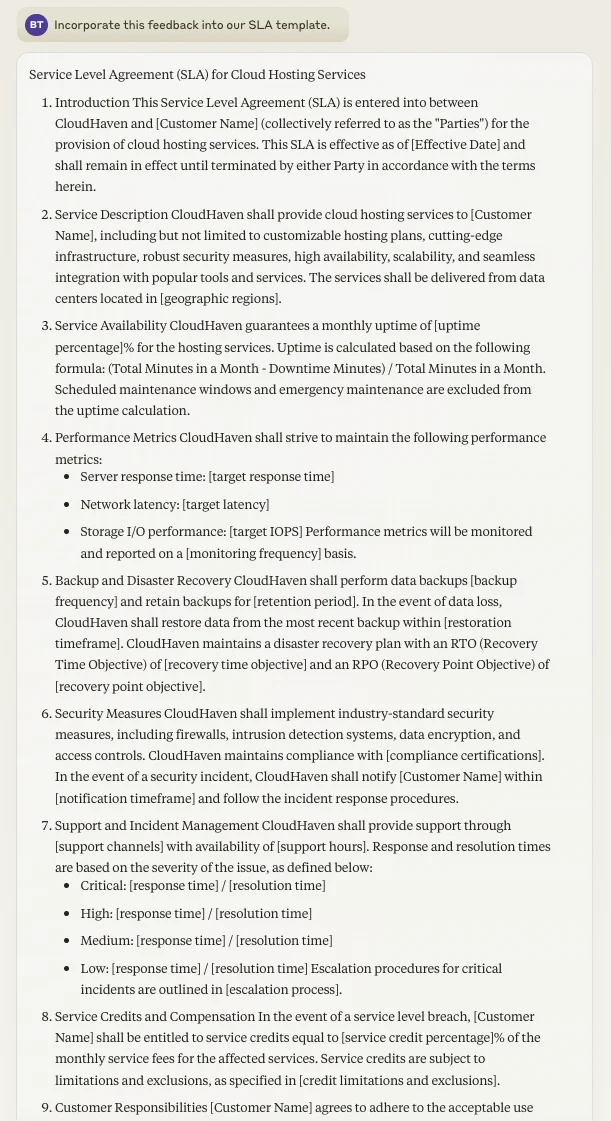
Now that we’re happy with our draft template, we can look at how best to communicate this SLA to customers and prepare the team to answer customer questions.
Great! What are some best practices for communicating our new SLAs to customers, and how can we ensure that our team is prepared to answer any questions they may have?
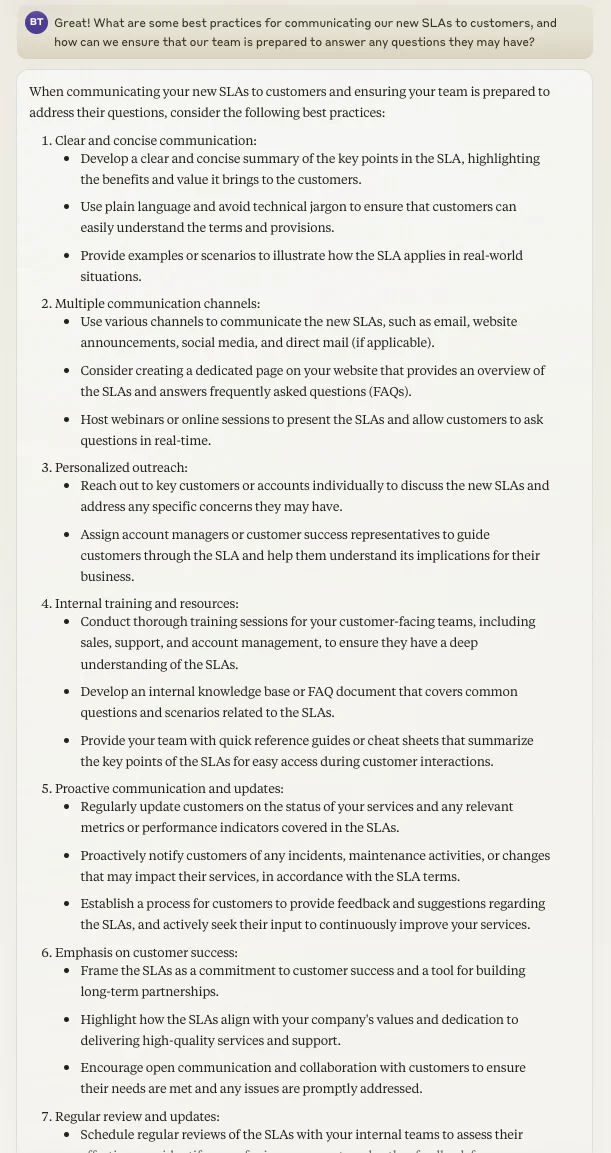
Monitoring and reporting on SLA performance
Finally, let’s look at tracking performance and measuring results to identify improvements.
What are some strategies for tracking and measuring our performance against the SLAs, and how can we use this data to identify areas for improvement?
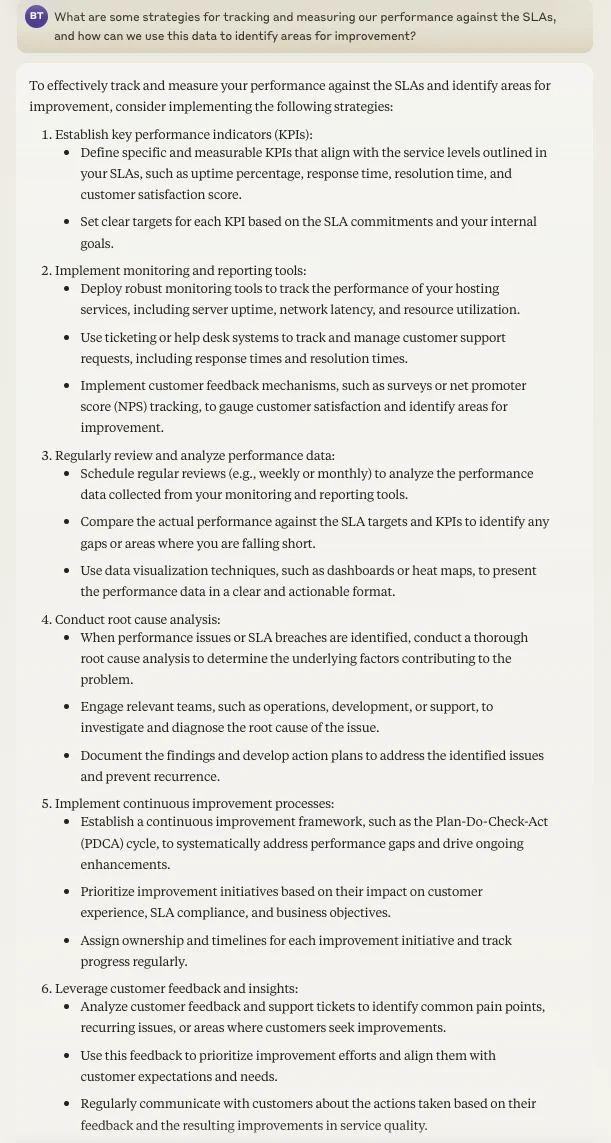
By following these steps and leveraging Claude, you’ll be able to craft SLAs that not only set clear expectations for service quality and timelines but also strengthen your commitment to customer satisfaction.