Prepare for a salary negotiation
Get AI to help you research, position yourself, and negotiate your salary.
2024-11-13
A key part of any potential employment agreement is salary negotiation. And while there are limits to what an organization can offer, it’s often up to the employee to see how far the organization is willing to go. This tutorial is designed to support professionals through salary negotiation with a new employer.
In this tutorial, you will learn how to:
- Prepare for salary negotiations
- Use positioning and anchoring techniques
- Practice effective negotiation strategies
Preparing for negotiation
Research market salary rates
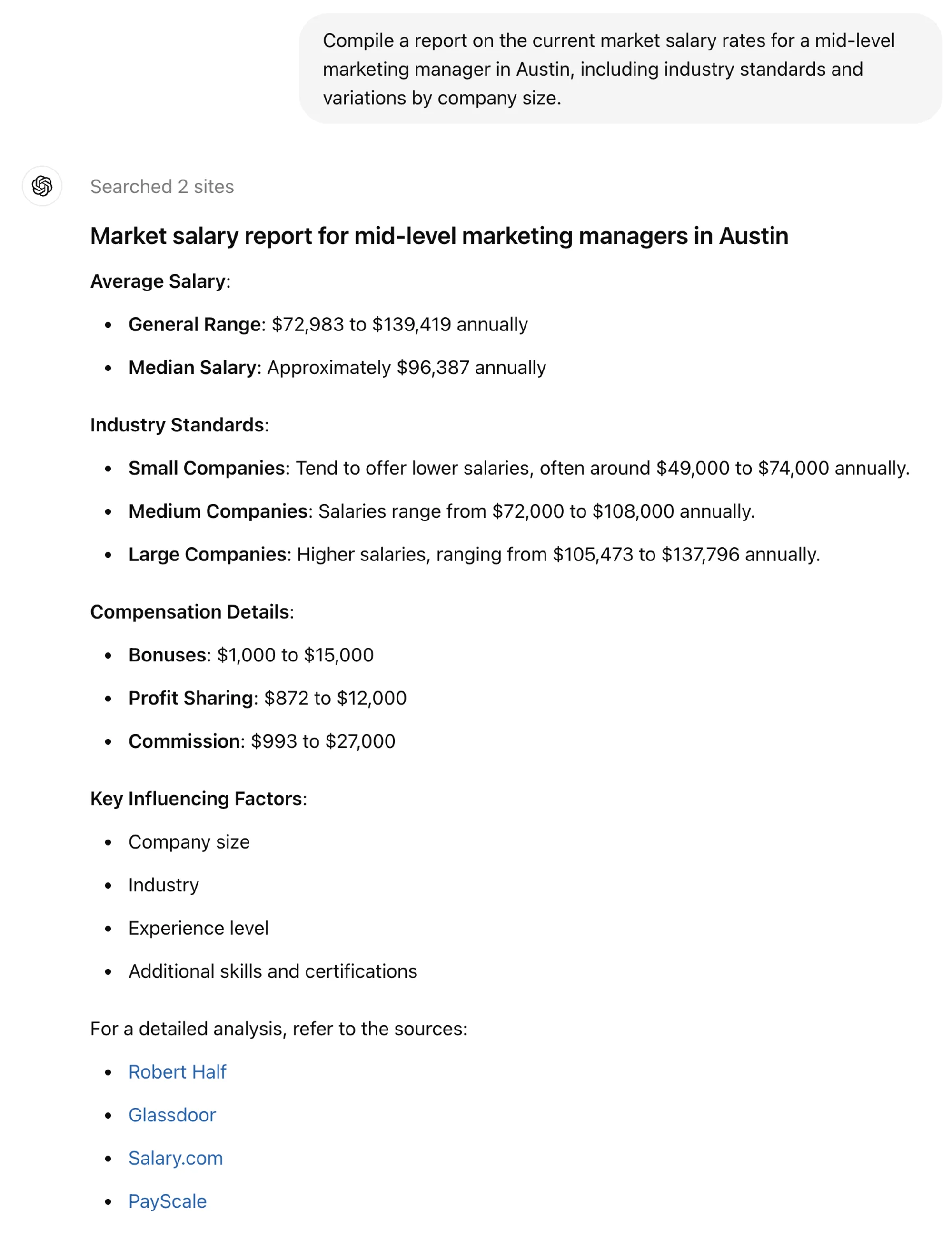
Start by researching the market salary rates for your position. Look at industry standards, geographic location, company size, and level of experience required. Use resources like salary surveys, job boards, and industry reports to gather comprehensive data. This information will help you set realistic expectations and strengthen your negotiation position.
Prompt ChatGPT with this:
Compile a report on the current market salary rates for a [seniority] [role] in [location], including industry standards and variations by company size.
Understand your value and contributions
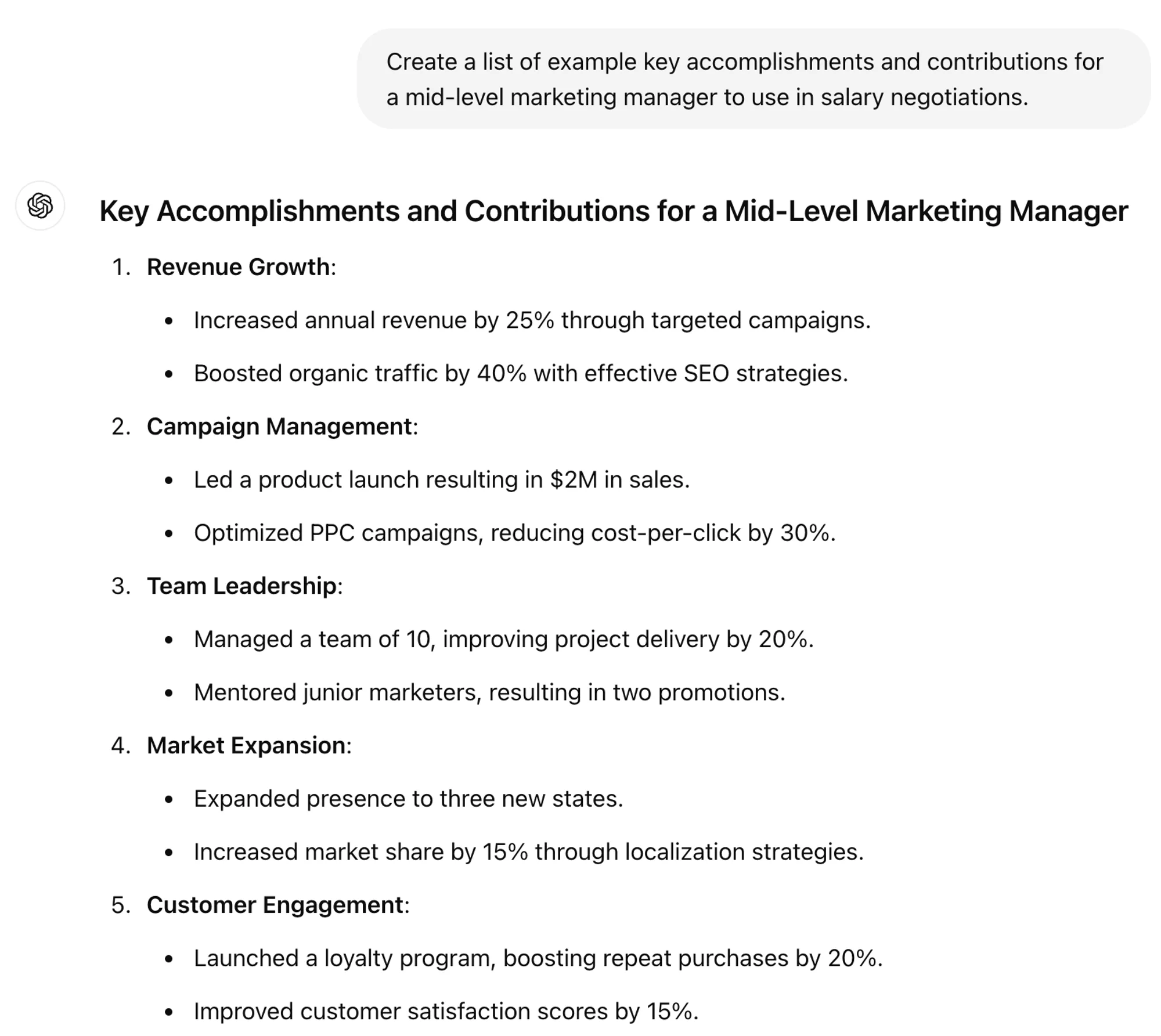
Create a list of accomplishments and contributions to your current or previous company. List your skills, accomplishments, and any specific projects where you added significant value. Quantify your achievements wherever possible, such as increased sales, improved processes, or cost savings. Understanding your worth helps you make a compelling case during negotiations.
ChatGPT can help you brainstorm a list by providing an example of what they might look like. Reflect on your own experience and use the examples as templates.
Create a list of example key accomplishments and contributions for a [seniority] [role] to use in salary negotiations.
.webp)
Positioning and anchoring
Set your desired salary range
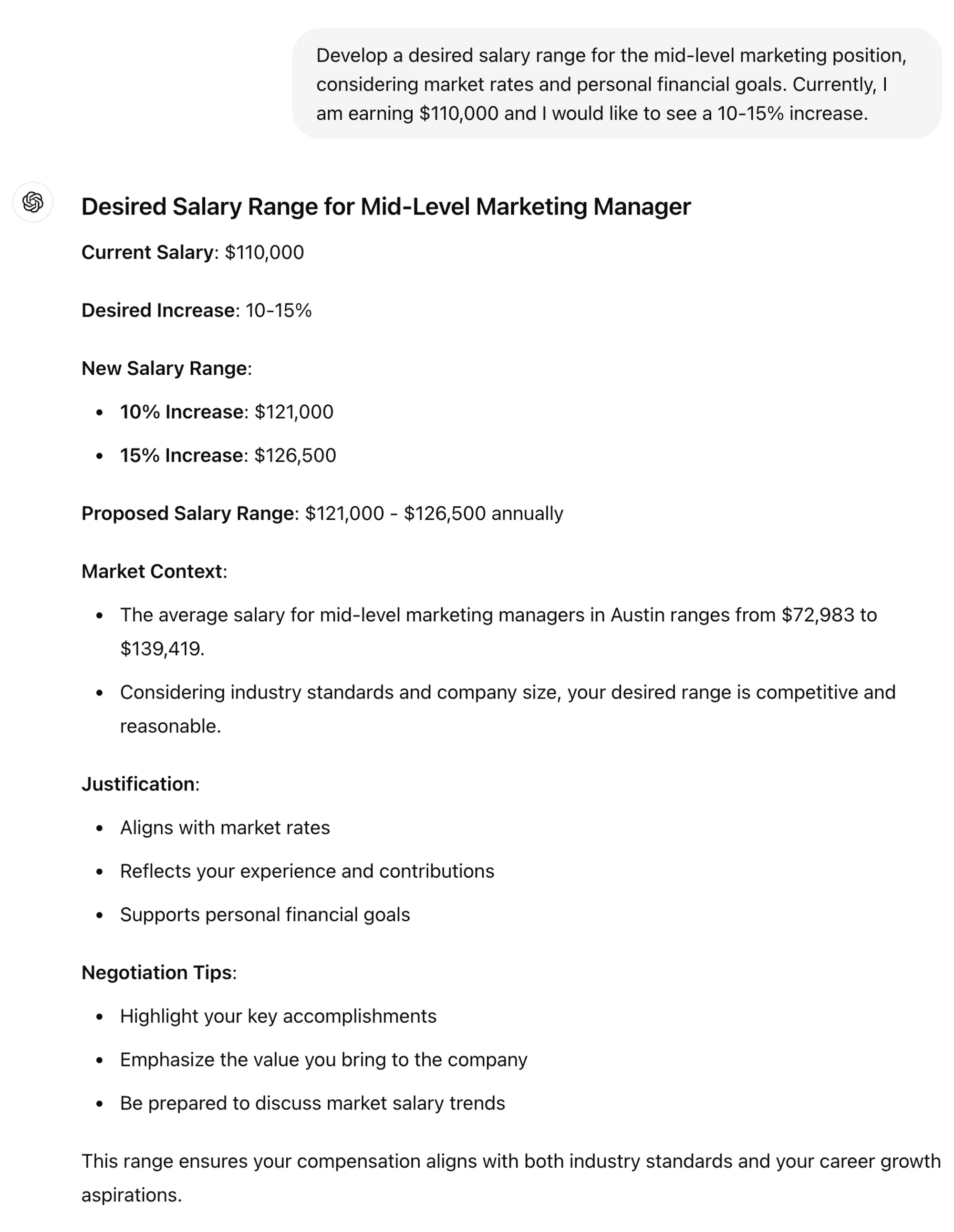
Determine your desired salary range before entering negotiations. Base this range on your market research and personal financial needs. Have a clear minimum acceptable salary (your "walk-away" point) and an ideal target salary. Setting a range provides flexibility and a starting point for discussions.
Develop a desired salary range for the [role] position, considering market rates and personal financial goals. Currently, I am earning [your current salary] and I would like to see a [percentage] increase.
Using anchoring to influence negotiations
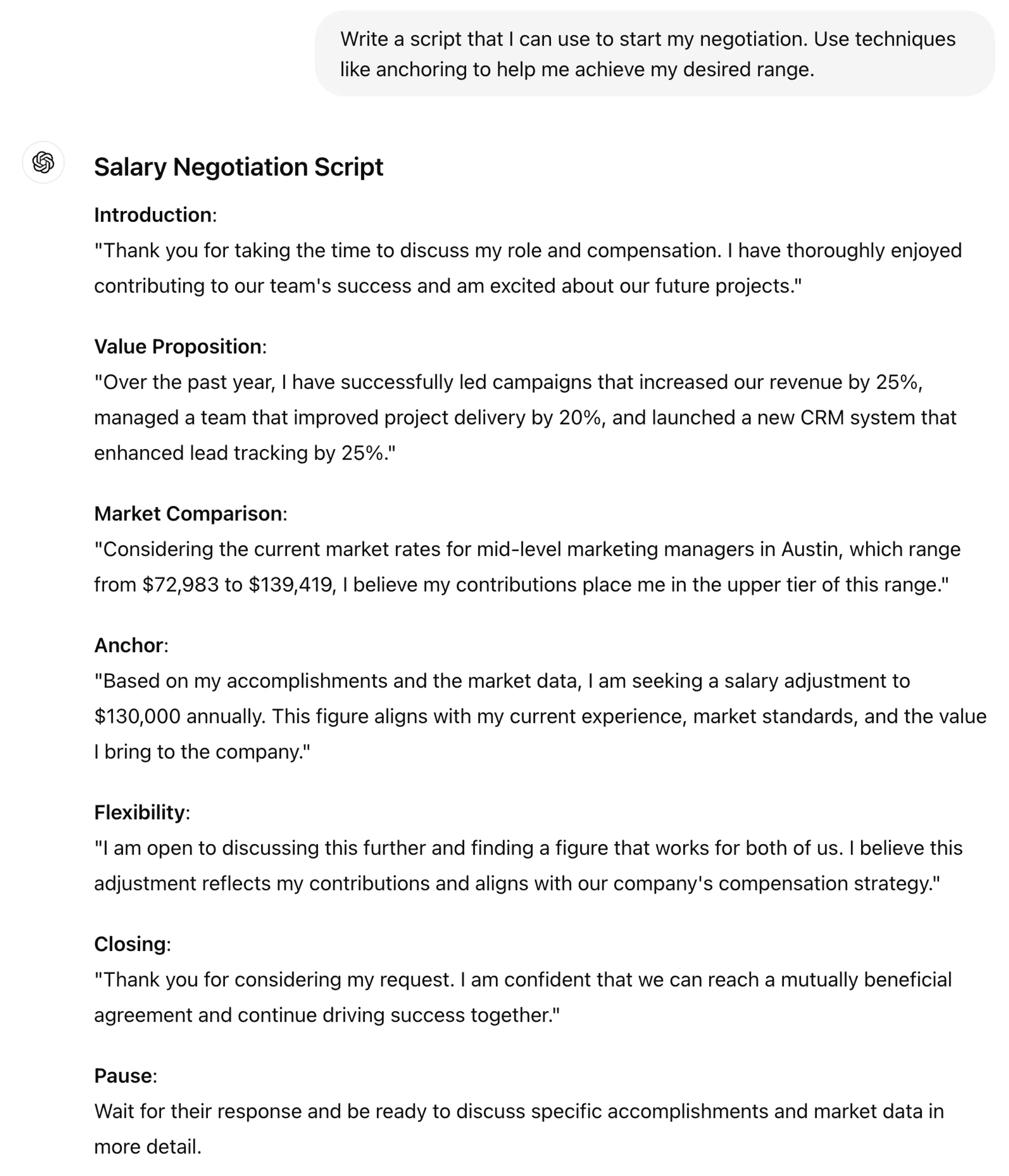
Use the anchoring technique to set the initial salary discussion. Start with a number at the higher end of your desired range to anchor the negotiation in your favor. This strategy can influence the final offer to be closer to your target salary. Be confident and clear when presenting your anchor.
Write a script that I can use to start my negotiation. Use techniques like anchoring to help me achieve my desired range.
Practicing negotiation techniques
Build confidence and clarity
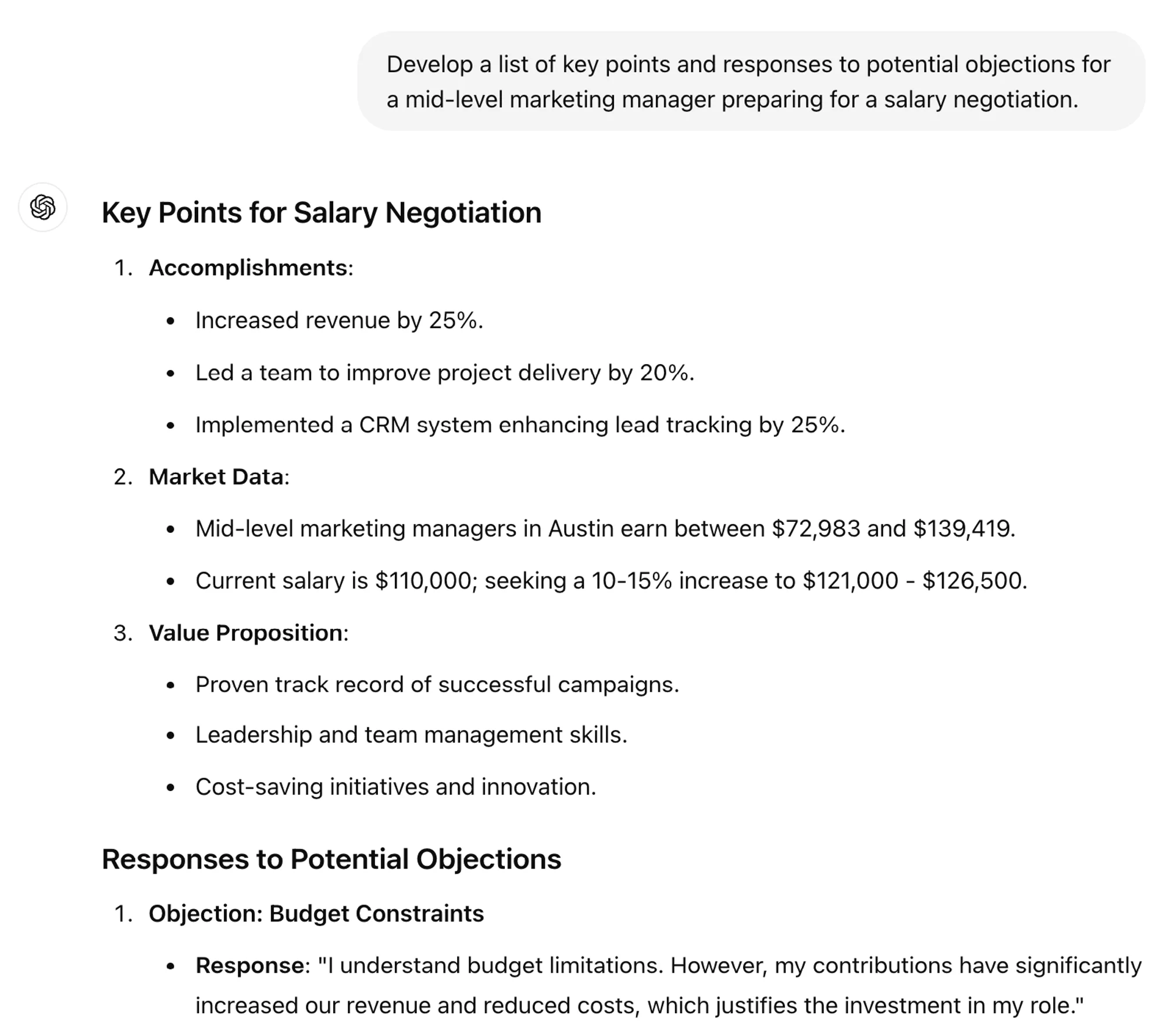
Build confidence and clarity by rehearsing your negotiation points. Practice speaking clearly and confidently about your value and desired salary. Prepare for potential objections and plan your responses. Confidence and clarity can significantly impact the success of your negotiation.
Develop a list of key points and responses to potential objections for a [seniority] [role] preparing for a salary negotiation.
.webp)
Role-playing scenarios
Practice negotiation through role-playing scenarios. While you can work with a friend or colleague to practice, ChatGPT can also be your negotiation practice partner.
Let’s role-play. You play the role of the employer and I will respond as the candidate. Assume that we've gone through the interview process and I am the candidate you want to hire.
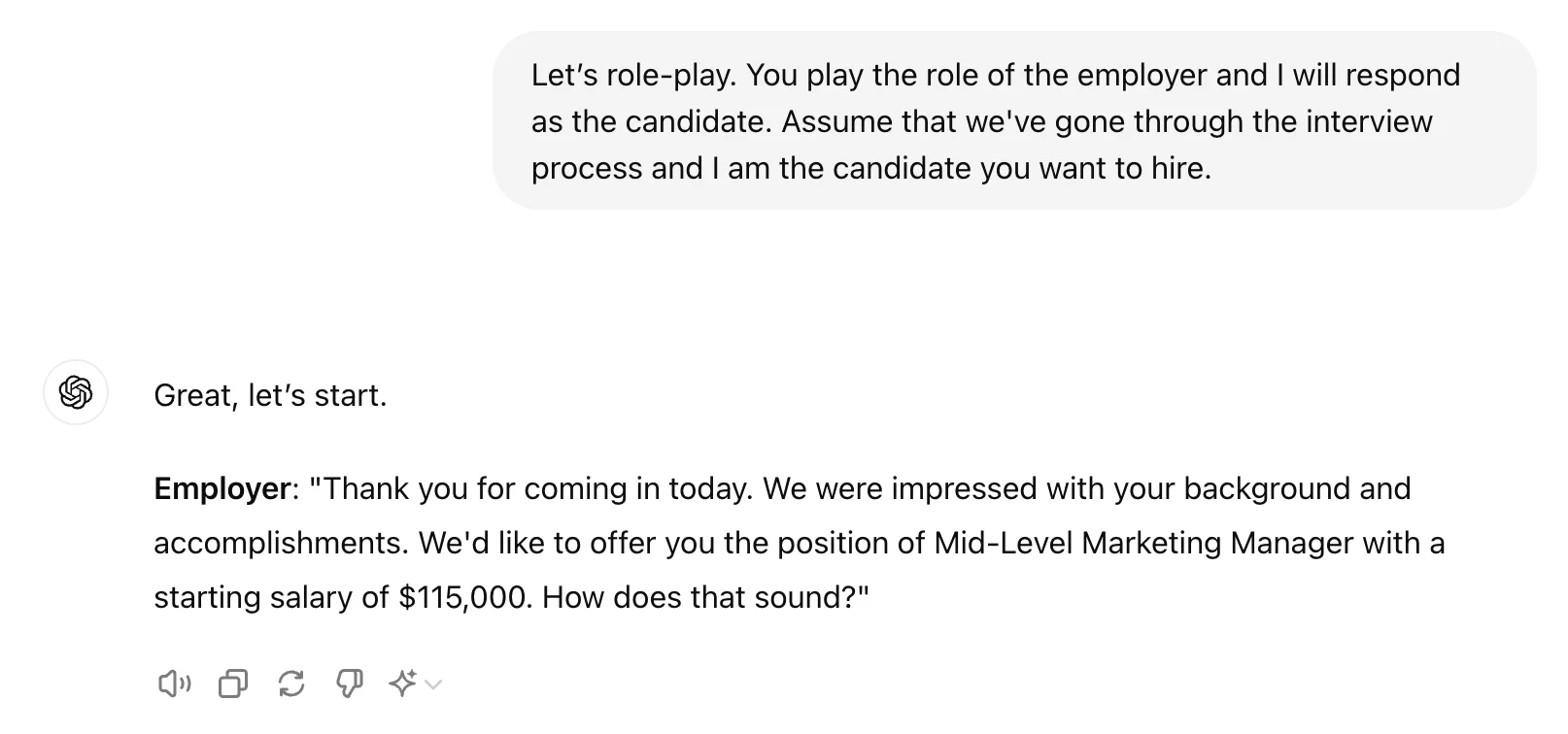
Continue the conversation with ChatGPT using the tips and positioning it previously suggested. Remember, salary is just one element of compensation so you’ll want to consider your total compensation package alongside your salary expectations. Good luck!
This tutorial was generated by Jonah.