Run a project pre-mortem for your project
Mastering pre-mortem techniques to identify and mitigate potential project risks.
2024-11-13
A pre-mortem involves identifying potential challenges and risks before a project begins, enabling teams to devise effective mitigation strategies. By anticipating obstacles and planning solutions in advance, you can significantly enhance your project's chances of success and avoid common pitfalls.
In this tutorial, you will learn how to:
- Conduct a pre-mortem exercise
- Identify potential project risks
- Develop strategies to mitigate risks
Prepare for the pre-mortem
Define the scope and objectives
To ensure the pre-mortem exercise is focused and productive, start by defining the scope and objectives. Clearly state the project’s goals and outline the expected outcomes. This will provide direction and clarity for the session. Additionally, define the boundaries of the project to keep discussions on track and prevent scope creep.
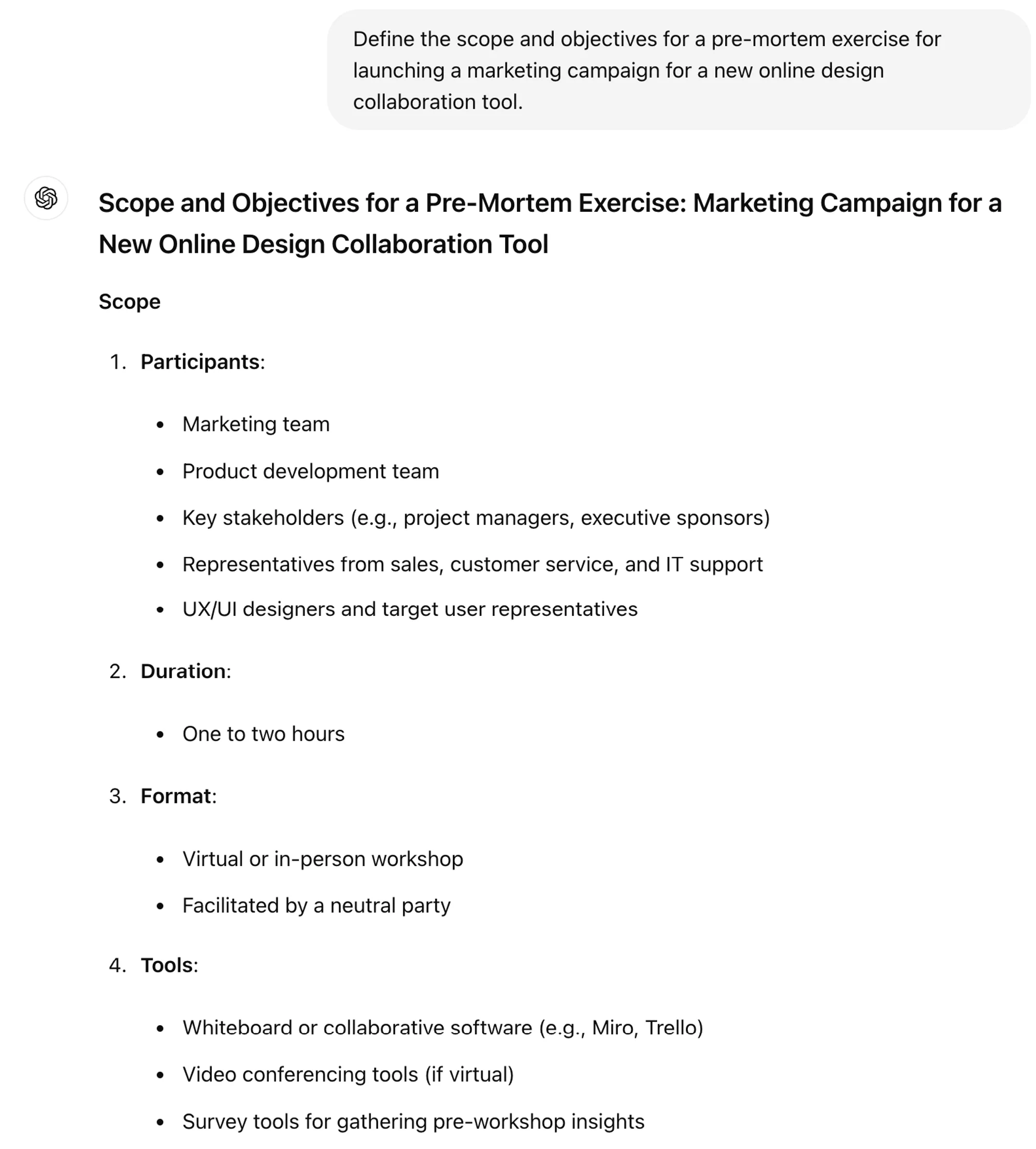
Define the scope and objectives for a pre-mortem exercise for [project].
.webp)
.webp)
Notifying the team
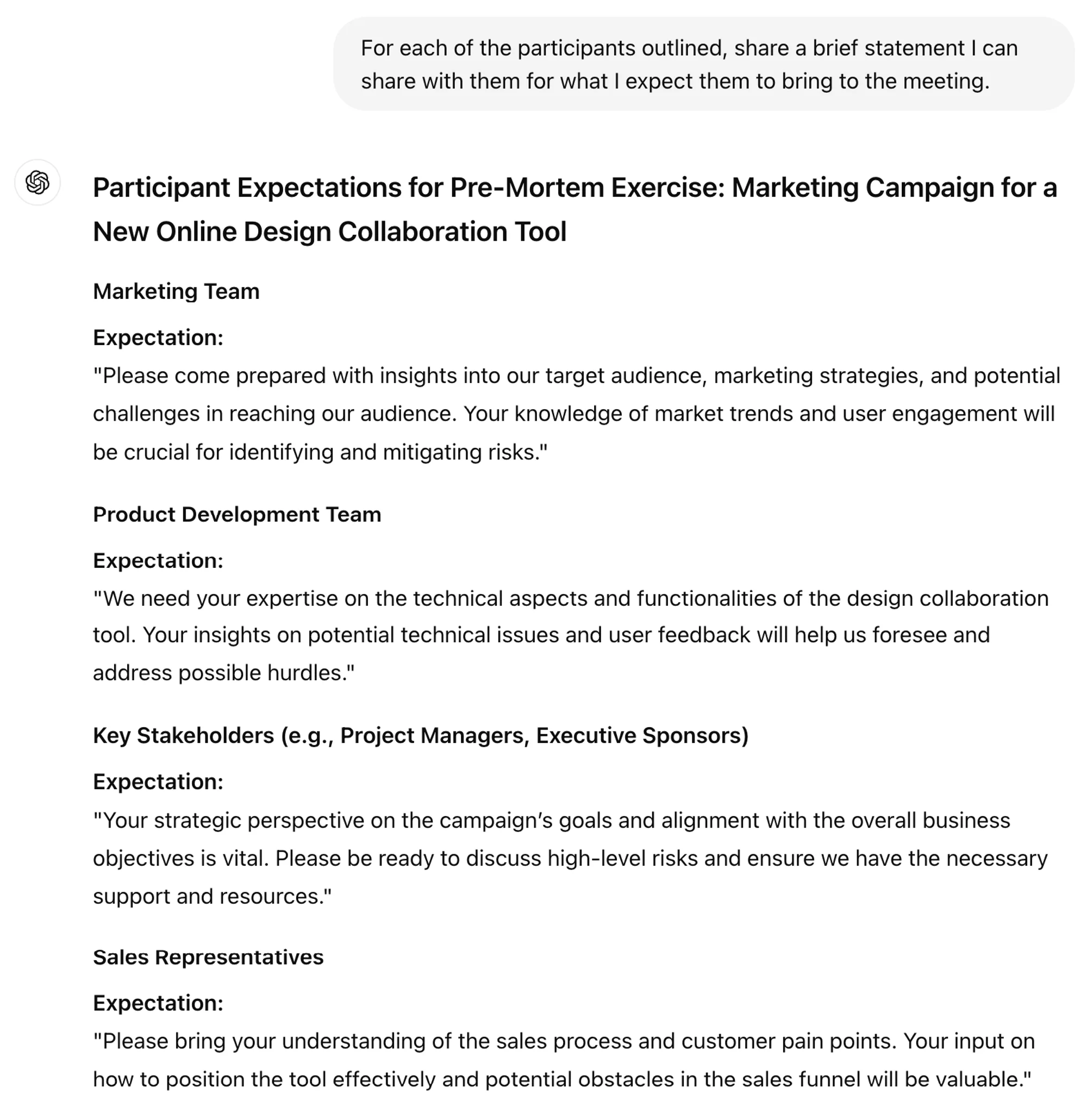
Identified key stakeholders and those who should be present for the exercise, then use ChatGPT to help draft comms:
For each of the participants outlined, share a brief statement I can share with them for what I expect them to bring to the meeting.
.webp)
With your preparation complete and team members informed, it's time to dive into the heart of the pre-mortem exercise.
Conduct the pre-mortem session
Identify potential failure points
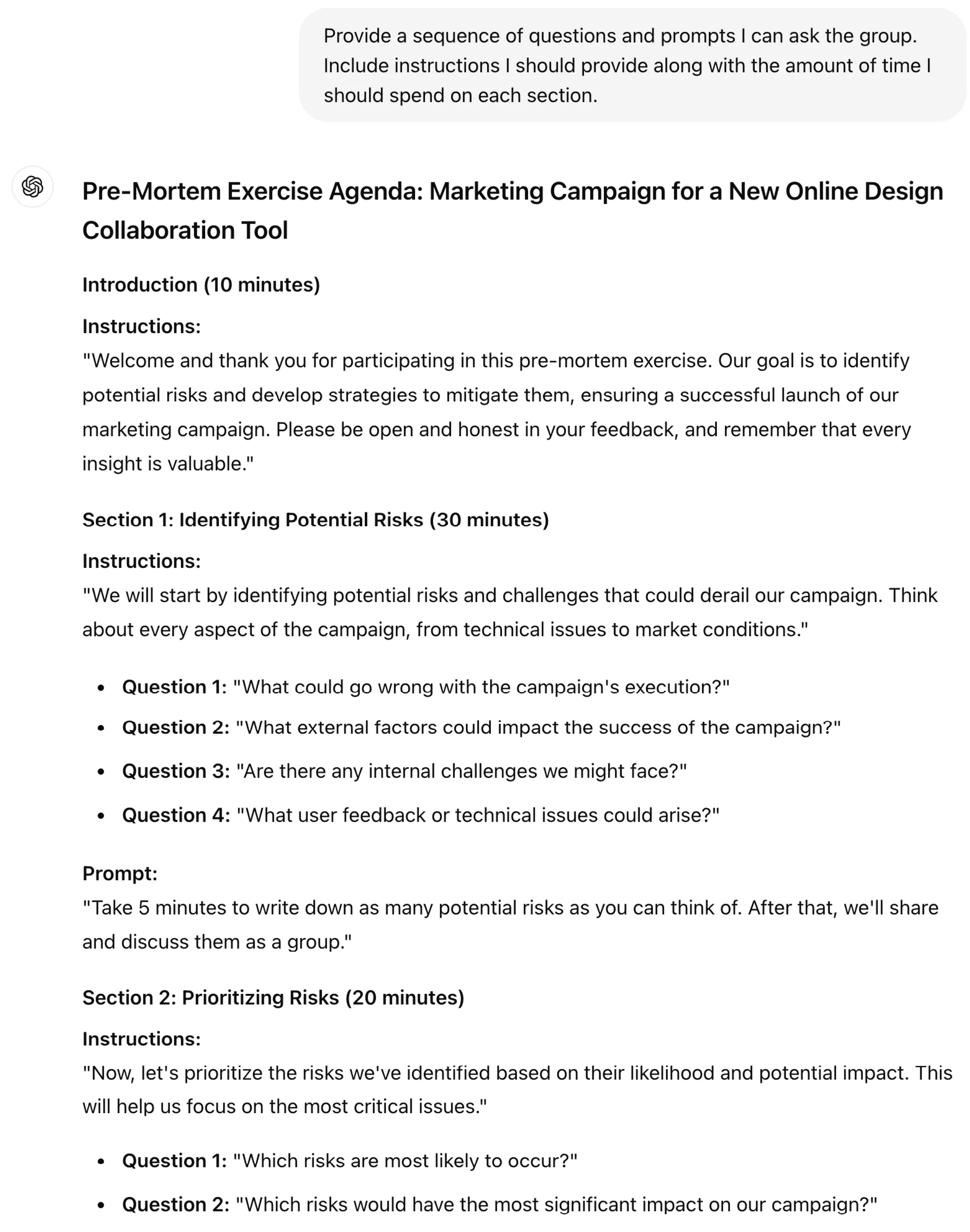
During the pre-mortem session, focus on identifying all possible ways the project could fail. Encourage open and honest discussion among team members, and use brainstorming techniques to uncover hidden risks. Document all identified risks to ensure nothing is overlooked and everyone’s concerns are addressed.
Provide a sequence of questions and prompts I can ask the group. Include instructions I should provide along with the amount of time I should spend on each section.
.webp)
.webp)
While your team's insights are invaluable, we can also leverage AI to complement human creativity. Let's see how ChatGPT can contribute to our risk identification process.
ChatGPT contributions
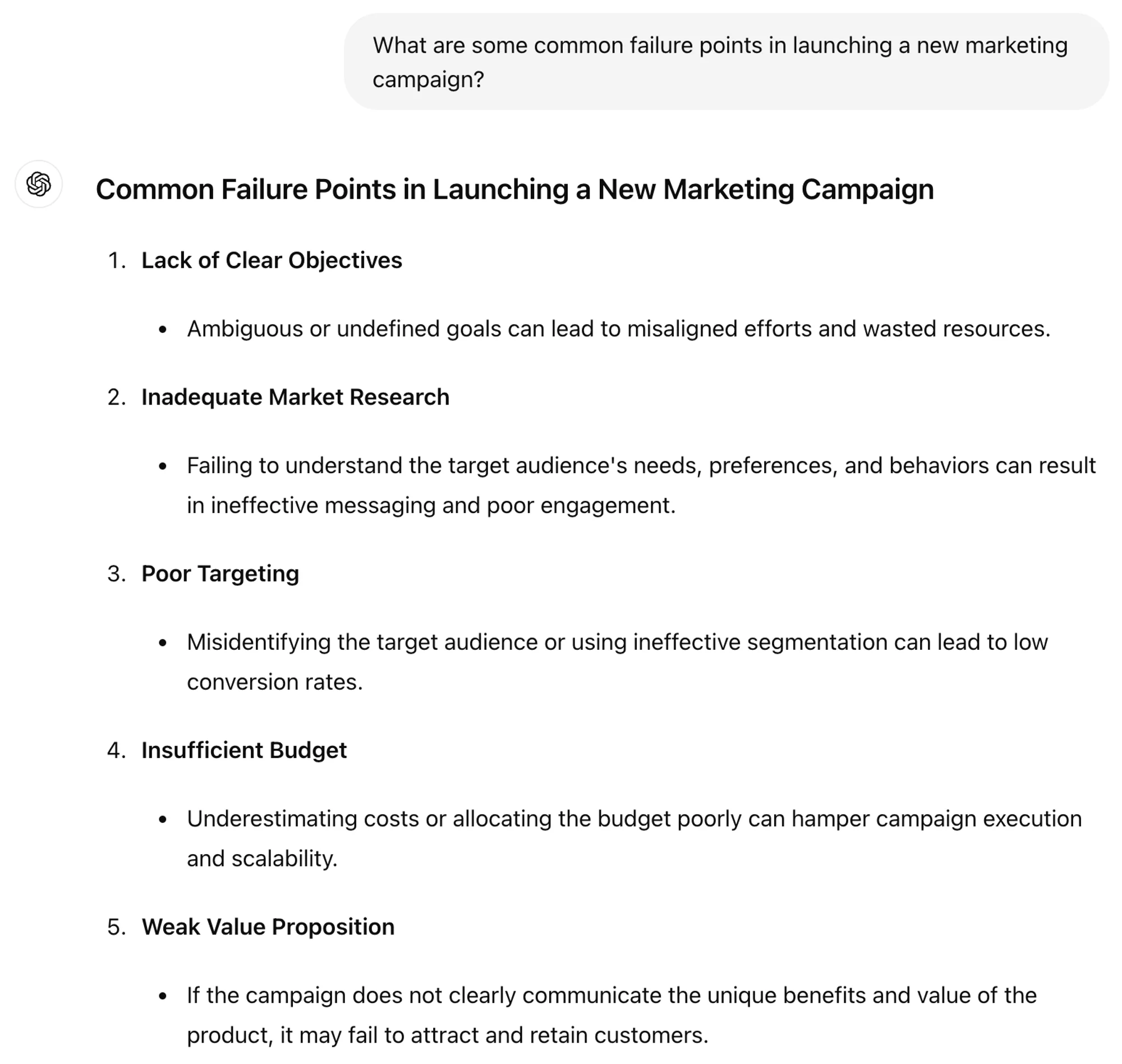
Before, during, or after the meeting, you can also have ChatGPT offer ideas:
What are some common failure points in [project]?
.webp)
.webp)
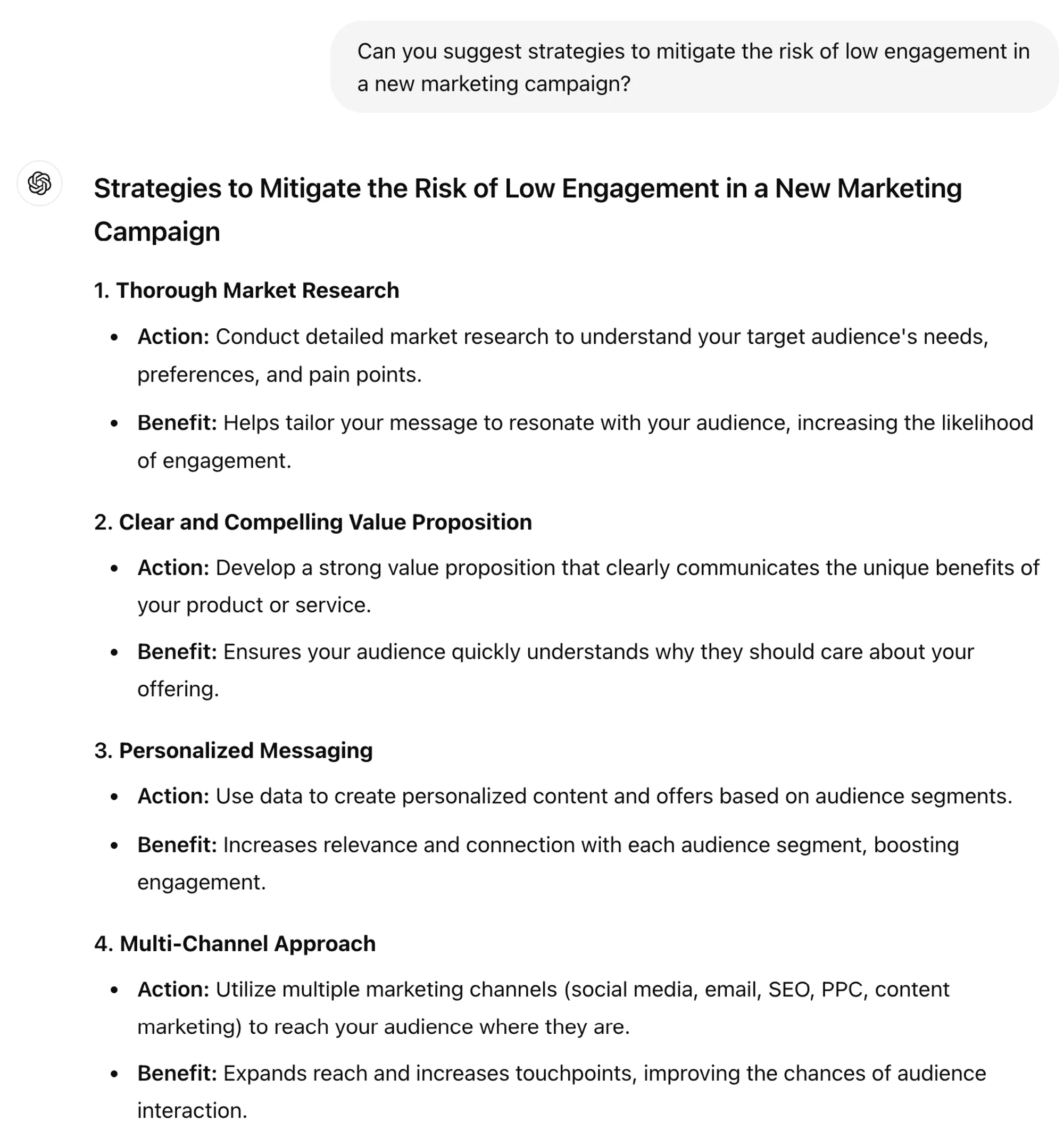
Can you suggest strategies to mitigate the risk of [major potential risk] in a [project]?
.webp)
.webp)
Document and act on findings
Create a risk management plan
After identifying risks and mitigation strategies, compile them into a comprehensive risk management plan. Categorize risks by their likelihood and impact, and assign owners for each risk and corresponding strategy. Setting deadlines for implementing mitigation measures will help keep the team accountable and on track.
You can ask ChatGPT for a template or you can include your notes with the prompt below:
Create a risk management plan for [project], including prioritizing risks and assigning ownership.

.webp)
.webp)
With our comprehensive risk management plan in hand, we're ready to move from planning to action.
Implement preventive measures
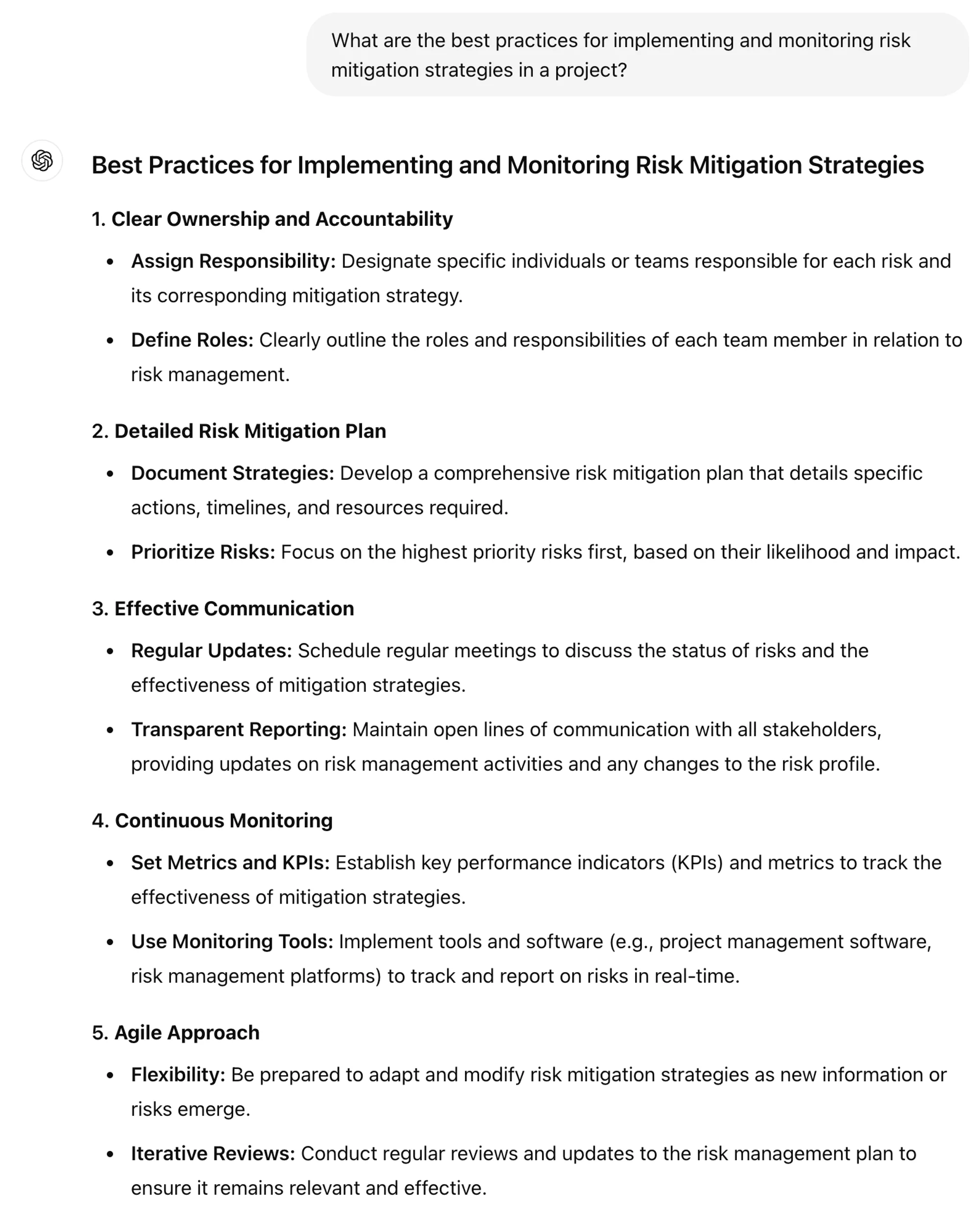
Put the risk mitigation strategies into action to prevent potential issues. Develop a timeline for implementation and monitor progress closely, adjusting strategies as needed. Conduct follow-up meetings to ensure the measures are effective and address any new risks that may arise.
What are the best practices for implementing and monitoring risk mitigation strategies in a project?
.webp)
.webp)
Congratulations! You’re ready to kick-off your project now that you have a thorough understanding of the risks involved weighed against the potential outcome.
This tutorial was created by Jonah.