Run an exit interview
Use AI to assist in successful exit interviews and turn the process into an SOP.
2024-11-13
When an employee departs your organization, you have a unique and fleeting opportunity to collect valuable feedback about your organization. In an exit interview, the power dynamic has changed. Your soon-to-be-former employee will often speak more freely about their experience giving you the change to improve your organization for everyone else.
In this tutorial, you will learn how to:
- Schedule interviews and manage final settlements
- Conduct effective exit interviews
- Facilitate knowledge transfer and feedback
Step 1: Schedule the exit interview
Invite the departing employee to a meeting
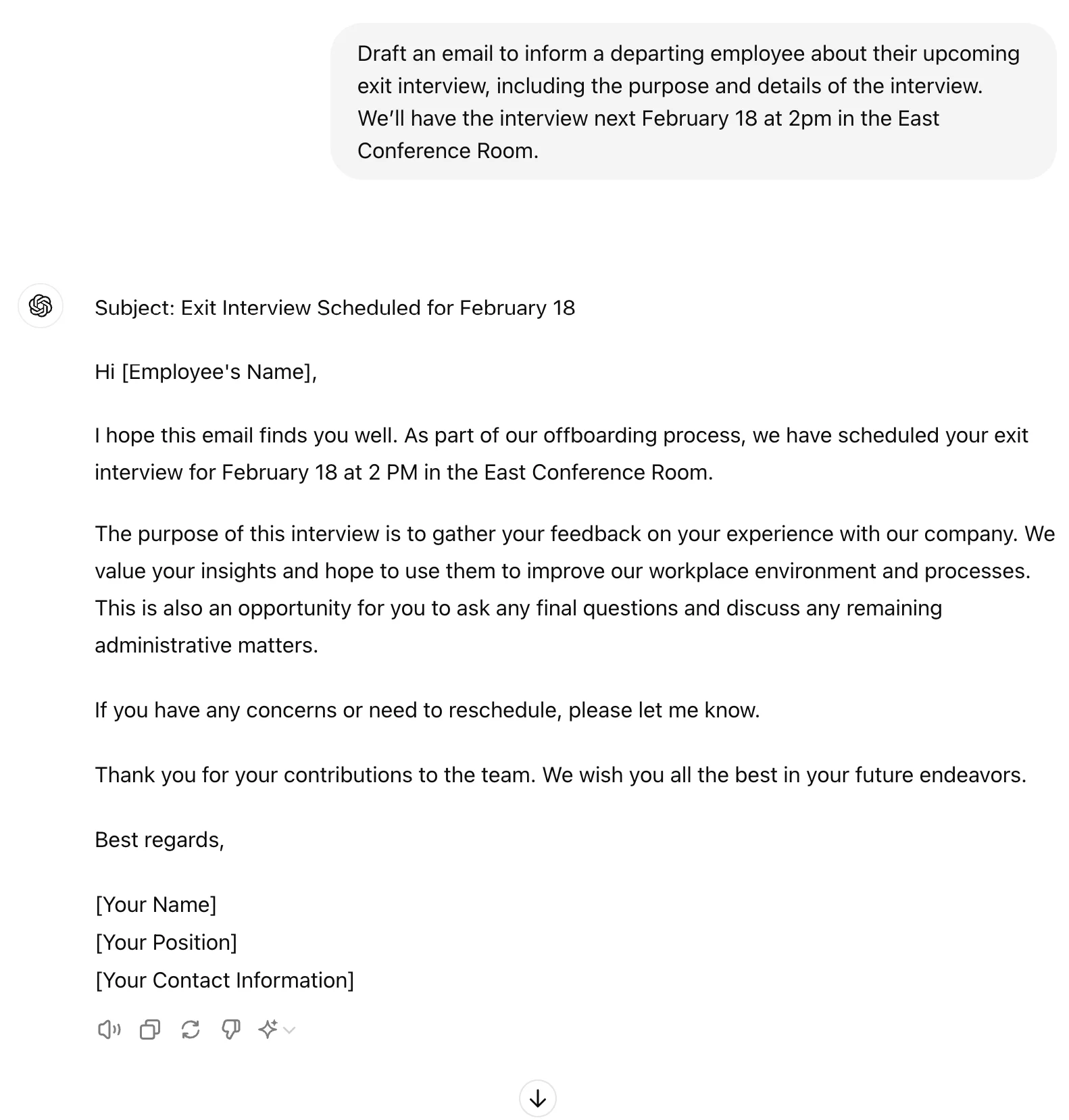
Inform the departing employee about the exit interview in advance. Explain the purpose of the interview, emphasizing its importance in understanding their experiences and improving the organization. Provide them with details on when and where the interview will take place.
Draft an email to inform a departing employee about their upcoming exit interview, including the purpose and details of the interview. We’ll have the interview [date and time] in [location].
Handle final settlements
Discuss benefits and compensation
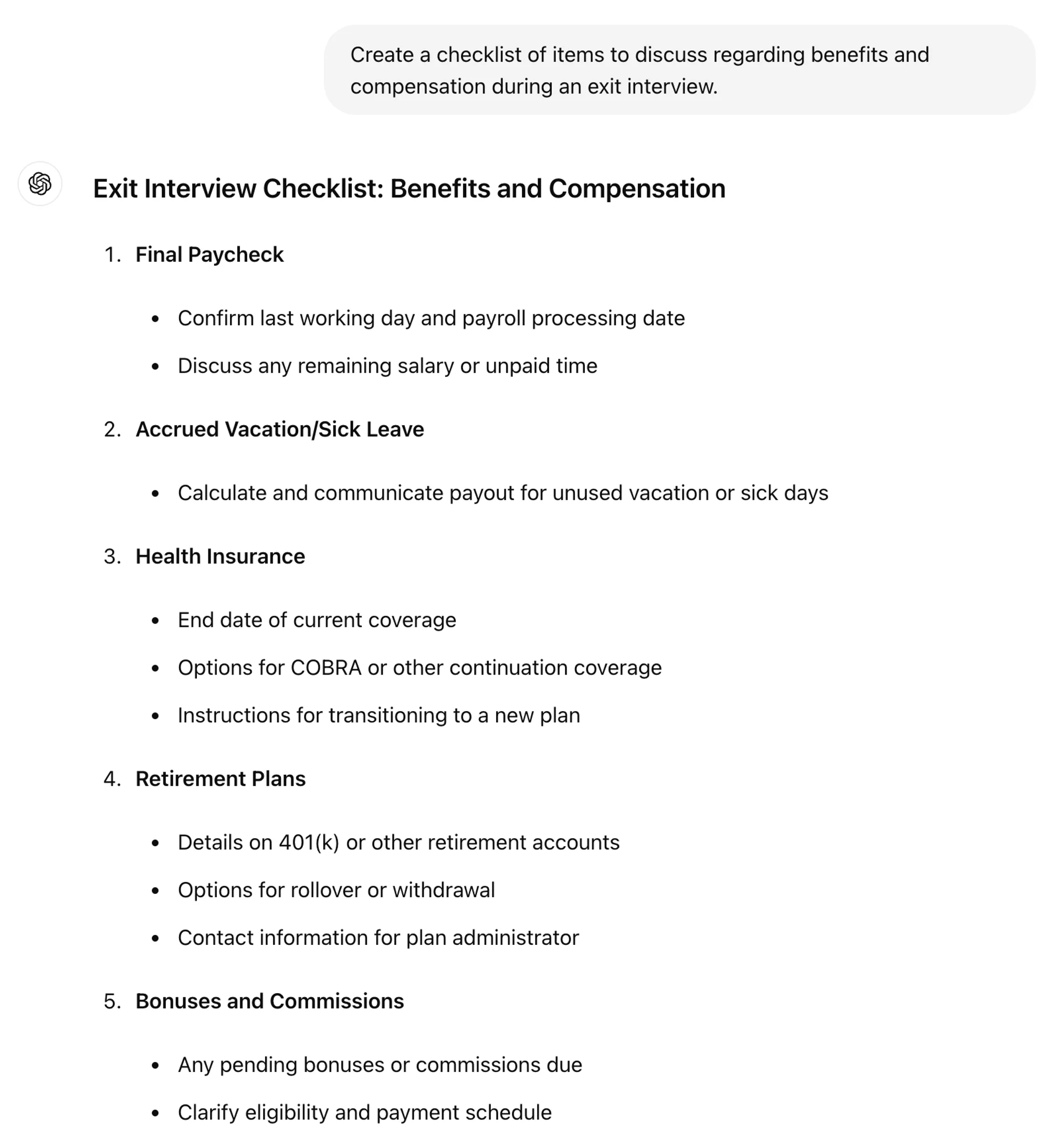
During the exit interview, discuss the final settlements, including any outstanding benefits and compensation. Ensure the employee understands what they are entitled to, such as unused vacation days, severance pay, and any other benefits. Clearly explain the process and timeline for receiving their final payment.
Create a checklist of items to discuss regarding benefits and compensation during an exit interview.
.webp)
Finalize paperwork
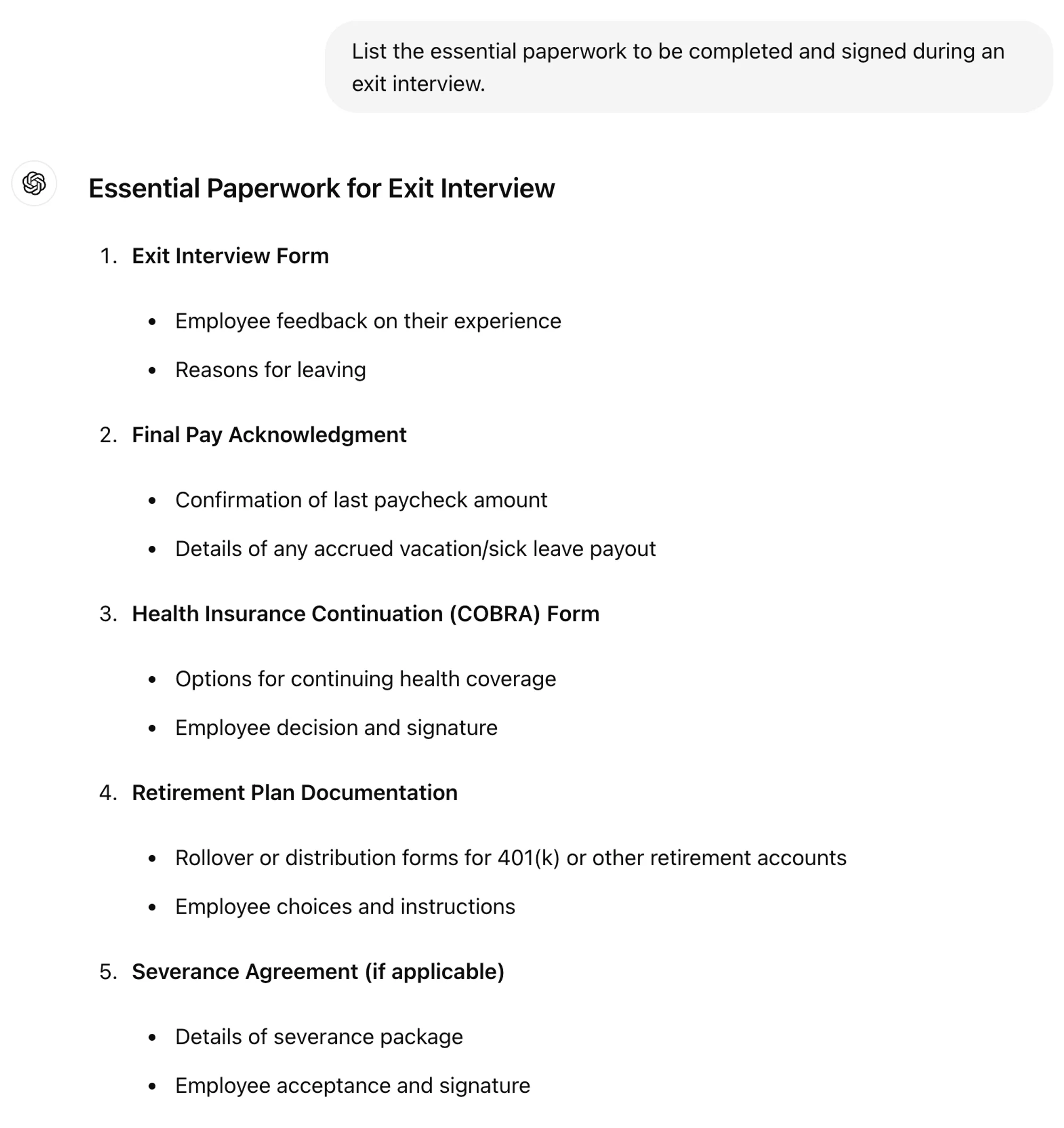
Finalize all necessary paperwork as part of the exit process. This includes obtaining signatures on any required documents, such as non-disclosure agreements, return of company property forms, and any other relevant paperwork. Ensure that all administrative tasks are completed efficiently to avoid any delays.
List the essential paperwork to be completed and signed during an exit interview.
.webp)
Step 2: Facilitate knowledge transfers
Document important information
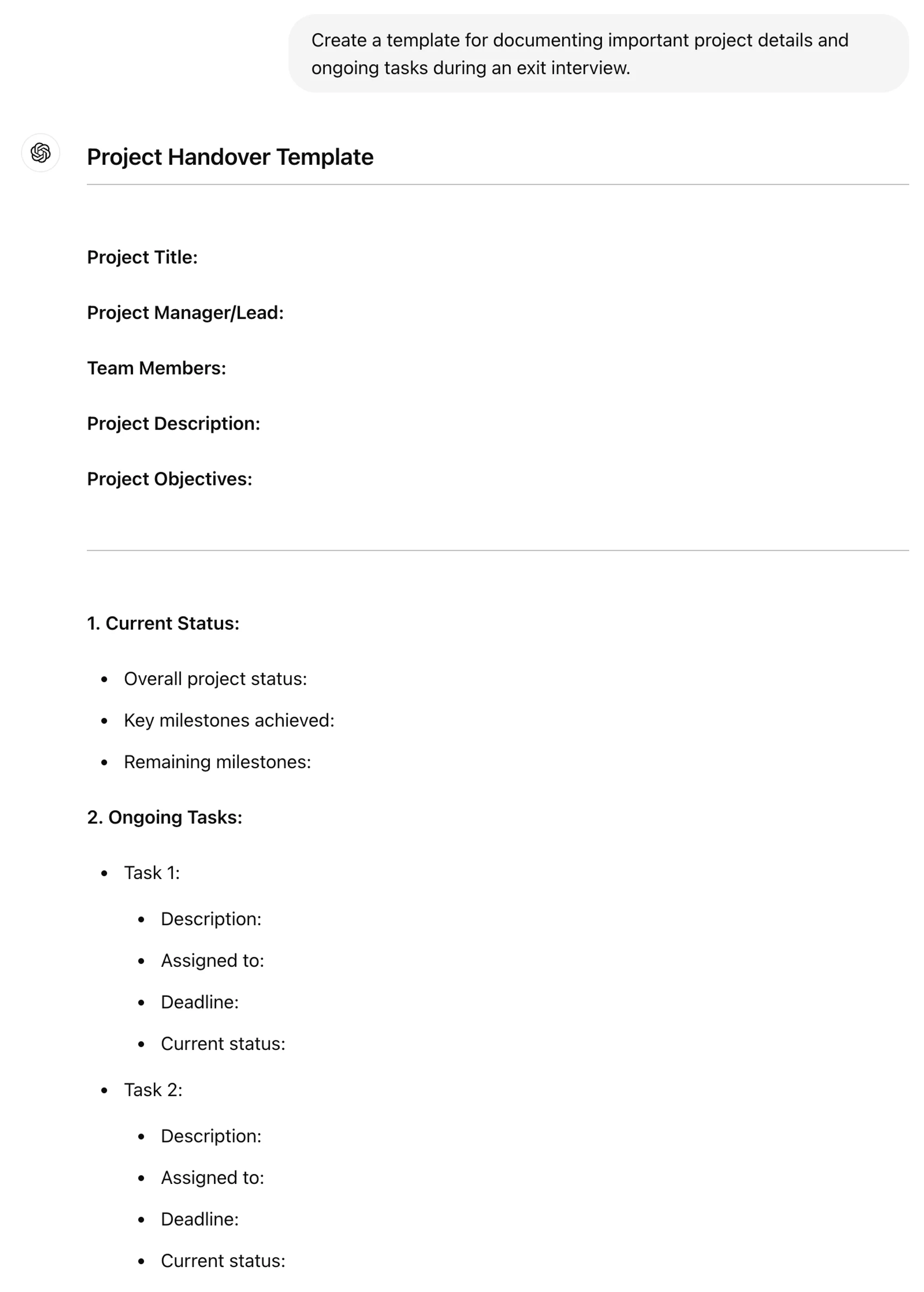
Facilitate the transfer of knowledge by documenting important information the departing employee possesses. Ask them to share critical project details, ongoing tasks, and any other pertinent information that will help ensure a smooth transition. Encourage them to leave behind any useful documentation or notes.
Create a template for documenting important project details and ongoing tasks during an exit interview.
.webp)
.webp)
.webp)
Step 3: Gather feedback for organizational improvement
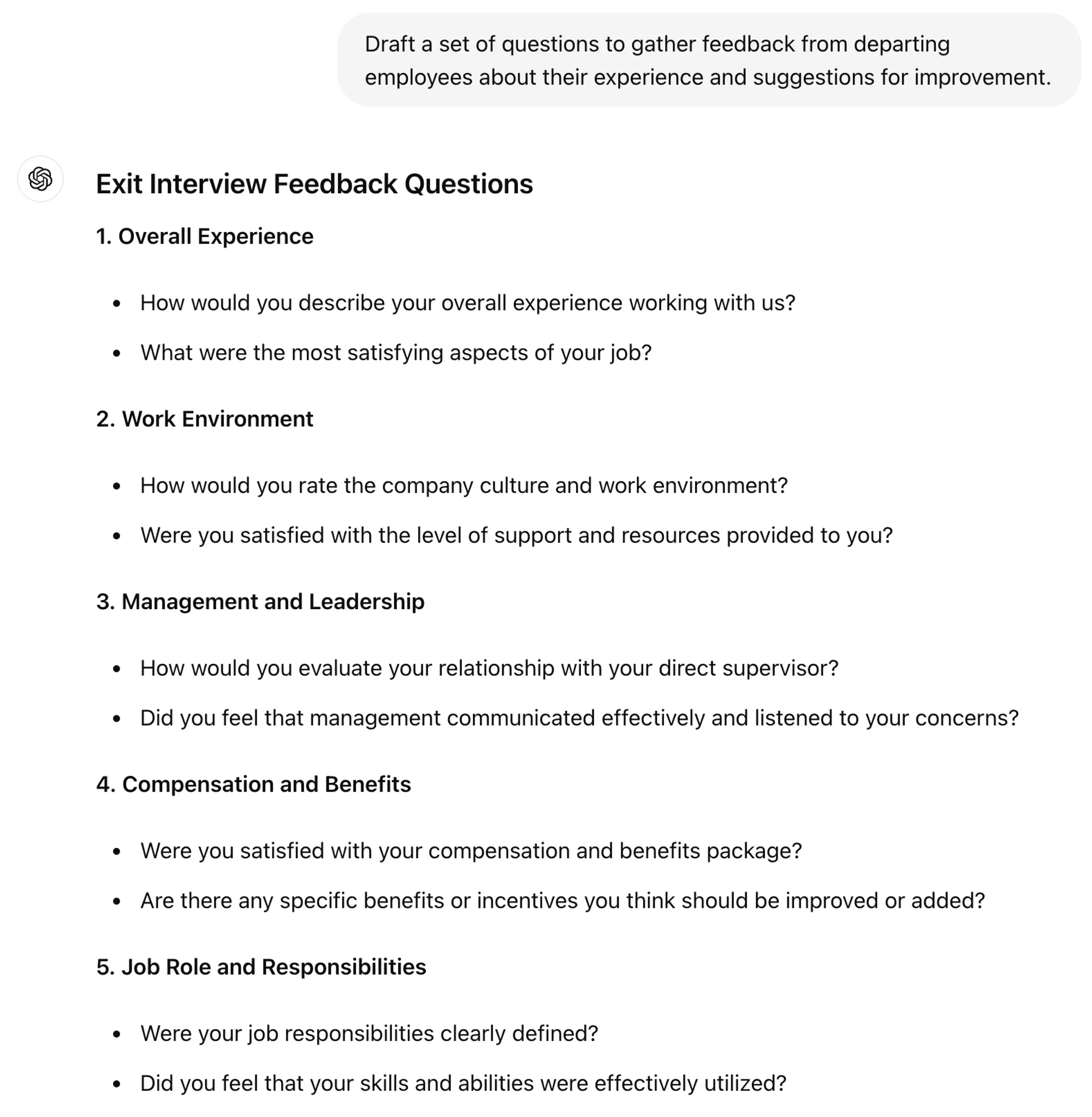
Gather valuable feedback from the departing employee to identify areas for organizational improvement. Ask specific questions about their experience, what they enjoyed, and what could be improved. Use this feedback to make necessary adjustments and enhance the work environment for current and future employees.
Draft a set of questions to gather feedback from departing employees about their experience and suggestions for improvement.
.webp)
The feedback you gain from these questions can help you explore challenges in your organization, and can also help you double-down on the elements of your business employees like most.
End the interview graciously
An exit interview can be slightly uncomfortable for both parties. Plan on a gracious and comforting way to end the interview.
Provide a brief script that will help me end the interview graciously.
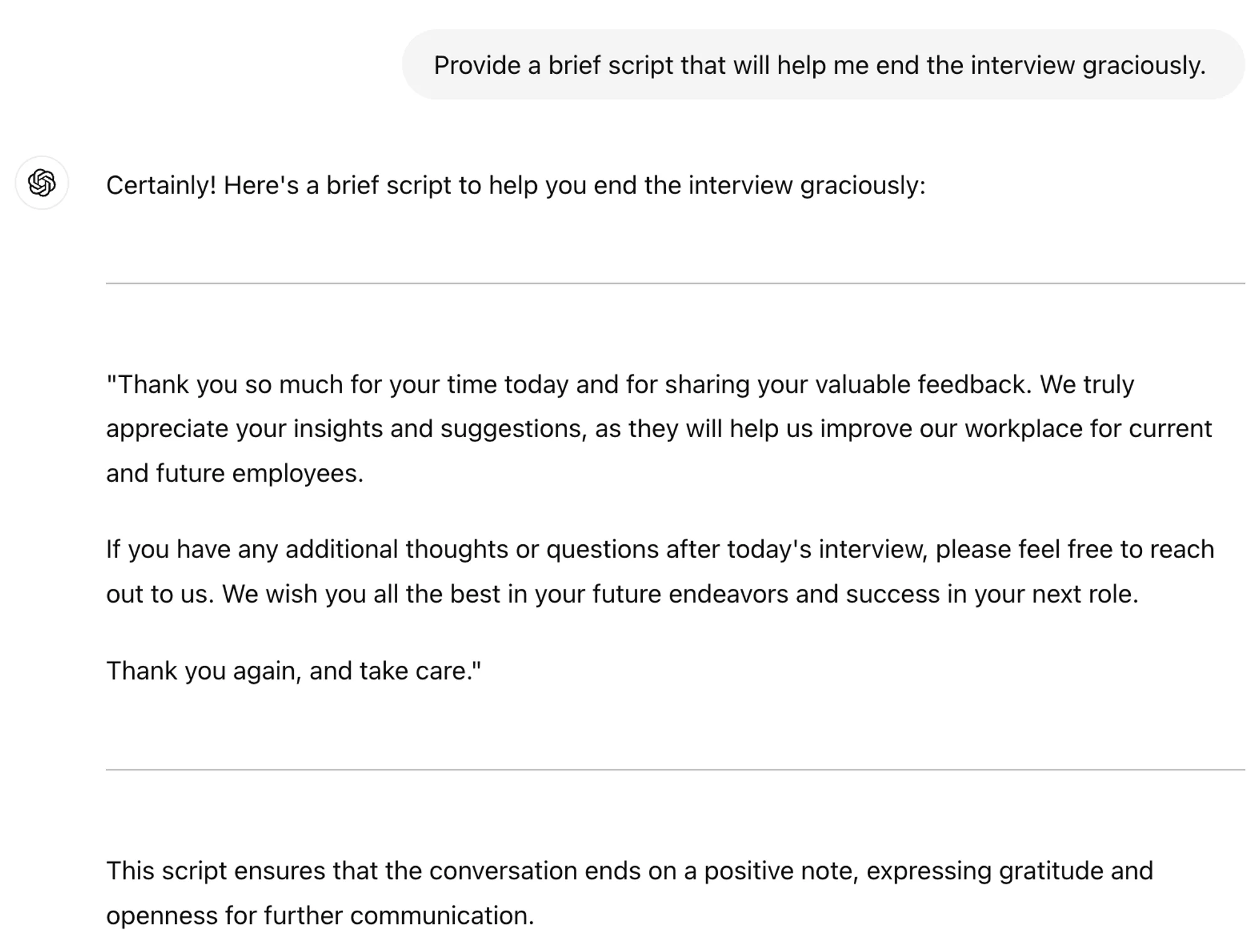
As your employee departs, you can continue getting value from their employment through honest and open feedback.
Bonus: Employee exit handbook
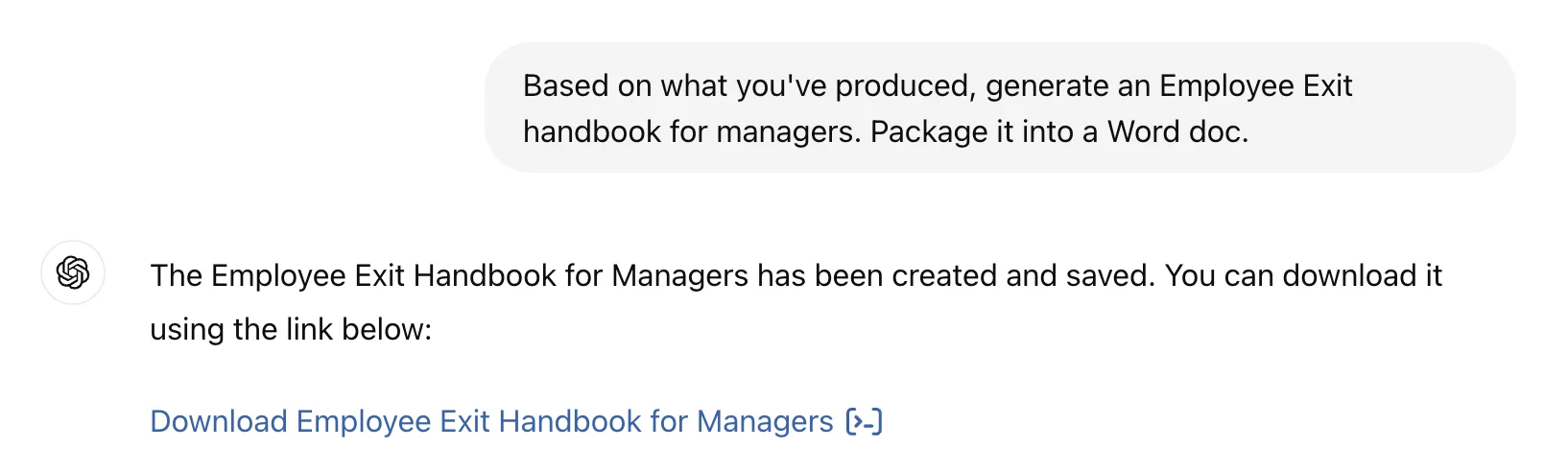
As your business grows, you’ll see more employees depart. To ensure the exit process is valuable to your organization, create a handbook outlining the steps, procedures, and templates you want managers to use.
Based on what you've produced, generate an Employee Exit handbook for managers. Package it into a Word doc.
This tutorial was created by Jonah.