Write a non-disclosure agreement (NDA)
Write a legally sound NDA to keep your company information private.
2024-11-13
When you’re working with consultants, partners, and other third parties, a non-disclosure agreement (NDA) ensures they can’t misuse information you share with them. But with all the legal jargon and necessity for accuracy, drawing up an NDA from scratch is near impossible, unless you’re a lawyer.
With ChatGPT, we can draft a customised NDA in minutes.
In this tutorial, you will learn how to:
- Draft a legally sound NDA
- Protect sensitive business information
- Ensure mutual understanding and compliance
Step 1: Understand NDA components
Define confidential information
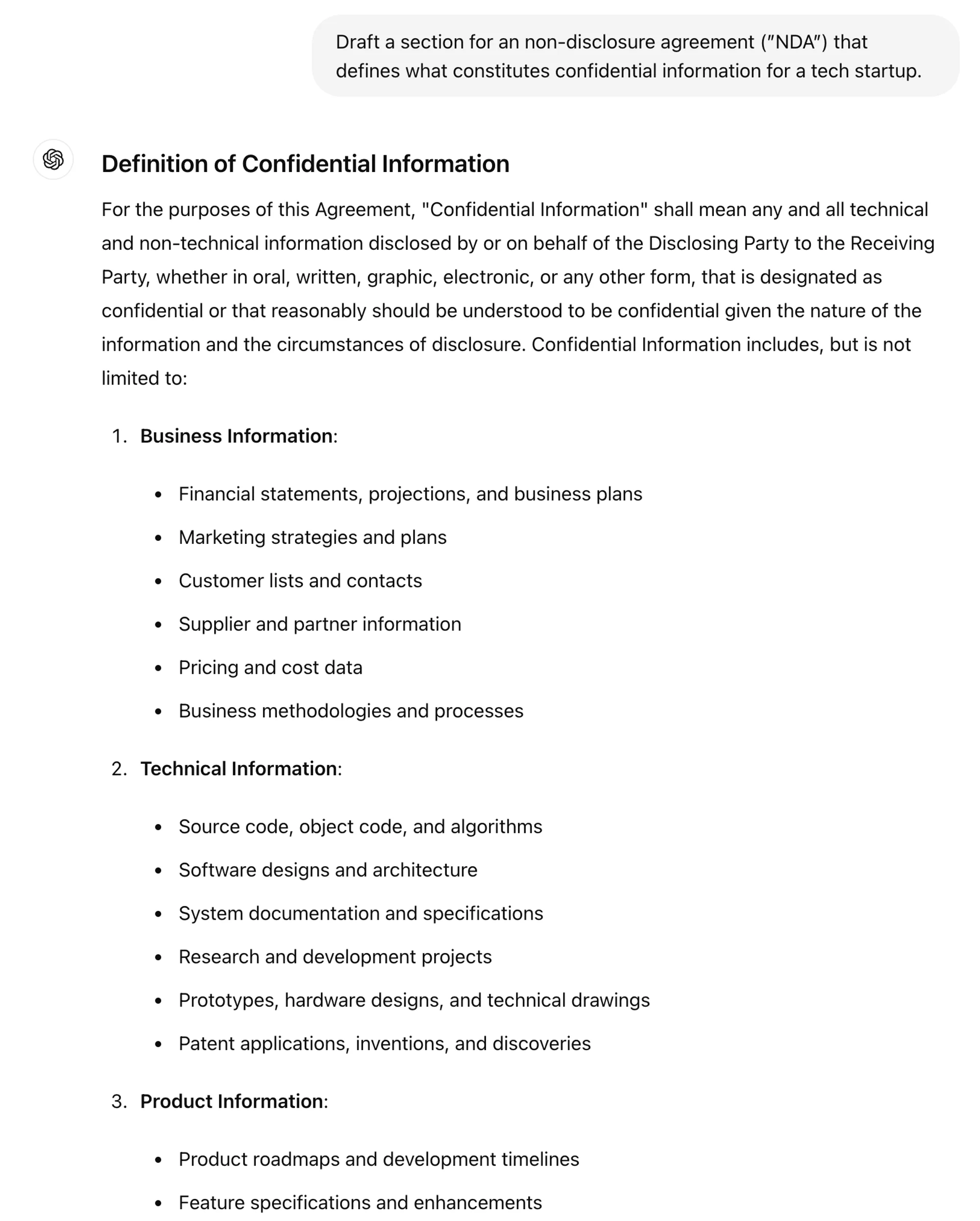
Begin by clearly defining what constitutes confidential information. This includes specifying the types of information covered under the NDA, such as business plans, financial data, proprietary processes, and any other sensitive data. Clearly defining these parameters helps both parties understand what needs to be protected.
Open up ChatGPT and use this prompt:
Draft a section for an non-disclosure agreement (”NDA”) that defines what constitutes confidential information for a [sector].
.webp)
Specifying obligations and duration
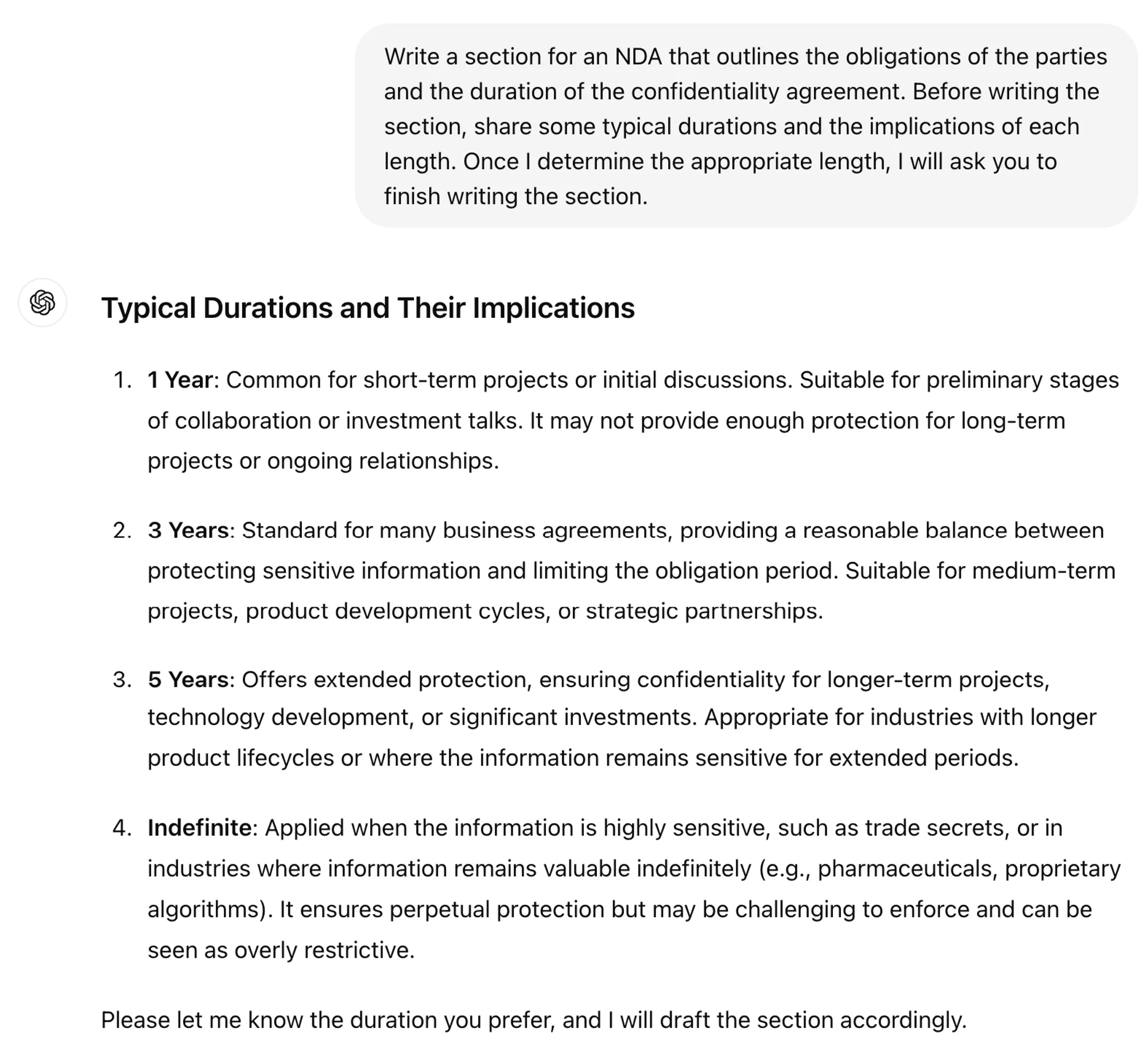
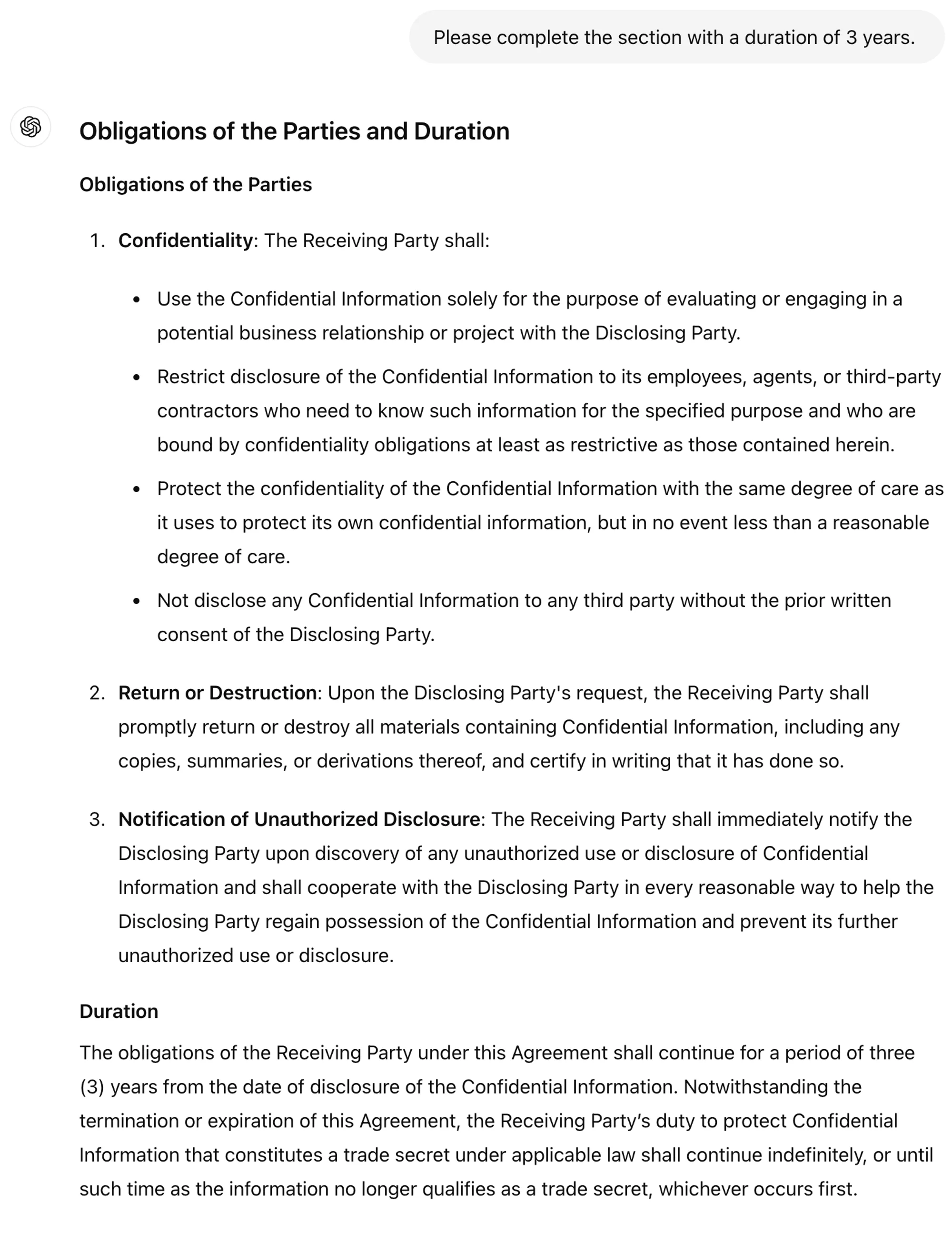
Specify the obligations of the parties involved in the NDA. This includes the duty to maintain confidentiality, restrictions on using the information, and the duration of the agreement. Typically, NDAs remain in effect for a certain period after the termination of the relationship to ensure ongoing protection of sensitive information.
Prompt:
Write a section for an NDA that outlines the obligations of the parties and the duration of the confidentiality agreement. Before writing the section, share some typical durations and the implications of each length. Once I determine the appropriate length, I will ask you to finish writing the section.
Please complete the section with a duration of [your duration choice].
Step 2: Draft the NDA
Use templates and customize clauses
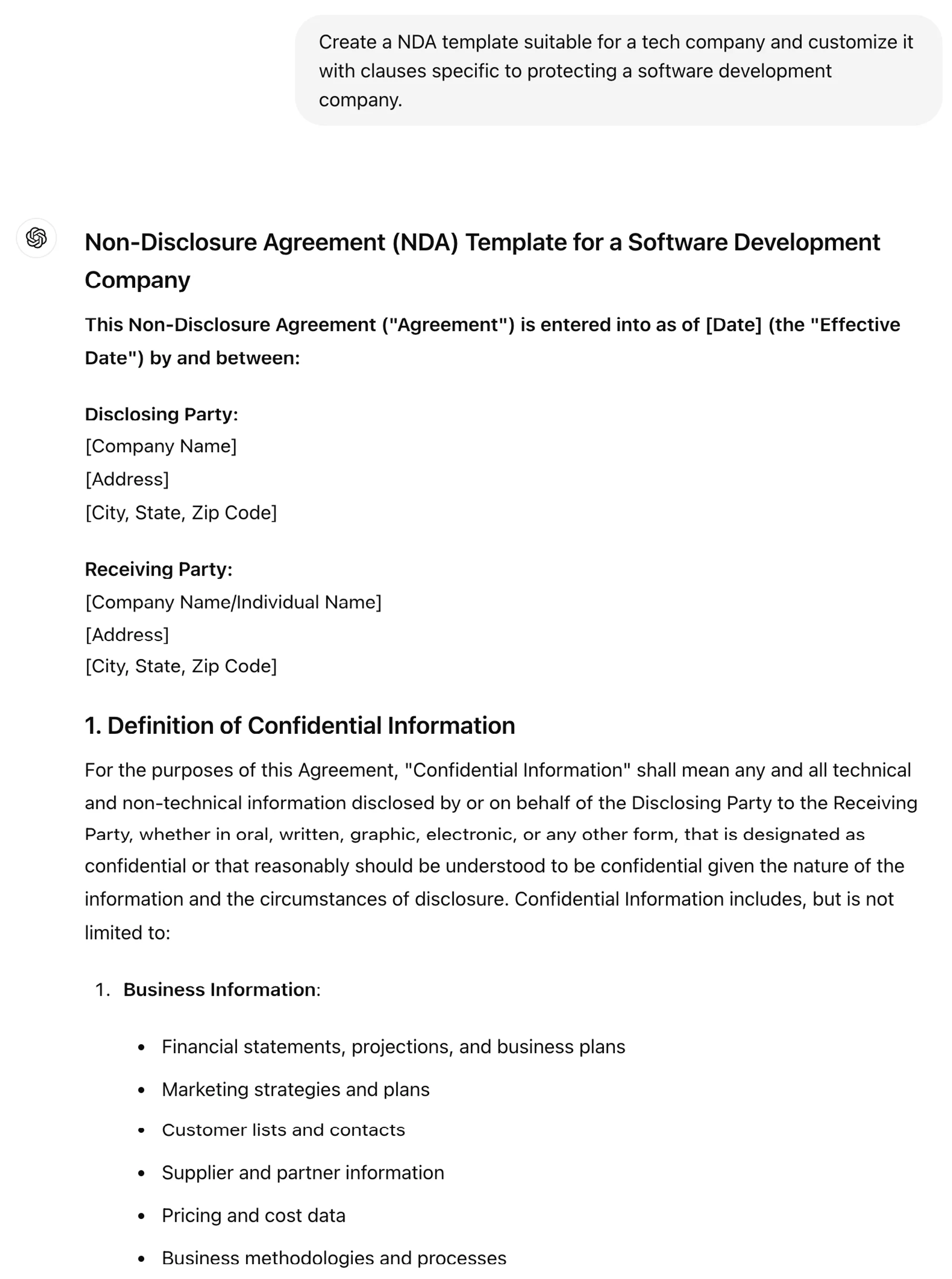
Utilize existing NDA templates as a starting point, but customize the clauses to fit your specific needs. Ensure that the language is clear and precise, avoiding any ambiguities that could lead to misunderstandings. Customizing templates ensures the NDA is tailored to your unique business requirements.
Prompt:
Create a NDA template suitable for a [sector] company and customize it with clauses specific to protecting [high level product/service].
.webp)
.webp)
.webp)
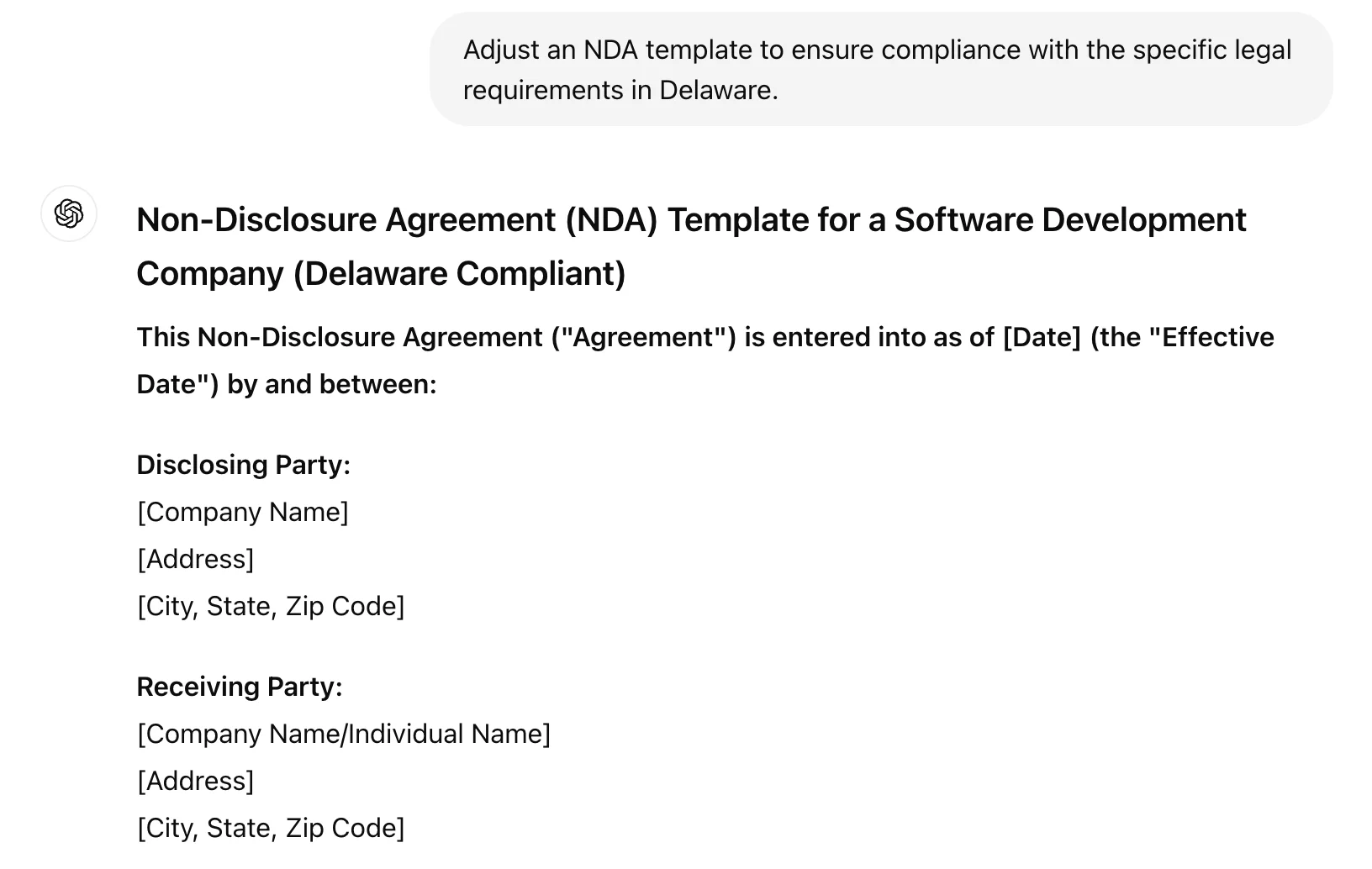
Ensure legal compliance based on jurisdiction
Ensure the NDA complies with the legal requirements of the relevant jurisdiction. This includes considering state, national, or international laws that might affect the enforceability of the agreement. Consulting with legal counsel can help ensure that your NDA is legally sound and enforceable.
Prompt:
Adjust an NDA template to ensure compliance with the specific legal requirements in [jurisdiction].
Condensed
Step 3: Implement the NDA
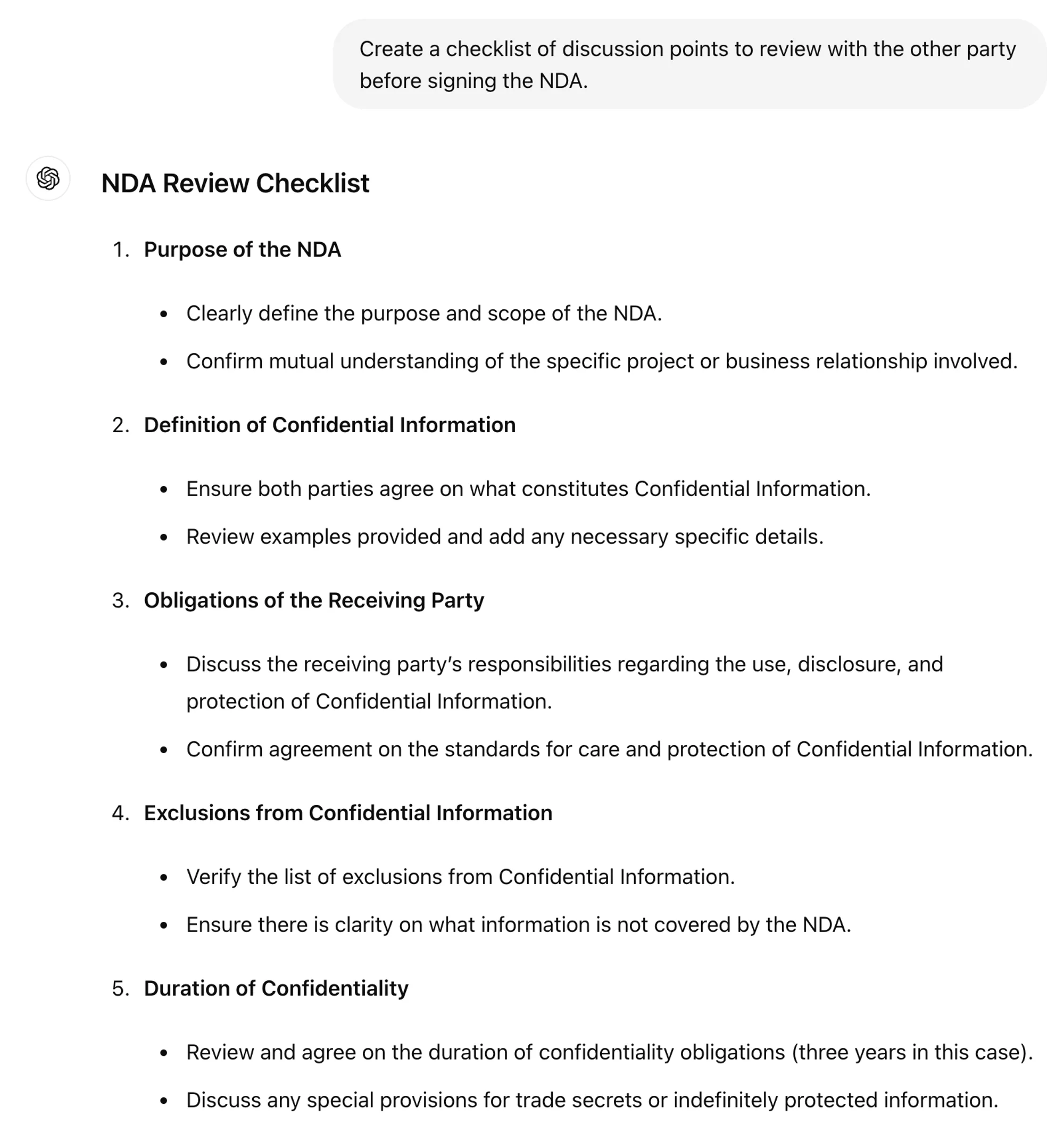
Discussing and signing the agreement
Before finalizing the NDA, discuss its terms with the other party to ensure mutual understanding and agreement. This includes reviewing each clause and addressing any concerns or questions. Once both parties are satisfied, proceed with signing the agreement.
Prompt:
Create a checklist of discussion points to review with the other party before signing the NDA.
.webp)
.webp)
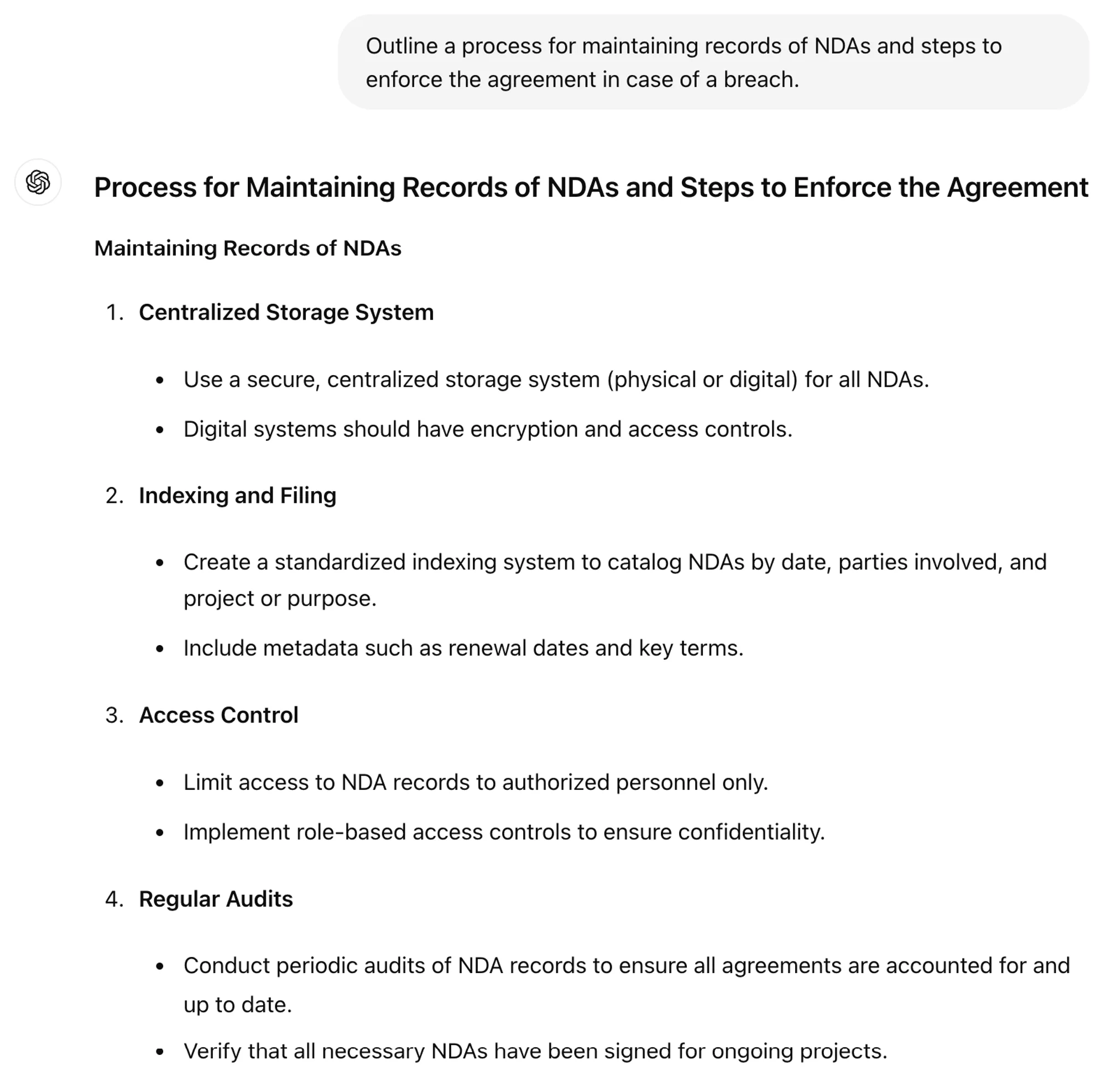
Maintaining records and enforcing terms
Maintain thorough records of all signed NDAs and ensure they are easily accessible. Regularly review and update your NDAs to ensure they remain relevant and enforceable. Be prepared to enforce the terms of the NDA if a breach occurs, including taking legal action if necessary.
Prompt:
Outline a process for maintaining records of NDAs and steps to enforce the agreement in case of a breach.
.webp)
.webp)
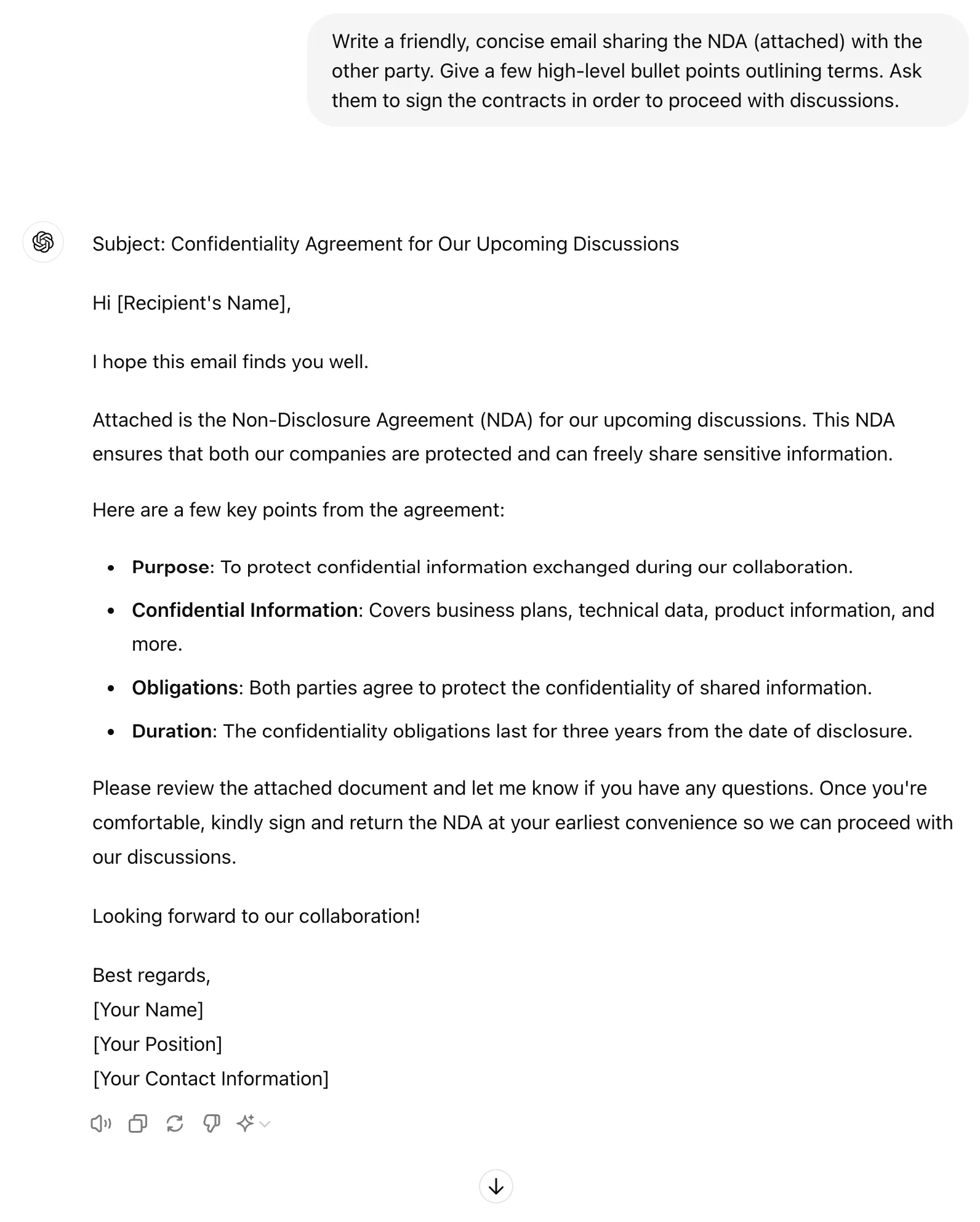
Send your NDA
A NDA is only effective when the other party understands it and signs it. Get ChatGPT to write you a brief email that will help you share the document with the other party.
Write a friendly, concise email sharing the NDA (attached) with the other party. Give a few high-level bullet points outlining terms. Ask them to sign the contracts in order to proceed with discussions.
Bonus: NDA writer
An alternative approach to generating a template is to have ChatGPT write custom contracts for you. It can take a bit more time but it yields more custom agreements.
Start with the following prompt:
You're writing a non-disclosure agreement that I can use prior to conversations with consultants and agencies. What information do you need from me before writing this contract? Assume typical clauses. Ask as few questions as possible.
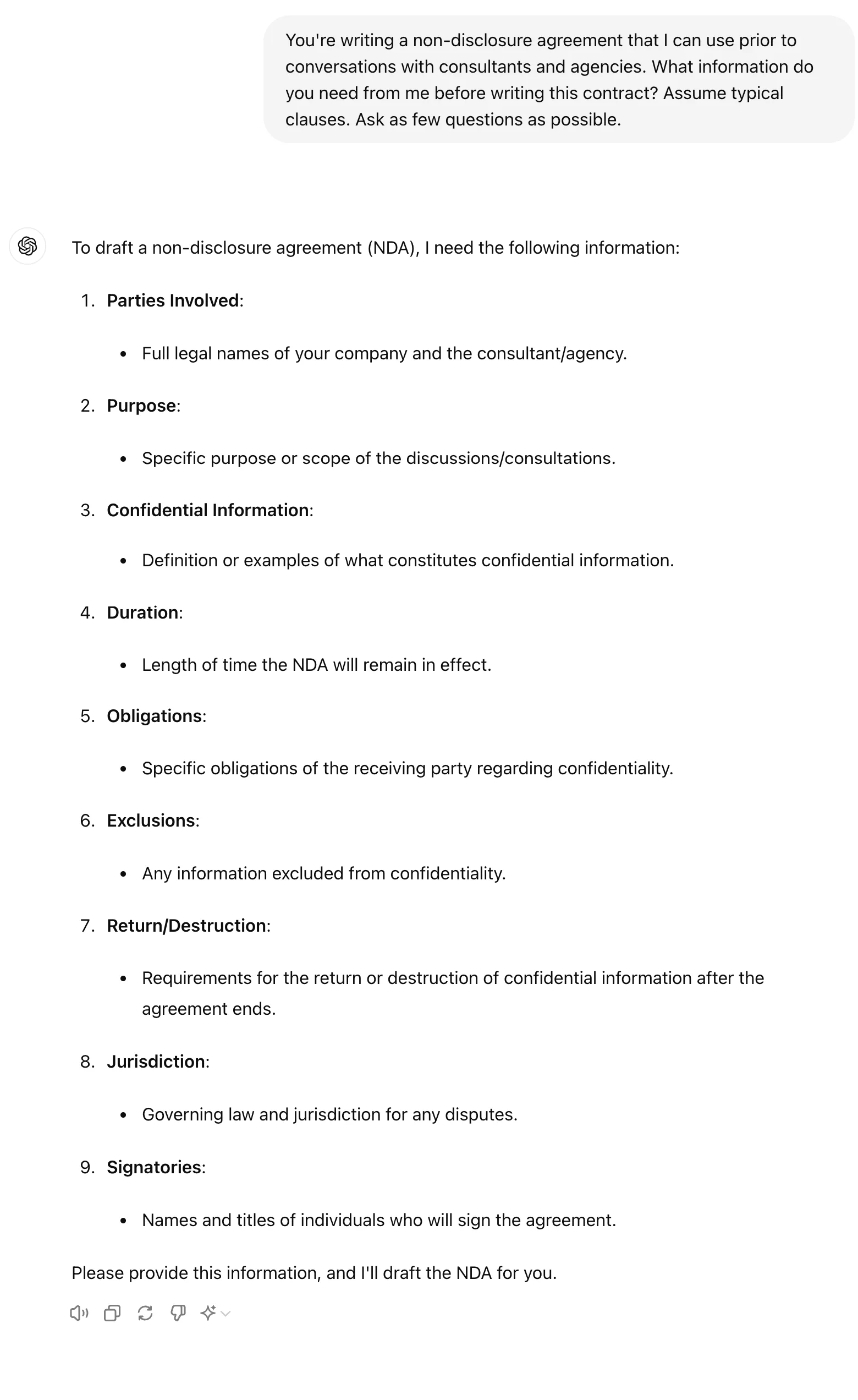
Answer each of these questions from ChatGPT clearly mirroring its numbered list of queries. From there, it will generate your custom contract, ready to send.
This tutorial was created by Jonah.